

The controversy over the Atlanta Dream and Golden State Valkyries leaving the court before the national anthem at the 2026 WNBA Finals exposes something more durable than a single pregame dispute: professional sports leagues routinely write anthem rules vague enough to survive legal scrutiny but specific enough to invite exactly this kind of argument.
Key Points
- Both teams were reported absent from the court during the anthem before Games 1 and 2 of the WNBA Finals, returning within seconds of its conclusion
- The WNBA rulebook requires players, coaches, and trainers to “stand and line up in a dignified posture” during the anthem — but does not explicitly say they must be on the court when it plays
- Neither the league nor either team had publicly explained the absences or announced discipline as of this reporting
- The rule’s wording dates back roughly four decades across the NBA and WNBA, and has never been enforced against teams that left the floor before the anthem began
- The episode reflects a long, recurring pattern across American pro sports of anthem rules colliding with athlete activism and the league’s reluctance to adjudicate either
What Actually Happened on the Court
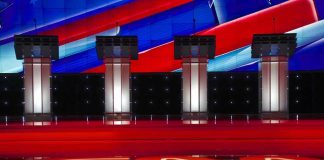
The facts here are not seriously in dispute. Reporting from Fox News/OutKick and Yahoo Sports describes the Atlanta Dream and Golden State Valkyries as absent from the court during the national anthem before both Game 1 and Game 2 of the 2026 WNBA Finals, with both teams reappearing within seconds of the anthem’s conclusion. Yahoo Sports pinned the gap at roughly the two minutes it takes to perform “The Star-Spangled Banner,” timing that suggests the absence was planned rather than a case of teams simply running late from warmups. Neither team nor the league offered a public explanation before or after either game, and no disciplinary action had been announced.
The Rule Itself — and Its Actual Wording
The WNBA’s official rulebook states plainly: “Players, coaches, and trainers are to stand and line up in a dignified posture along the sidelines or on the foul line during the playing of the National Anthem”. That sentence is the entire textual basis for the controversy, and it is worth reading closely, because its precision is also its limitation. It tells participants how to behave if they are present for the anthem. It does not say they must be present. Multiple outlets covering the Finals flagged exactly this gap — the rule “doesn’t explicitly require players to be on the court when the anthem is played. It only lays out how they should conduct themselves if they are”. That is not a minor semantic quibble; it is the entire question an enforcement body would have to resolve, and it is one the league has conspicuously declined to answer.
Why the Ambiguity Persists — and Who Benefits From It
A rule written to govern posture, not presence, gives a league enormous flexibility and almost no obligation to explain itself. That flexibility cuts both ways. It lets the WNBA avoid picking a side in a charged cultural argument, but it also leaves the league looking evasive at the exact moment a clear statement would have settled the matter. One analysis of the rule noted it “could be interpreted as it only applying to players and coaches that are on the court when the anthem is playing,” meaning the Dream and Valkyries players, having left the floor altogether, may simply have fallen outside the rule’s reach rather than violated it. That reading is plausible on the text. It is also precisely why critics describe the league’s silence as its own kind of statement — an information vacuum that, absent a ruling, lets the loudest interpretation fill the space.
This is not the WNBA’s first encounter with anthem-adjacent protest, and the league’s own history undercuts any claim that the current rule has ever been applied strictly. In 2017, the Los Angeles Sparks remained in their locker room during the anthem before a Finals game, and three other teams had locked arms or otherwise altered their anthem conduct earlier that season — conduct the league ultimately absorbed without lasting punishment, after briefly fining teams and rescinding those fines. The underlying language requiring players to “stand and line up in a dignified posture” is not new; NBA Commissioner Adam Silver noted in 2020 that an equivalent provision in his league had existed for nearly 40 years, a history the WNBA’s rule shares. Rules this old were written for a different sporting culture, one less saturated with televised activism, and leagues have repeatedly chosen not to test them against the behavior that now routinely violates their spirit.
Valkyries and Dream ditch National Anthem for second game in a row during WNBA Finals https://t.co/5WOX1xGJEH pic.twitter.com/OOQ3ZphjQG
— California Post (@californiapost) October 20, 2026
What the Evidence Does Not Establish
It is important to separate the documented facts from the surrounding commentary. The reporting establishes that the teams were off the court and that the rule’s text is ambiguous about whether that matters. It does not establish why the players left, whether the decision was coordinated between the two organizations, or what instructions arena staff may have given beforehand. Characterizations describing the conduct as anti-American or ideologically motivated circulated widely on social media and in sports commentary, but none of that framing rests on an on-record statement from either team about the 2026 Finals specifically. A 2020 statement from the Atlanta Dream players’ union — asserting the anthem does not “represent freedom, justice, and liberty for all Americans” — speaks to that team’s history of anthem-related protest, but it is six years removed from this incident and cannot stand in for an explanation nobody in 2026 has actually given.
What Comes Next
The likeliest outcome is the one the league has already chosen: silence. A written ruling clarifying whether Section H requires on-court presence would resolve the ambiguity instantly, but it would also force the WNBA to either formalize a presence requirement it has never enforced or publicly concede the rule doesn’t cover this conduct — either path invites more scrutiny than saying nothing. Until the league issues that clarification, or until a team is actually disciplined under it, the honest assessment is that the Dream and Valkyries left the court, the rule as written doesn’t clearly forbid that, and everything layered on top of those two facts is interpretation, not adjudicated fact.
Sources:
foxnews.com, cdn.wnba.com, sports.yahoo.com, thespun.com, thecomeback.com, dailywire.com, streamlinefeed.co.ke