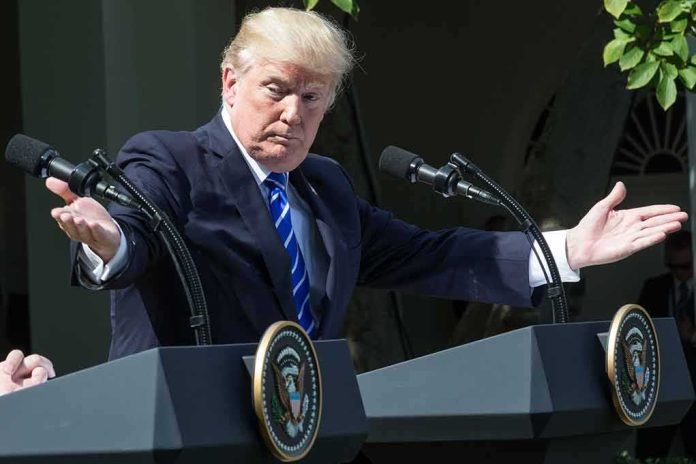
A presidential rally is rarely about winning over the people in the room; the crowd at Truist Arena was already converted. Its real function is to manufacture momentum — a burst of media coverage, fundraising energy, and partisan enthusiasm that academic research shows fades within roughly a week, even as the political theater built around it suggests something far more permanent.
Key Points
- President Trump rallied at Truist Arena in Highland Heights, Kentucky, on October 17, 2026, backing Senate nominee Andy Barr and House candidate Ed Gallrein as part of a multi-state “midterm blitz” tour.
- At the rally, Trump declared “I can do stuff that is unbelievable,” a characteristic assertion of personal political potency delivered amid slipping national approval numbers.
- Kentucky Gov. Andy Beshear publicly rebuked the visit, calling it “a complete disservice” to the state.
- Peer-reviewed research on Trump-era rallies finds a real but short-lived bump in candidate support — around 4.5 percentage points lasting about a week — with no consistent, robust effect for down-ballot candidates.
- Separate studies on Trump’s formal endorsements show a mixed record: a durable advantage in Republican primaries, but inconsistent or even negative effects in general-election contests.
What Happened in Highland Heights
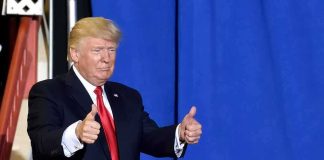
On Saturday, October 17, 2026, President Trump flew into Northern Kentucky University’s Truist Arena to headline a rally for Andy Barr, the Republican nominee seeking the Senate seat Mitch McConnell is vacating, and Ed Gallrein, running for the House seat in Kentucky’s 4th Congressional District. The stop was one leg of a broader “midterm blitz” tour through competitive and reliably conservative states alike, a format Trump has used repeatedly since his first term to consolidate the party base ahead of consequential elections. Both candidates spoke before the president took the stage, with Trump telling the crowd Barr was “fantastic” and predicting victory up and down the ballot.
It was during that appearance that Trump made the remark that has circulated widely since: “I can do stuff that is unbelievable”. The line fits a long-running rhetorical pattern — Trump frequently frames elections as referenda on his own singular capability rather than on the policy records of the candidates he’s endorsing. He also used the stage to go after Democratic opponents, at one point urging Republican candidates to win over what he called “lunatic” Democrats, and voiced confidence in Ralph Alvarado, his endorsed candidate for Barr’s old House seat, who faces Democrat Zach Dembo in the general election.
The Mechanics of a Modern Campaign Rally
Understanding why a sitting president spends a Saturday afternoon in a college arena requires separating what a rally is engineered to do from what casual observers assume it does. A rally is not primarily a persuasion tool aimed at undecided voters — turnout at these events skews overwhelmingly toward people who have already made up their minds. Its actual functions are logistical and psychological: it generates local and national media coverage that a campaign could never otherwise afford, it signals to donors and volunteers that the race is worth their continued investment, and it gives committed supporters a shared, visible experience that reinforces identity and intention to vote. Researchers who study rallies describe this as “political meaning-making” — the event matters less for what is said than for what attending or watching it signals about group belonging.
What the Data Actually Show
The clearest empirical answer comes from a National Bureau of Economic Research study examining presidential rallies between 2008 and 2016. It found that Trump’s rallies produced a genuine, measurable increase in his support relative to Hillary Clinton — on the order of 4.5 percentage points — concentrated among voters already leaning Republican, alongside a short-term uptick in stated turnout intention among strong partisans and a bump in individual campaign contributions. The catch, and it is a significant one, is durability: the effect dissipated within about a week, and the researchers found no consistent, robust spillover benefit for other candidates sharing the stage. That matters directly for events like Highland Heights, where the stated purpose was lifting Barr and Gallrein rather than Trump himself.
Endorsement research tells a more complicated story still. One analysis of Trump’s endorsements in 2018 House and Senate races found he tended to back candidates who already had strong odds, meaning the appearance of an endorsement “effect” partly reflects his selecting likely winners rather than manufacturing victories. A separate study tracking endorsements from 2018 through 2022 found a consistent, even growing, benefit in Republican primary elections — but estimated a roughly 1.5-point decrease in general-election vote share for endorsed candidates, a reminder that the same affiliation that mobilizes the base can also activate opposition turnout. Other survey-based work has found endorsements can backfire further still when attached to candidates with unorthodox positions. Taken together, the literature does not support a simple story of Trump rallies or endorsements as a uniform electoral tailwind; the effect is real, partisan, and conditional.
The Political Stakes on the Ground in Kentucky
Northern Kentucky’s 4th Congressional District, the setting for the rally, is the same ground where Gallrein defeated an incumbent Republican in the primary with Trump’s backing, underscoring how thoroughly primary contests in deep-red districts now run through presidential endorsement rather than local party infrastructure. The Senate race pits Barr against Democrat Charles Booker in a state Trump carried comfortably in prior cycles, which is precisely the kind of contest the NBER research suggests benefits least from rally-driven persuasion, since there are few true swing voters left to move. Governor Beshear’s response — calling the visit “a complete disservice” to Kentucky and urging voters toward Democratic alternatives — reflects the predictable other half of the mobilization dynamic: a high-profile Republican rally gives Democratic officials a comparably visible platform to counter-mobilize their own base. Coverage of the event also noted that Trump’s national approval ratings had slipped amid developments including the war in Iran, context that frames why reasserting personal political potency — “I can do stuff that is unbelievable” — carried particular rhetorical weight that day.
What It Means Going Forward
The enduring lesson of events like Highland Heights is not that rallies don’t matter — they demonstrably move the needle, if briefly, among voters predisposed to listen. It is that the lasting political value of a presidential rally lies less in persuasion than in logistics: energized volunteers, loosened donor wallets, and a news cycle dominated by the party in attendance. Whether Barr, Gallrein, and Alvarado convert that one afternoon of attention into November victories will depend far more on the fundamentals of their individual races — fundraising, local organization, the national mood — than on any single rally, however large the crowd or confident the rhetoric on stage.
President Trump says his nonstop campaign schedule is paying off, pointing to Republican races he believes are shifting in his party's favor.
When Fox News correspondent @MollyLineFNC asks about his stamina as he travels from state to state, Trump says he's feeling good and… pic.twitter.com/tyVChtognL
— Fox News (@FoxNews) October 17, 2026
Sources:
cbsnews.com, courier-journal.com, linknky.com, redstate.com, wlky.com, yahoo.com, abc6onyourside.com, academic.oup.com, link.springer.com, onlinelibrary.wiley.com, nationalaffairs.com