Federal agents say a noncitizen quietly voted in two national elections, raising hard questions about how America polices its own voter rolls.
Story Snapshot
- An Australian permanent resident is indicted for allegedly lying about citizenship to vote in 2022 and 2024 federal elections.
- The case grew out of a federal database sweep that flagged dozens of noncitizens on Louisiana’s voter rolls.
- Homeland Security and the Federal Bureau of Investigation led the probe, and prosecutors say she faces up to five years in prison.
- Independent evidence, like her actual registration forms and ballots, has not yet been released, feeding public distrust across the political spectrum.
What Prosecutors Say Happened
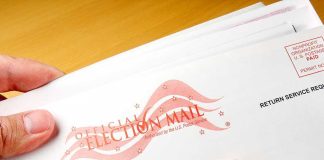
Federal prosecutors in New Orleans say 51-year-old Denise Nataly Migliore, a lawful permanent resident from Australia living in Franklinton, Louisiana, twice claimed to be a United States citizen so she could vote in federal elections. According to the indictment, they allege she falsely said she was a citizen when registering on October 6, 2022, and October 22, 2024, then cast ballots in the November 2022 and November 2024 federal elections. Each count carries up to five years in prison, supervised release, and a large fine if she is convicted.
The United States Attorney’s office stresses that an indictment is only a formal charge, not proof of guilt, and that the government must still convince a jury beyond a reasonable doubt. Still, officials frame the case as a clear example of noncitizen voting, which is illegal in federal and state elections under long-standing federal law. Homeland Security Investigations and the Federal Bureau of Investigation are credited in the press release for uncovering the alleged false claims and illegal ballots, signaling that top federal law-enforcement agencies are treating such cases as serious crimes.
How Louisiana’s ‘Election Integrity’ Push Flagged the Case
Louisiana Secretary of State Nancy Landry says Migliore’s indictment is a direct result of the state’s new push to hunt for noncitizens on the voter rolls using the federal Systematic Alien Verification for Entitlements, known as the SAVE database. Landry reports her office has identified 83 noncitizens who have voted in at least one Louisiana election since the 1980s, including multiple people currently under investigation. Under a new state law signed by Governor Jeff Landry, future secretaries of state must continue using the SAVE database to cross-check registered voters against federal immigration records.
Landry describes a simple but powerful process: the database compares lists of registered voters to federal records and flags names that appear to belong to noncitizens; her Election Integrity Division then investigates each case to confirm whether the person is allowed to vote. Supporters say this kind of check is needed because federal law makes it a crime for noncitizens to vote, and voters must swear they are citizens when they sign up. Critics on both the left and the right worry that big databases and aggressive sweeps can mislabel legal voters, and that political leaders may use rare cases like Migliore’s to push broader crackdowns that do more to scare people than to fix real problems.
Rare Problem, Big Politics, and Missing Facts
Research groups across the political spectrum agree that proven cases of noncitizen voting are extremely rare compared with the tens of millions of ballots cast in each national election. One review of noncitizen voting claims found that suspected cases made up far less than a tiny fraction of one percent of all voters, and that most alerts turned out to be data errors or status changes, not fraud. That pattern fits Louisiana’s numbers: 83 suspected noncitizen voters over roughly four decades is not nothing, but it is a drop in the bucket compared with all votes cast over that time.
🗳️ ICE Arrests Australian National for Voting in Two Federal Elections
ICE arrested Denise Nataly Migliore, a lawful permanent resident from Australia, on July 1 at a federal courthouse in New Orleans after a Homeland Security Investigations probe found she allegedly cast… pic.twitter.com/WMDccRzVzf
— ronald ham (@ronaldham15) July 8, 2026
Yet the Migliore case is already part of a larger fight. National outlets like the New York Post and ABC report that President Donald Trump has pointed to the indictment as a warning to “aliens” who might consider voting, and the Department of Homeland Security social media account is pushing the message that “only Americans should elect American leaders.” For many conservatives, this looks like long-overdue enforcement after years of loose borders and weak election checks. For many liberals, it feels like another example of “America First” politics used to justify harsh treatment of immigrants, even when the actual numbers show noncitizen voting is extremely rare.
What We Still Do Not Know
Despite strong official language, key facts are still hidden from the public. The indictment describes false claims of citizenship but does not show the actual voter registration forms or give direct quotes from Migliore’s applications. Her specific ballots have not been publicly identified or authenticated, and there is no released court transcript explaining her side of the story or any defense argument about her intent or understanding of the rules. So far, there is also no detailed evidence from local election officials on what they saw when she registered or voted.
That gap matters in a country already split and frustrated with its leaders. People on the right and the left both worry that elites in Washington talk about “integrity” while basic systems still fail, whether on immigration, voting, or the economy. Many citizens now assume government agencies hide important details, spin rare cases into political weapons, or ignore deeper problems like outdated voter databases and confusing rules for immigrants on the path to citizenship. Until more evidence in the Migliore case is public, it will continue to serve less as a settled fact and more as a symbol of a system that many Americans, whatever their party, feel they can no longer fully trust.
Sources:
thegatewaypundit.com, abc.net.au, youtube.com, foreign.senate.gov, x.com, foreignpolicy.com, digitalcommons.odu.edu, bipartisanpolicy.org, brennancenter.org, americanimmigrationcouncil.org, forumtogether.org, electioninnovation.org