
Burned flags outside Ayatollah Ali Khamenei’s funeral procession turned a grief ritual into a blunt political message.
Quick Take
- Iranian state and media reports described enormous funeral crowds, with officials projecting attendance in the millions.
- Some mourners burned United States and British flags, reinforcing the anti-Western tone of the ceremony.
- Foreign delegations also appeared, which gave the event a wider political reach than a domestic funeral alone.
- Questions remain about how much of the turnout reflected raw public feeling versus state-driven choreography.
A Funeral That Became a Show of Power
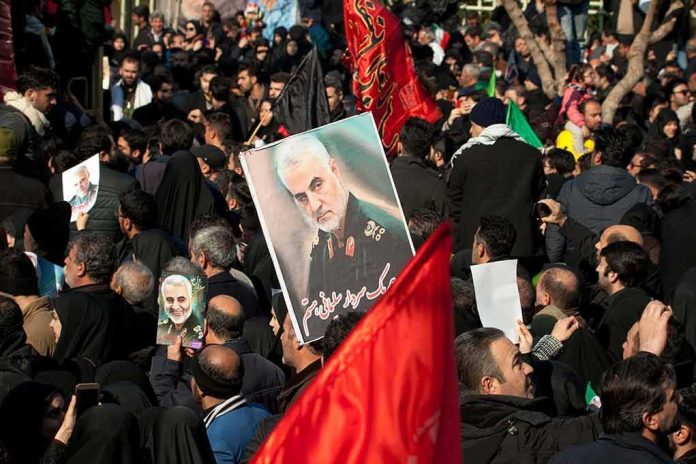
The procession for Khamenei was never just about mourning. It also became a public test of loyalty, anger, and control. Official reporting said the crowds were massive, with Iranian authorities and some outlets describing the event as historic and expecting millions to appear across the funeral route and burial sites. That scale mattered because, in Iran, size is never only about size. It is a signal of strength.
Reports from Tehran said the mourning was intense, with crowds chanting anti-United States and anti-Israel slogans while some people burned flags. Al Jazeera and The New York Times both described chants such as “Death to America” and “Death to Israel,” while other reports noted the burning of American and Israeli flags at earlier state funerals tied to wartime losses. In this setting, the flags were not a side detail. They were the point.
Why the Flags Mattered So Much
Flag burning at a funeral is not random anger. It is theater with a target. The United States and United Kingdom flags turned the procession into a sharp visual warning to foreign enemies and to domestic critics at the same time. Iran has used this kind of symbolism before. During the funeral for Qassem Soleimani in 2020, Reuters-style reporting and other coverage described mourners burning American and Israeli flags and calling for retaliation. The Khamenei funeral followed that same script, only on a larger political stage.
The message was built for cameras and for memory. Supporters wanted the world to see a nation united in grief and defiance. Critics saw something else: a tightly managed public display designed to prove the regime still commands the street. That divide sits at the heart of the story. The same flames that looked like rage to one viewer looked like propaganda to another.
What the Crowds Said About the Regime
Several reports said the funeral drew foreign delegations, including leaders or senior representatives from Pakistan, Turkey, Qatar, and Saudi Arabia. That gave the event diplomatic weight. It also helped Tehran frame the funeral as more than a domestic ceremony. The regime wanted the world to read the day as proof of endurance after war, sanctions, and assassination. In that sense, the procession worked like a political billboard placed along the city’s most visible roads.
Hundreds of thousands of mourners flooded the streets of Tehran on Monday as Iran transformed the funeral of Supreme Leader Ayatollah Ali Khamenei into a display of defiance.
Read full story: https://t.co/MMSD0YWbL1
.
.
Have a tip? Get in touch: 672-5555 pic.twitter.com/kbqxl4HSlm— News 5 Live (@News5Live) July 6, 2026
But there is another layer. Some accounts noted that crowds were smaller than the official language suggested, and that the event moved with heavy state control. Those details do not erase the presence of mourners. They do, however, raise a serious question: how much of what the world saw was spontaneous and how much was organized? In authoritarian systems, the answer is often both. Real grief can exist inside a staged display.
What This Moment Reveals About Iran
Khamenei’s funeral showed how the Iranian state uses public ritual. It gathers supporters, isolates opponents, and sends a message abroad in one sweep. That is why the flags mattered so much. They condensed the whole event into one image: Iran grieving its leader while warning its enemies. At the same time, the ceremony exposed the regime’s limits. A government that must choreograph unity this carefully is still fighting for legitimacy, not just remembrance.
The deeper story is not whether every mourner believed the same thing. It is that the funeral became a contest over meaning. Was it a genuine outpouring of loyalty, or a managed display of power? The available reporting supports both elements, but not in equal measure. The flags, the chants, the foreign guests, and the disputed crowd size all point to one hard truth: in Tehran, even mourning is political.
Sources:
youtube.com, cnbc.com, cnn.com, jpost.com, aljazeera.com