One courtroom hearing has turned a murder case into a public test of proof, sympathy, and hard evidence.
Quick Take
- Erika Kirk is expected to attend a major hearing in the Tyler Robinson case this week.
- The state says it has DNA evidence, a recorded confession, and other proof tying Robinson to the killing.
- The defense is attacking the ballistics, witness handling, and prosecutor conduct instead of denying every fact head-on.
- The hearing matters because it may shape how strong the case looks before trial, and whether the death penalty stays in play.
The Hearing That Puts the Family in the Front Row
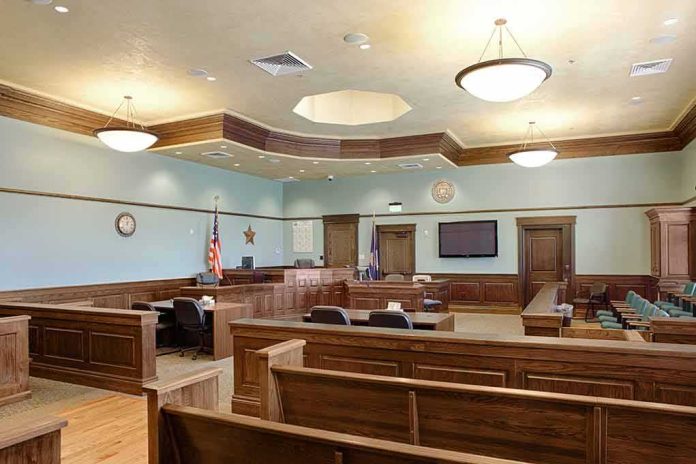
Charlie Kirk’s widow is expected to be in court for a week-long hearing in Provo, where Tyler Robinson faces his first major test of evidence. That detail gives the case a sharp human edge. This is not just about filings and motions. It is about a grieving family watching the state and the defense fight over what the evidence means, what it proves, and what it leaves uncertain.
Robinson is charged with aggravated murder, and prosecutors have said they intend to seek the death penalty. A related report says the charge includes a political-targeting enhancement, which makes the case even heavier in both legal and public terms. The legal issue is simple to state, but hard to unwind: did Robinson kill Charlie Kirk, and can the state prove that beyond a reasonable doubt with evidence strong enough to survive attack?
What the State Says It Has
The prosecution’s case leans on several kinds of proof, not just one dramatic moment. Reporting says authorities found DNA consistent with Robinson on the rifle trigger, fired casing, unfired cartridges, and a towel used to wrap the weapon. Other accounts say prosecutors also rely on a recorded statement from Lance Twiggs that ties Robinson to the killing, the weapon, and the disposal of clothing.
That combination matters because juries usually do not convict on one fact alone when a case grows this serious. A DNA hit can place a person near a weapon. A confession can give motive and sequence. Timeline evidence can show movement after the crime. Put together, the state appears to be building a layered story, one designed to withstand the normal defense argument that any single item can be questioned in isolation.
Where the Defense Sees Weak Spots
The defense has not tried to ignore the case’s emotional force. It has instead pushed on the seams. One motion cites an ATF summary saying the agency was unable to identify a bullet fragment from Kirk’s neck as coming from Robinson’s rifle. That claim does not erase other evidence, but it does give the defense a way to argue that the physical chain from gun to victim is not as clean as prosecutors want it to look.
………..The five-day preliminary hearing that began on Monday for Tyler Robinson, the 23-year-old accused of assassinating conservative activist Charlie Kirk at Utah Valley University.
Even when prosecutors have a massive amount of evidence—including a suspect's DNA on the…
— JV (@joveg8) July 6, 2026
The defense is also pressing on witness credibility. Court filings say Lance Twiggs received full immunity and will not be compelled to testify live at the hearing, leaving the state to rely on a recorded statement. That creates an opening for the defense, because cross-examination is where weak points often show up. If the witness cannot be questioned in person, the defense can argue that the state is asking the court to trust a voice without exposing it to full scrutiny.
Why the Prosecutor Contempt Ruling Matters
The case is also complicated by a contempt finding against Deputy Utah County Attorney Christopher Ballard for violating a gag order. That ruling does not decide guilt or innocence. It does, however, give the defense fresh material. In a case this charged, any suggestion that prosecutors talked too freely to the press can feed claims of bias, overreach, or a rush to judgment. In a conservative county, that kind of fight can matter more than outsiders expect.
The defense has used that opening to argue that prosecutors ran a “willful media tour” meant to shape public opinion. This is not a direct rebuttal to the murder charge. It is a challenge to the process around the charge. That distinction is important. Courts can tolerate aggressive advocacy. They cannot ignore conduct that seems to poison a jury pool. Even when the evidence is strong, bad procedure can still slow a case, distort its public image, or force extra hearings.
The Real Test This Week
This hearing is less about a final verdict than about pressure points. The state wants to show that its proof hangs together. The defense wants to show that parts of the story are still incomplete, contested, or filtered through people with reasons to help the prosecution. Erika Kirk’s presence in the room will keep the case grounded in the loss that started all of this. Yet the legal outcome will turn on something colder: whether the evidence can hold up when the lights are brightest.
Sources:
nypost.com, independent.co.uk, lovebscott.com, yahoo.com, youtube.com, cnn.com