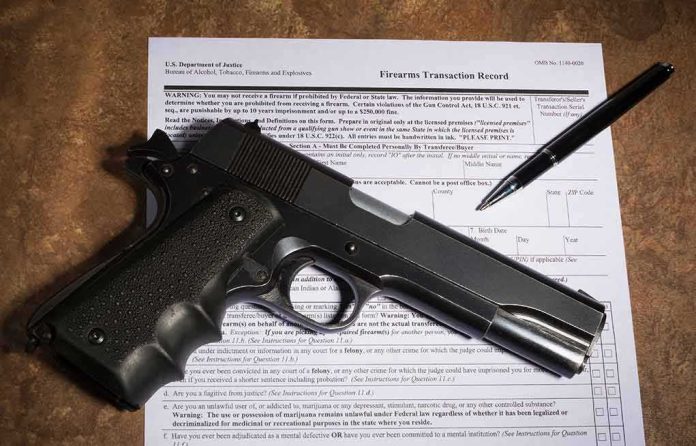
The fight over whether ordinary Americans should be able to mail handguns through the U.S. Postal Service is not just a procedural tweak in shipping rules; it is a direct clash between a century-old crime‑control framework and a newly assertive vision of Second Amendment rights, with substantial implications for gun trafficking, background checks, and the business models of online gun sellers.
Key Points
- The proposed USPS rule would, for the first time in roughly 100 years, let private individuals mail handguns much like rifles and shotguns, including intrastate transfers without a licensed dealer.
- Critics warn this effectively creates a nationwide “background‑check bypass” channel, enabling prohibited buyers to receive guns by mail and complicating gun tracing and enforcement.
- The rule is grounded in a DOJ Office of Legal Counsel opinion that the long‑standing handgun mailing ban violates the Second Amendment, reflecting the broader post‑Bruen expansion of gun rights.
- If adopted, the change would open significant commercial opportunity for online retailers and logistics‑savvy gun companies, while exposing USPS to legal and safety battles with states and gun‑violence advocates.
What the USPS Handgun Proposal Actually Does
The starting point is the proposed rule, “Revised Mailing Standards for Firearms,” published by the Postal Service after the Department of Justice concluded that the federal handgun mailing ban is unconstitutional. For nearly a century, 18 U.S.C. § 1715 has treated pistols, revolvers, and other concealable firearms as “nonmailable” for ordinary people, with narrow exceptions for law enforcement, licensed manufacturers, and similar entities. Under current rules, non‑licensees may mail long guns (rifles and shotguns) in certain circumstances, but not handguns.
The proposal would move handguns into the same regulatory bucket as long guns: “mailable firearms” that individuals can send through USPS, provided they are unloaded and packed according to postal standards. It explicitly allows intrastate mailing of lawful handguns from one private individual to another without routing the transfer through a federally licensed firearms dealer. It also authorizes out‑of‑state shipments when the gun is mailed to the sender “in care of” someone at the destination, with the sender required to be physically present to take possession on arrival.
Operationally, the proposal does impose some safeguards. Mailers must use tracking and signature capture services, and packages cannot be marked in a way that reveals they contain firearms. But critically, the rule does not build any background‑check mechanism into the postal transaction: USPS would not verify eligibility; it would simply carry a lawful commodity as defined in postal and federal firearms law.
The Constitutional Argument Driving the Change
The legal engine behind this proposal is a January 15, 2026 opinion from DOJ’s Office of Legal Counsel (OLC). OLC concluded that the 1927 mailing ban, as applied to “constitutionally protected firearms,” violates the Second Amendment because it prevents law‑abiding citizens from shipping and receiving arms in common use, such as handguns, for lawful purposes like self‑defense, hunting, and sport shooting.
OLC’s view is straightforward: if Congress chooses to operate a parcel service, it cannot selectively refuse to carry constitutionally protected firearms for law‑abiding citizens merely because they are concealable. On that reasoning, DOJ announced it would no longer enforce § 1715 against protected firearms, and it urged USPS to bring its regulations into line with this constitutional interpretation.
This opinion sits within the broader post–Supreme Court trend of reading the Second Amendment more expansively—Heller’s recognition of handguns as the “quintessential” self‑defense weapon, and Bruen’s insistence that modern gun regulations must be consistent with historical tradition. Gun‑rights groups have seized on the USPS proposal as a symbolic victory: the NRA, for example, has framed it as “restoring a long‑denied right” and declared that “the Second Amendment doesn’t stop at the post office.”
Why Safety Advocates See a Trafficking Loophole
Gun‑violence prevention organizations and many state attorneys general take a very different view. Their central concern is not that USPS will carry guns at all—they already carry long guns in some contexts—but that handguns, the dominant crime gun, will now move in a channel that bypasses the usual gatekeepers: licensed dealers and background checks.
Brady, Everytown, and others have laid out a clear scenario. Under the proposed rule, a person legally barred from possessing a firearm—because of a felony conviction, domestic violence order, or other disqualifying factor—could arrange for a third party to buy a handgun and mail it directly to them. No NICS background check would ever occur, because the transaction never passes through a Federal Firearms Licensee (FFL), and USPS has neither the authority nor the tools to vet the recipient.
Everytown’s comment is blunt: someone who cannot pass a background check “could have a handgun delivered to their front door by the USPS without any background check involved,” including convicted felons, domestic abusers, fugitives, and others the law is designed to keep from acquiring guns. Brady extends that concern to cross‑border trafficking, arguing that the rule would enable firearms to be mailed into states with stricter purchase and transfer rules, in violation of those states’ statutes.
A multistate coalition led by Democratic attorneys general similarly argues that USPS “recognizes no statutory obligation” to ensure that mailed firearms comply with receiving states’ purchase and possession laws. Their criticism is structural: a national parcel carrier, they contend, cannot simply declare compliance an obligation of the sender and addressee, then wash its hands of how its system may be used to defeat state regulatory regimes.
The Legacy of the 1927 Ban and Why Handguns Are Different
To understand the alarm, you have to go back to why handguns were singled out in the first place. In 1927, Congress barred mailing of “concealable firearms” through USPS as part of a broader effort to reduce crime and limit easy, anonymous shipment of weapons around the country. The statute reflected a judgment that the combination of concealability, lethality, and ease of transport posed a special threat when paired with a ubiquitous federal mail service.
Long guns remained mailable under certain conditions, but handguns were treated as categorically riskier. That distinction still matters. In modern crime data, handguns overwhelmingly dominate as the weapons used in homicides and robberies; whatever one’s view of gun rights, any regulatory change that makes handguns more mobile and less traceable will raise questions about downstream impact on violent crime.
The traceability concern is twofold. First, transfers conducted by mail between private parties may lack the paper trail associated with dealer transactions, especially in states without robust record‑keeping for private sales. Second, when guns move across state lines via private mail, they can cross from jurisdictions with weaker rules to those with stronger ones, complicating enforcement and investigation when a mailed gun later surfaces at a crime scene.
State Attorneys General vs. DOJ: A Clash of Legal Theories
The most pointed opposition comes from the coalition of roughly twenty–two state attorneys general who argue the rule is flatly unlawful because the Postal Service cannot “partially repeal” a criminal statute by regulation. In their view, § 1715 still bars direct receipt of concealable firearms by private individuals unless a licensed retailer is involved; DOJ’s OLC opinion may constrain federal prosecutions, but it does not erase the statute, and USPS lacks authority to declare pistols and revolvers “mailable” for everyone.
This is a deeper separation‑of‑powers argument. The AGs contend that only Congress can rewrite the underlying statute; until it does, USPS must operate within § 1715’s constraints. They also highlight the statutory duty of federal agencies to respect state firearms laws when their activities could facilitate violations, casting the postal rule as an intrusion into state police powers.
DOJ, for its part, has emphasized that the aim is to create “simpler, clearer regulations that do not compromise ATF’s ability to perform its critical missions to protect American communities from violent crime.” The agency is explicitly weighing comments from both gun‑rights and gun‑safety organizations before finalizing the rule. Yet, as critics point out, DOJ and ATF have not released detailed empirical analyses showing that allowing handgun mailing will not increase trafficking or impede tracing; the case is being made primarily on constitutional grounds and generalized assurances about enforcement capacity.
Economic Interests and the Role of Online Gun Retailers
Beneath the legal and safety arguments lies a significant commercial stake. Private carriers like UPS and FedEx generally restrict firearm shipments to FFLs, and DHL prohibits firearm shipments outright. If USPS opens its network to ordinary handgun mailings, it instantly becomes the only major carrier willing to move handguns for non‑licensees.
That shift creates obvious opportunity for companies built around remote gun commerce. Online retailers and marketplace platforms can more seamlessly integrate USPS into their business models, making it easier for buyers and sellers to transact without local dealers acting as shipping hubs. Public materials from firms like GrabAGun, which emphasize “modernizing the way firearms are bought and sold” through software‑driven logistics, suggest how attractive a liberalized postal environment would be to such players.
Supporters of the rule lean into this economic argument. DOJ representatives have spoken of “economic benefit” and the potential for USPS to “make a lot of money” if it can safely carry firearms, positioning the rule partly as a lifeline to a financially strained postal system. To critics, that framing underscores their worry about regulatory capture: when postal finances and industry profits stand to gain from expanded gun commerce, pressure may tilt away from caution and toward permissive rules that prioritize volume over safety.
How This Fits Into the Broader Gun Policy Landscape
The USPS handgun proposal is not happening in isolation. It is one front in a larger campaign to strip away what gun‑rights advocates describe as “onerous” or “outdated” regulations—from state handgun rosters and feature requirements, to bans on particular models, to restrictions on where and how guns may be carried. The DOJ’s move against California over its handgun restrictions, for example, rests on the same constitutional template: modern handguns in common use are protected arms, and states or agencies that block access face legal challenge.
On the other side, safety advocates and many states are focused on plugging gaps that allow guns to move around traditional safeguards. They point to gun‑show loopholes, private sale exceptions, and now potential mail‑order pathways as structural weaknesses in the background‑check system. In comments on the USPS rule, organizations like Brady and Everytown stress that federal parcel infrastructure is uniquely powerful: once a handgun can travel through USPS without dealer oversight, any local effort to regulate point‑of‑sale conduct can be undermined by an unmonitored shipment from elsewhere.
In that sense, the mailing debate is a test case for how far constitutional claims will reach into the logistics layer of gun commerce. Is the Second Amendment merely a right to possess and carry firearms, or does it also encompass an entitlement to have those firearms shipped by a federal carrier on request? DOJ’s OLC has taken a strong position on that question; the courts, if and when the multistate coalition’s promised litigation materializes, will decide whether that view holds.
Practical Risks, Unanswered Questions, and What Comes Next
From an operational perspective, USPS faces a set of practical questions that have not yet been fully answered. Gun‑violence groups argue that the proposal “unreasonably expects U.S. postal workers to understand and navigate complex federal, state, and local gun laws,” exposing them to liability and safety risks. Training frontline clerks to distinguish lawful from unlawful shipments is unrealistic; the rule essentially assumes compliance and places the burden on mailers and recipients.
There is also the question of enforcement. If a prohibited person receives a handgun by mail and later uses it in a crime, investigators must reconstruct an informal private transaction rather than a dealer record, and they must do so across state lines using postal data not designed for law‑enforcement trace work. Critics argue this will “obstruct gun tracing for violent offenses,” as Giffords and others have warned. Supporters respond that ATF’s core tracing tools remain intact and that criminals already move guns through many channels; they see the rule as primarily benefiting lawful owners shipping firearms for repair, relocation, or sporting use.
Empirical answers are thin. No comprehensive ATF study has yet compared tracing outcomes for guns acquired via mail versus other private transfer methods, and USPS has not released detailed safety audits of worker exposure to firearms under the proposed regime. Those gaps matter, because they leave the policy debate to be decided largely on principle—constitutional rights and theoretical risks—rather than on hard data about how mail‑based gun movement would operate in practice.
What is clear is that any final rule will be litigated. The coalition of state attorneys general has telegraphed its intention to challenge USPS in court, arguing that the agency has overstepped its statutory bounds and undermined state law. If the rule does take effect, companies deeply invested in online gun sales and shipping technologies are well positioned to benefit, while enforcement agencies and communities will be left to manage whatever consequences emerge.
Sources:
feedpress.me, thelensnola.org, thehill.com, reddit.com, youtube.com, facebook.com, instagram.com, federalregister.gov, bradyunited.org, finance.yahoo.com, firearmslaw.duke.edu, linkedin.com, investors.grabagun.com, stephens.com