

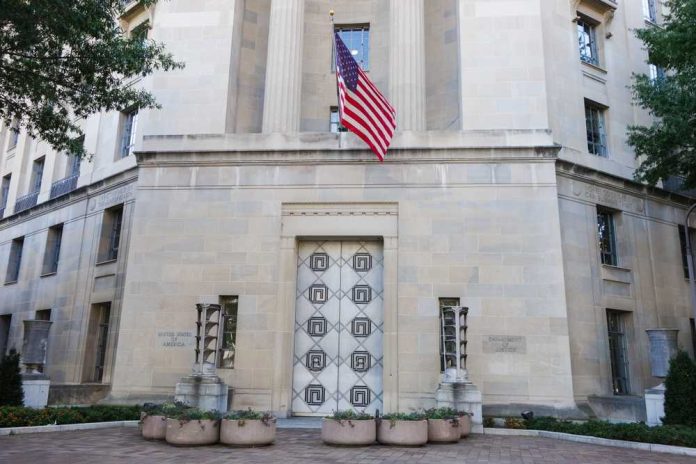
An Afghan migrant accused of ambushing two National Guard heroes just blocks from the White House now faces federal death‑penalty charges — and the case exposes how past policies put Americans in danger while today’s Justice Department works to hold him fully accountable.
Story Snapshot
- Federal prosecutors have filed a 17-count superseding indictment that makes Rahmanullah Lakanwal death‑penalty eligible if convicted.
- He is accused of ambushing West Virginia National Guard members Sarah Beckstrom and Andrew Wolfe near the White House, killing one and critically wounding the other.
- The case moved from local D.C. court, which has no death penalty, into federal court so the government can pursue the toughest possible punishment.
- Lakanwal, an Afghan national who previously worked with the Central Intelligence Agency (CIA), has pleaded not guilty, and questions remain about how he entered and stayed in the United States.
Deadly Ambush On National Guard Near The White House
Federal prosecutors say Rahmanullah Lakanwal traveled from Bellingham, Washington, to Washington, D.C., with a stolen firearm and carried out a planned ambush on November 26, 2025. He is accused of shooting West Virginia Army National Guard Specialist Sarah Beckstrom and United States Air Force Staff Sergeant Andrew Wolfe as they stood watch near the Farragut West Metro station, only a few blocks from the White House and the heart of the federal government. Beckstrom was killed in the attack, and Wolfe was left in critical condition, turning a routine security patrol into a national tragedy.
The National Guard members were in D.C. as part of President Trump’s federal law‑enforcement surge to crack down on crime and protect key sites in the capital. They were doing exactly what many Americans respect our military for: guarding public spaces, backing up local police, and standing between everyday citizens and those who would do harm. Prosecutors describe the shooting as an ambush‑style attack, suggesting the shooter waited for an opening and fired without warning, targeting uniformed service members precisely because of their mission.
From D.C. Court To Federal Death‑Penalty Case
After the shooting, the case first landed in District of Columbia Superior Court, where Lakanwal was charged under local law with first‑degree murder, assault with intent to kill, and illegal gun possession. The District of Columbia does not allow the death penalty, so even the most serious conviction there could never lead to capital punishment, despite a fallen soldier and another gravely wounded airman. As the facts developed, prosecutors shifted the case into federal court and built a broader indictment, using federal law to match the punishment to the alleged crime.
The United States Attorney’s Office for the District of Columbia has now filed a 17‑count superseding indictment, dramatically expanding the charges. Those counts include first‑degree murder, attempted murder of a person assisting a federal officer, transport of a stolen gun across state lines, and several firearm offenses tied to crimes of violence. According to the Justice Department, six of these federal counts are death‑penalty eligible, meaning they legally allow capital punishment if a jury finds Lakanwal guilty and the Attorney General approves seeking that sentence.
Death‑Penalty Review And The Fight Over Evidence
Under the federal death‑penalty system, the Department of Justice must follow a strict review process before asking for a capital sentence. The superseding indictment in Lakanwal’s case includes special findings by a grand jury, such as that he “intentionally” killed Beckstrom and attempted to kill more than one person, which are key legal steps toward a possible death‑penalty request. These findings send the case to the Justice Department’s Capital Case Committee, which studies the evidence and recommends whether the government should pursue execution instead of life in prison.
At his latest court hearing, Lakanwal pleaded not guilty to all counts, forcing prosecutors to prove every allegation at trial. His defense team has pushed for more information about his past work with the Central Intelligence Agency in Afghanistan and his mental health history, arguing that the government must share all relevant records before any capital case moves forward. A federal judge has set another hearing for September and has not yet scheduled a trial, signaling that evidence and procedure issues still need to be sorted out before a jury can weigh guilt and punishment.
Afghan Vetting, Border Security, And Public Safety Questions
Media reports describe Lakanwal as a 29‑ or 30‑year‑old Afghan national who previously worked with the Central Intelligence Agency as part of America’s war effort overseas. That background raises serious questions for many Americans about how he was vetted before entering or staying in the United States, and whether past “refugee” or partner programs under earlier administrations allowed dangerous individuals to slip through the cracks. Those questions are especially sharp when a foreign national stands accused of killing a young American soldier guarding the capital.
Attorney General Pam Bondi has said the Justice Department plans to seek the death penalty in the case, calling Lakanwal “a monster who should not have been in our country.” Her comments reflect deep anger many families feel when they see violent crimes by non‑citizens and when they remember years of loose border controls and rushed resettlement programs. At the same time, federal officials stress that an indictment is only an accusation and that every defendant, including Lakanwal, is presumed innocent unless and until a jury finds him guilty beyond a reasonable doubt.
What This Case Signals For Law And Order
For conservative Americans, this case highlights two truths at once: the damage caused by past policies that weakened vetting and border security, and the importance of a strong, law‑and‑order Justice Department now that the federal government is under Trump‑era leadership again. The alleged ambush took place blocks from the White House, against National Guard members sent to restore order, showing how quickly evil can strike when weapons and bad actors move freely across state lines.
If a jury credits the government’s evidence, the federal death‑penalty framework is designed to make sure the punishment fits the crime, especially when a service member is killed in the line of duty. The Justice Department’s process is slow and complex, but that is meant to protect constitutional rights while still allowing the harshest sentence for the worst offenses. Many readers will watch closely to see whether prosecutors follow through on seeking the death penalty and whether the system delivers justice for Beckstrom, Wolfe, and every American who expects their capital to be safe.
Sources:
cbsnews.com, thehill.com, abc7ny.com, abcnews.com, facebook.com, x.com, military.com, nytimes.com, fox5dc.com, youtube.com