
A combative “Meet the Press” showdown between President Trump and Kristen Welker is exposing once again how corporate media turns tough questions for Democrats into a prosecutorial inquisition only when a Republican is in the chair.
Story Snapshot
- President Trump clashed with NBC’s Kristen Welker over Iran, January 6 defendants, and 2020 election questions before walking out of the interview.[1]
- Trump defended plans to help January 6-related defendants through an anti‑weaponization fund, while critics spun it as paying off “allies.”[1][2]
- Welker pressed Trump on his Iran strategy and “no new wars” pledge, reflecting a long-running media pattern of treating Republican foreign policy as presumptively reckless.[1][4]
- The dust‑up highlights the deeper battle between conservative America and legacy outlets that many viewers see as fact‑checkers for the left and cross‑examiners for the right.[1][3]
Trump’s Clash With Welker: What Really Happened in the Interview
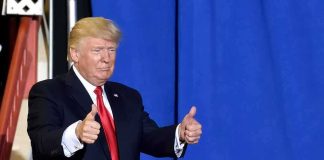
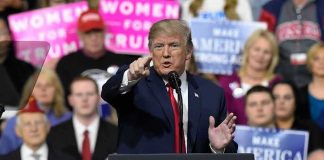
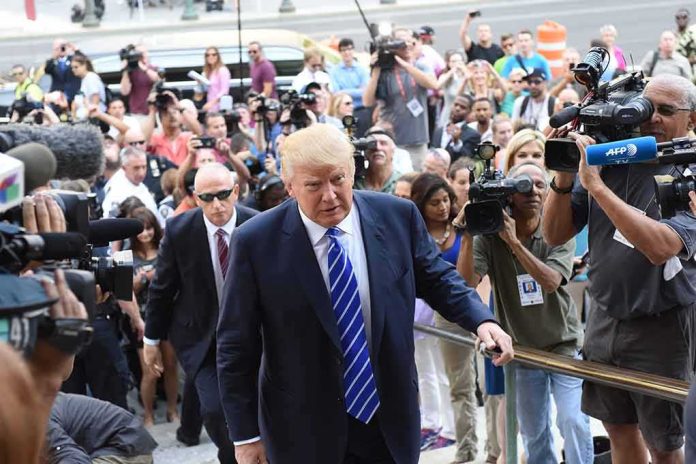
President Donald Trump’s latest appearance on NBC’s “Meet the Press” quickly shifted from a policy discussion into a test of wills between the president and host Kristen Welker.[1][2] During the wide‑ranging interview, Welker pressed Trump on Iran, the 2020 election, and his past language about “no new wars,” while Trump repeatedly accused the network of weaponizing questions and ignoring context that mattered to his voters.[1][4] After a tense exchange over election challenges, Trump abruptly ended the interview and walked off.[1]
Coverage from legacy and partisan outlets immediately framed the exchange as either a Trump “meltdown” or another example of biased media badgering a sitting president.[1][3] Left‑leaning commentators emphasized Trump’s frustration and portrayed his exit as proof he could not defend his record on Iran or the 2020 race.[3] Conservative voices instead argued that Welker’s style crossed the line from moderator to adversary, focusing more on policing Trump’s rhetoric than on explaining the policies affecting American families and national security.[1][3]
January 6 Defendants, ‘Weaponization,’ and Media Spin
A major flashpoint was Trump’s discussion of Americans prosecuted in connection with January 6, whom he linked to broader “weaponization” of the justice system against his supporters.[1][2] In the full NBC episode, Trump said that if it were up to him, he would pay them “the kind of money that they deserve,” and described wanting a fund for people he believes were harmed by political targeting.[2][1] Axios and other outlets summarized this as a scrapped $1.8 billion plan to compensate his “allies,” flattening important distinctions Trump tried to draw.[1]
Trump’s supporters see this as a necessary pushback against a system that threw the book at some protesters while turning a blind eye to left‑wing rioters in earlier years.[1] Welker’s questions, however, largely followed the establishment framing that casts any sympathy for January 6 defendants as dangerous or anti‑democratic.[1][3] Instead of exploring how federal power has been used against conservative activists, the focus stayed on whether Trump’s words supposedly “enabled” wrongdoing, reinforcing the idea that speech from the right is uniquely suspect while aggressive tactics by federal agencies are treated as routine governance.[1][3]
Iran, ‘No New Wars,’ and How Republicans Get Questioned
The interview also centered on Trump’s handling of the ongoing conflict with Iran and whether launching a war there violated his “no new wars” campaign message.[1][4] Trump responded that he had never guaranteed the absolute absence of any conflict, but insisted that Iran “is not an endless war” and that his strategy aimed to end the threat decisively, not sink America into another forever conflict.[1][4] He warned that slow negotiations and weakness could invite escalation, emphasizing that strong deterrence and clear red lines protect American troops and allies.[1][4]
Welker pressed Trump on these statements, portraying his posture as potentially inconsistent and risky, which mirrors how national media frequently handles Republican foreign policy.[1][4] When Democrats oversee prolonged interventions, coverage often focuses on nuance, competing pressures, and the difficulty of global leadership.[2] When a Republican talks tough, many outlets immediately jump to words like “reckless,” “escalatory,” or “betrayal” of campaign promises.[1][2] Trump’s argument—that decisive strength can stop a war before it spreads—received less oxygen than the angle that he had supposedly broken a slogan, again matching a familiar media template.[1][4]
Election Legitimacy, Media Narratives, and the Walk‑Off Moment
The breaking point came when Welker repeatedly questioned Trump about his challenges to the 2020 election, echoing years of commentary that labels his claims as “rigged election conspiracies.”[3] Outlets hostile to the president described him as going “verklempt” and losing control when pressed on evidence, while portraying the host as simply upholding “journalistic accountability.”[3] For millions of conservatives, this looked more like a prosecutor cross‑examining a defendant than a journalist interviewing a president about current policy and future plans.[1][3]
‘I’ve Had Enough, Thank You Darling’: Trump Walks Out On NBC Interview: by Harold Hutchison at CDN –
President Donald Trump frequently sparred with “Meet the Press” host Kristen Welker about multiple topics before cutting the interview short. Trump… https://t.co/hwbkLURjyN pic.twitter.com/ABx4w1JUNo
— Conservative Daily News (@CDNPosts) June 8, 2026
Trump eventually cut off the exchange with “I’ve had enough,” thanked Welker, and walked out, prompting a wave of viral clips and social media pile‑ons. Critics rushed to frame the moment as proof he cannot face tough questions, yet many viewers remember years when Democrats were allowed to question elections—from Florida in 2000 to Russia‑collusion narratives—without being treated as pariahs.[3] The episode underscores a deeper problem: legacy outlets like NBC still expect conservative America to trust referees who call the game differently depending on which team has the ball.[1][3]
Sources:
[1] Web – Launches greatest hits against ‘MEET THE PRESS’ host…
[2] Web – 5 key moments from Trump’s cut-short “Meet the Press” interview
[3] YouTube – Meet the Press Full Episode — June 7
[4] Web – The Trump Meet the Press interview that spun out of control after he …