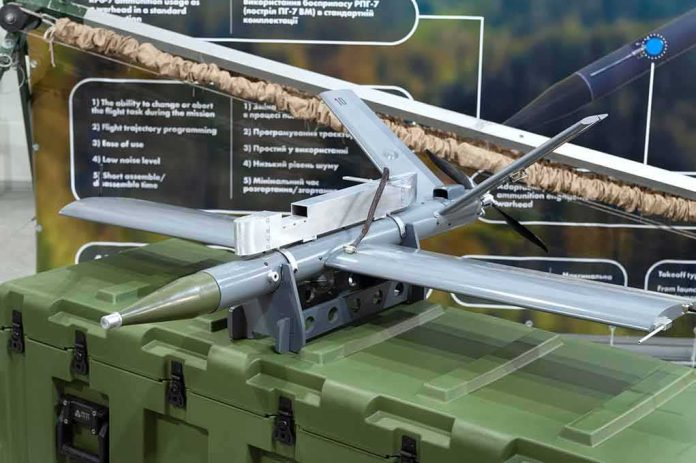
A young American father was just killed by an Iranian attack drone in Iraq, raising hard questions about why our troops are still exposed to growing drone threats overseas.
Story Snapshot
- Sgt. Michael Emmanuel Swinton, 30, was killed disarming a downed Iranian attack drone at Erbil Air Base in Iraq.
- The Department of War says he died during a controlled detonation meant to protect fellow soldiers, and the incident is under investigation.
- His death highlights how cheap enemy drones now threaten U.S. forces even after they are shot down.
- Swinton will be posthumously promoted and awarded the Bronze Star, Purple Heart, and Combat Action Badge for his sacrifice.
Who Sgt. Michael Swinton Was And How He Was Killed
The Department of War identified Sgt. Michael Emmanuel Swinton, 30, of Fayetteville, North Carolina, as the U.S. service member killed during a controlled detonation of a downed Iranian one-way attack drone at Erbil Air Base in northern Iraq on July 19, 2026. Officials say he was killed in action while disposing of unexploded ordnance from the drone, in an operation meant to safely remove the threat to other troops on the base. The incident remains under investigation, with early reports noting at least one other service member suffered minor injuries in the blast.
Military statements stress that Swinton died while “safeguarding fellow soldiers,” underscoring that the danger did not end when the drone was shot down. According to a U.S. official cited in reporting, Swinton was not the person who triggered the detonation, but was killed by flying debris from the blast once the explosives on the drone were set off. This tragic detail shows how even careful disposal work around these drones can turn deadly in an instant. The Department of War has said more facts will be released once the investigation is complete.
His Unit, Service Record, And Honors For His Sacrifice
Sgt. Swinton served as an Air Defense Early Warning System Operator, a role focused on spotting and tracking air threats so commanders can act before they hit U.S. forces. He enlisted in the Army in 2017 and was assigned to D Battery, 2nd Battalion, 55th Air Defense Artillery Regiment, 108th Air Defense Artillery Brigade, based at Fort Bragg, North Carolina. That brigade is part of the Army’s larger air and missile defense mission, which today includes detecting and countering hostile drones, missiles, and rockets aimed at American troops and allies in the Middle East and beyond.
Commanders have already announced that Swinton will be posthumously promoted to staff sergeant, a mark of trust and responsibility he earned through nearly a decade of service. The Army also says he will receive the Bronze Star, Purple Heart, and Combat Action Badge, recognizing his courage under enemy conditions and the ultimate price he paid in the line of duty. Local coverage notes that Swinton was a married father of two, rooted in Cumberland County, North Carolina, which adds a painful human face to what many Americans may otherwise hear as just another headline from a distant war zone. For many conservative families, his story echoes generations of quiet service and sacrifice that rarely make front-page news.
Iranian Drone Threats And Why U.S. Troops Are Still At Risk
Swinton’s death did not come from a direct drone strike on a barracks or convoy; instead, it happened during the effort to clean up an already downed Iranian drone, showing how the threat continues even after the immediate attack fails. In recent years, Iranian-backed groups and other hostile actors have turned to low-cost, “one-way” attack drones and commercial-style “off-the-shelf” systems to target U.S. bases, Iraqi security sites, and regional oil and radar facilities. These drones can be launched from inside Iraq but built elsewhere, making it hard for local authorities and U.S. commanders to track their true origin and stop every launch before it happens.
How many more families must grieve after Sgt. Michael Swinton, 30, was killed in Iraq on July 19th?
The Fayetteville, NC native died during the detonation of an Iranian one-way attack drone at Erbil Air Base.
Are we doing enough to protect our heroes?🇺🇸💔 pic.twitter.com/83ZWDr2J69
— Aliana™ ✨🦋 (@Aliana_hyatt) July 21, 2026
Reports from Iraqi Kurdistan and across at least fourteen provinces describe a mounting drone “plague” where both Iraqi and U.S. positions face repeated attacks and must deal with unexploded ordnance afterward. Swinton’s case fits a pattern seen since the Tower 22 drone attack in January 2024, when an Iranian-backed militia’s drone killed three U.S. soldiers at a small outpost in Jordan and injured dozens more. Since then, drones have damaged radar systems, struck parked U.S. helicopters, and forced American units to devote more effort and risk to both air defense and careful disposal of failed attack drones. Each new incident raises hard questions for many Americans: How long will our troops face these threats overseas, and what more can be done to protect them while they defend our interests and allies?
Sources:
facebook.com, war.gov, fayobserver.com, instagram.com, anews.com.tr, shafaq.com, youtube.com, reuters.com, en.wikipedia.org, storychase.co, twz.com, bbc.com, airandspaceforces.com, aljazeera.com