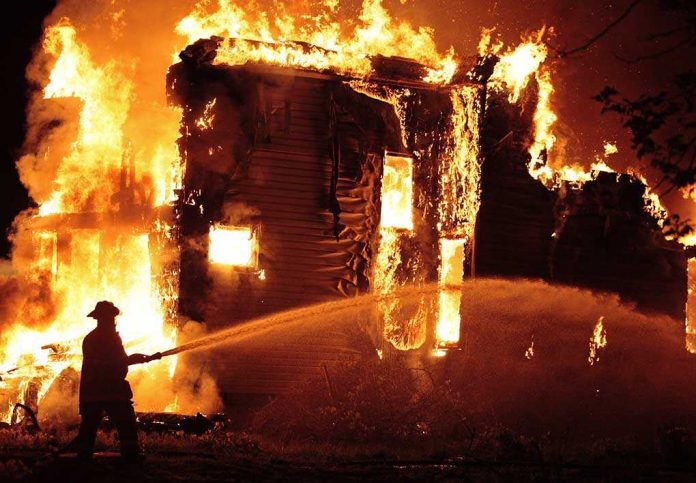
A fire that began in the small hours of October 12, 2026 destroyed the Marché des Enfants Rouges, the covered market that had anchored Paris’s Marais district since 1615 and stood as the oldest surviving food market in the city — a 411-year run ended in a matter of hours.
Key Points
- Fire swept through the Marché des Enfants Rouges in Paris’s 3rd arrondissement overnight on October 11–12, 2026, destroying 17 stalls and collapsing part of the metal roof structure.
- Paris fire officials, including Lieutenant Colonel Pierre de Bouvier, declared the covered market “completely destroyed,” with “nothing” remaining of it.
- Roughly 150 firefighters and 50 vehicles were mobilized to contain the blaze and protect surrounding buildings in the historic Marais neighborhood.
- The market, founded in 1615 and designated a historic monument in 1982, had already survived near-collapse and a 1990s restoration before this fire.
- The cause of the fire had not been determined in initial reporting, and investigators had not yet released findings on its origin.
What Burned, and How Badly
Contemporaneous Paris Fire Brigade imagery showed flames tearing through the market’s interior during the overnight hours, consistent with reporting across multiple outlets that placed the fire’s onset in the early morning and its scale at roughly 1,000 square meters. By the time officials spoke to reporters at the scene, the damage assessment was unambiguous. Lieutenant Colonel Pierre de Bouvier, addressing journalists at the site, stated plainly that the market had been “completely destroyed” and that nothing of the covered structure remained. The New York Times reported that part of the market’s metal framework had collapsed and that 17 individual stalls — the vendor units that gave the market its character as a food hall rather than a single retail space — were destroyed outright.
The emergency response itself tells you something about the fire’s severity. Authorities mobilized approximately 150 firefighters and around 50 vehicles, a deployment scaled for a major structural fire rather than a contained or minor incident. That response appears to have worked where it mattered most: multiple reports indicate that neighboring buildings in the dense, historic Marais streetscape were protected from significant spread, even as the market itself was lost. Reporting on casualties was largely consistent — no serious injuries were reported among the public, though one account noted a firefighter experienced a minor medical episode during the operation.
Four Centuries Inside the Marais
To understand why this fire registered well beyond Paris’s restaurant and retail press, you have to understand what the Marché des Enfants Rouges actually was. It opened in 1615, when Paris was the largest city in Western Europe, as a food hall serving the Marais — then a fashionable aristocratic quarter and today one of the city’s most visited historic districts. The market’s name derives from a nearby orphanage whose children wore red uniforms until 1772; the “Enfants Rouges,” or Red Children, gave their name to the market long after the orphanage itself disappeared. That naming history is not trivia — it is the kind of layered, centuries-deep provenance that made this market distinct from the dozens of other covered markets scattered across Parisian arrondissements, almost none of which can trace a continuous identity back to the early seventeenth century.
The market’s survival was never guaranteed. It was formally designated a historic monument in 1982, a protective status reserved for structures of recognized architectural or cultural significance in France. Yet by the 1990s, despite that designation, the market had fallen into serious disrepair — described in reporting as effectively a ruin, saved only after preservationists pushed through a renovation that allowed it to reopen in 2000. That history matters now because it establishes precedent: this is not the first time the Enfants Rouges faced existential threat, and it was not always structural neglect alone that nearly finished it. The question of whether the site can be rebuilt again, and in what form, will inevitably be litigated against that same tension between preserving original fabric and accepting reconstruction.
What Remains Unknown, and What Comes Next
Investigators had not identified a cause for the fire in the days immediately following the blaze, and no official determination — accidental, electrical, or otherwise — had been released. That is a normal feature of early fire investigations rather than a gap in the reporting on destruction itself; origin-and-cause determinations typically require on-site forensic work that takes weeks, not hours, to complete. What is already established, by contrast, is not in serious dispute: the market burned, a substantial portion of its structure collapsed, 17 stalls were destroyed, and officials on the scene characterized the loss as total.
For the vendors who ran those 17 stalls — cheese merchants, spice sellers, the small international food counters that made the Enfants Rouges a lunch destination for both Marais residents and tourists — the immediate reality is displacement and uncertain timelines for any return. For the city, the longer question echoes the 1990s: whether France’s heritage-preservation apparatus, which fought to save this market once before, mobilizes the political will and funding to rebuild it again, or whether four centuries of continuous market life on that site in the Marais becomes, instead, a memory preserved only in photographs and municipal records.
Sources:
youtube.com, france24.com, nytimes.com, franceinfo.fr, rtl.fr, euronews.com, abc30.com, sortiraparis.com
PARIS HAS LOST A PIECE OF ITS HISTORY
Fire has devastated the Marché des Enfants Rouges, Paris’s oldest covered food market.Founded in 1615 during the reign of Louis XIII, it survived revolutions, occupations, wars and four centuries of upheaval. In a matter of hours, much of… pic.twitter.com/0UZrHjjwSv
— Catherine Perez-Shakdam (@ShakdamC) October 12, 2026