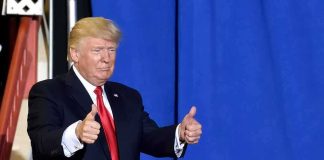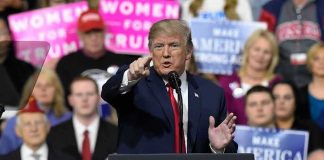

The central story of Donald Trump’s “explosive” election integrity address is not only what he claimed about past vulnerabilities, but how he is positioning his administration’s next moves to reshape the rules of American voting in the name of security.
Key Points
- Trump used a primetime address to declassify intelligence alleging a massive Chinese compromise of U.S. voter data and widespread election-system vulnerabilities, framing them as an urgent national security threat.
- The documents and intelligence community assessments indicate espionage-grade data collection and known technical risks, but do not substantiate claims that foreign actors changed votes or outcomes in 2020.
- Trump is building on a broader second-term agenda: tightening voter-roll maintenance, expanding citizenship verification, scrutinizing election technology, and pressing Congress to pass his “Save America Act.”
- His strategy fits a wider pattern in which political elites weaponize fraud narratives to justify rule changes, shape public perceptions of electoral integrity, and influence who can vote and how.
Trump’s Speech: What He Said and What the Documents Show
Trump’s nationally televised election integrity speech was structured around a dramatic claim: that newly declassified intelligence revealed “shocking vulnerabilities in our election infrastructure” and a vast Chinese compromise of U.S. voter data. In his telling, the People’s Republic of China obtained roughly 220 million U.S. voter files, which he characterized as “the largest compromise of election data in history,” including names, addresses, party preferences, and other registration details needed to “engage in nefarious activities.” He asserted that U.S. intelligence agencies discovered that tens of millions of voters’ data from 18 states had been “bought, stolen, or hacked” and suggested that officials deliberately kept this information from him and from Congress when he was first president.
In conjunction with the speech, the White House released a collection of declassified documents on election security and foreign activity. Reporting based on briefings with administration officials and the documents themselves underscores an important distinction: these records describe aggressive data-gathering and technical capabilities, but they do not show that any foreign actor changed votes, altered tallies, or hacked voting machines in the 2020 election. A prior intelligence community assessment declassified in 2021 concluded that no foreign government attempted to alter “any technical aspect of the voting process” in 2020, including ballot casting, tabulation, or voter registration; that judgment remains the baseline against which Trump’s new claims are being compared.
Several analyses of the newly released material note that some of the voter-registration data China obtained was either scraped from public sources or downloaded from states where registration files are legally accessible, and that earlier intelligence already described Chinese use of such data for public-opinion analysis rather than operational interference in election infrastructure. In other words, the declassified documents corroborate serious espionage against Americans’ personal data and identify genuine vulnerabilities in election-related systems, but they stop short of Trump’s broader insinuation that such activity amounted to outcome-changing election meddling.
The Policy Architecture Behind “Election Integrity”
Trump’s speech did not occur in a vacuum. It sits atop an evolving second-term policy framework that seeks to redefine election administration under a security rubric. In March 2025, he signed an executive order titled “Preserving and Protecting the Integrity of American Elections,” which directs federal agencies to strengthen citizenship verification, bar non-citizens from involvement in administering federal elections, and review the security of electronic systems used throughout voter registration and voting. The order tasks the Department of Homeland Security, in coordination with the Election Assistance Commission, with assessing all electronic systems in the registration and voting process, and authorizes new federal structures to obtain and analyze state voter files and list-maintenance records.
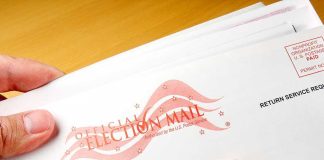
These steps are framed as restoring trust in American elections through tighter controls: more stringent verification that voters are citizens, limits on who can access election equipment, and systematic scrutiny of the technology used to maintain voter rolls and tabulate ballots. In the primetime address, Trump explicitly called on Congress to pass his “Save America Act,” a legislative package designed to codify and extend these reforms by mandating aggressive list maintenance, national voter ID requirements, and stricter rules on mail-in and absentee voting. His directive that DHS alert all 50 states about alleged non-citizens on voter rolls, and instruct state officials to remove ineligible registrants, is a practical extension of this strategy, moving from rhetoric to concrete administrative action.
From a governance perspective, this is a significant shift. Historically, election administration in the United States has been decentralized and largely state-run, with federal law setting baseline protections and procedures. Trump’s approach pushes toward a more centralized, security-driven framework in which federal intelligence and homeland security agencies play an expansive role in evaluating and pressuring state election systems. For supporters, this looks like long overdue modernization and protection against foreign and domestic threats; for critics, it risks federal overreach and politicization of election infrastructure under the banner of fraud prevention.
Fraud Narratives, Foreign Threats, and Public Perception
To understand Trump’s next moves, it helps to situate them within the broader research on election integrity perceptions. Studies of recent U.S. elections consistently find that beliefs about fraud and interference are strongly shaped by partisanship and by whether one’s preferred side wins or loses. Losing parties’ supporters become substantially more likely to see fraud as common, and those attitudes persist across multiple election cycles. Trump has spent years amplifying allegations of rigged voting machines, counterfeit mail ballots, and stuffed ballot boxes, most of which have been rejected by courts, election officials, and expert reviews.
Researchers describe a dynamic of “motivated reasoning” in which people interpret information about mail-in ballots, foreign interference, or machine vulnerabilities through a partisan lens, accepting claims that align with prior distrust and discounting contrary evidence. When political elites emphasize fraud and foreign threats, they can reshape not only perceptions of specific contests but also baseline trust in the electoral system itself. The Election Integrity Partnership’s work on mis- and disinformation in 2020 and 2024 documents how persistent fraud narratives—often detached from concrete evidence—circulated widely through media ecosystems and social networks, eroding confidence and providing justification for restrictive voting measures.
Trump’s latest speech fits squarely within this pattern. The empirical record recognizes real vulnerabilities: outdated election infrastructure, exposure of voter data, and the capacity of adversaries like China and Russia to target U.S. political processes. At the same time, expert assessments continue to draw a line between those vulnerabilities and proven, outcome-changing fraud. Recounts, audits, and post-election investigations into 2020 confirmed the certified results and did not uncover large-scale irregularities or foreign manipulation of vote counts. The declassified documents Trump spotlighted add detail on foreign intelligence activities, but they have not overturned that consensus.
Trump’s Likely Next Steps: Legal, Administrative, and Political
Given this landscape, what comes after the speech? The administration has already signaled several concrete next moves. First, expect a push for expanded investigations and prosecutions framed around election-related offenses. In his address, Trump said he was directing the Department of Justice to pursue individuals and networks implicated in fraud schemes and in facilitating foreign access to voter data. Observers anticipate some of these investigations will focus on alleged non-citizen registration and on actors associated with election technology providers, even if prior audits did not show votes being altered.
Second, Trump and his allies are likely to intensify efforts to rework the rules of voting ahead of upcoming federal contests. The Save America Act, as described, combines several long-debated proposals: nationwide voter ID, tightened proof-of-citizenship requirements, restrictions or additional verification for mail-in ballots, and federal standards for how states maintain and periodically purge voter rolls. His DHS directive to notify states of purported non-citizens on their rolls is both a policy measure and a political signal, encouraging state legislatures and secretaries of state to move aggressively on list maintenance and adopt the administration’s preferred security standards.
Third, Trump’s team is poised to leverage the declassified intelligence in the political arena. The documents, even in redacted form, provide a narrative backbone for campaign messaging that emphasizes foreign threats and institutional coverups. Media analyses of the speech suggest that, regardless of the technical nuance about espionage versus interference, the imagery of “220 million voter files” compromised by China will be used to justify constraints on mail voting, oppose expansive registration reforms, and criticize officials who resist federal election security oversight. In partisan communications, the distinction between data theft and vote manipulation is likely to blur, even though intelligence assessments maintain it.
Finally, there is a bureaucratic dimension. The March 2025 executive order created new review and reporting obligations for DHS and related bodies. Over the next cycles, those agencies may issue risk assessments, recommended technical standards, and lists of “preferred” technologies or practices for voter registration and ballot tabulation. Depending on how assertively the administration wields this authority, those outputs could become de facto requirements for states that depend on federal funding or fear public accusations of lax security.
"IT'S BEEN A GOOD DAY FOR ELECTION INTEGRITY AND A BAD DAY FOR FRAUDSTERS OVERALL."@jsolomonreports and @amandahead highlight new election integrity developments alongside the Trump administration's latest anti-fraud actions
https://t.co/72qfngQ4Tl— Victoria O'Kane (@Victoriaokane) July 21, 2026
Why This Matters for the Future of American Elections
Election systems are never static; they evolve under both technological pressure and political contestation. Trump’s post-speech trajectory illustrates how a president can use declassified intelligence, executive orders, and rhetorical campaigns to steer that evolution. The evidence supports three firm conclusions. First, foreign actors have targeted U.S. voter data and probed election-related systems, and those activities warrant serious security responses. Second, the best available intelligence and expert reviews have not found that such activity altered vote counts or election outcomes in 2020, even as they identify vulnerabilities that should be addressed. Third, narratives that conflate vulnerability with proven fraud are being deployed to justify sweeping changes in who can vote, how they can vote, and who controls the machinery of elections.
For citizens who care about electoral integrity, the challenge is to disentangle these strands. Strengthening defenses against espionage and cyber risk is compatible with maintaining broad, equal access to the ballot; the question is whether reforms are calibrated to documented threats or to partisan narratives. Trump’s next moves—legislatively, administratively, and rhetorically—will test that boundary. They will also test voters’ ability, after years of contested claims, to distinguish between genuine security improvements and changes that primarily serve to reshape the electorate under the banner of election integrity.
Sources:
youtube.com, votebeat.org, cnn.com, ksgf.com, kotaradio.com, wltreport.com, abc.net.au, edition.cnn.com, cbsnews.com, pbs.org, dhs.gov, facebook.com, pmc.ncbi.nlm.nih.gov, asc.upenn.edu, tandfonline.com, frontiersin.org, eipartnership.net, journalofdemocracy.org, hks.harvard.edu