
A U.S.-brokered deal to end the Israel–Lebanon war tries to sideline Iran and Hezbollah, but leaves American power and taxpayer money squarely on the hook.
Story Snapshot
- Trump’s team signed a trilateral framework with Israel and Lebanon that aims to end the war and disarm Hezbollah.
- The deal creates a U.S.-run Military Coordination Group for Lebanon and ties aid to security changes inside Lebanon.
- Israeli troops will stay in a “security zone” until Hezbollah is fully disarmed across all of Lebanon.
- Hezbollah and key Lebanese leaders reject the deal, and Israeli strikes continued after the signing.
Trump’s Peace Push: What Washington Signed, And Why It Matters
On June 26, American, Israeli, and Lebanese representatives gathered in Washington to sign the Trilateral Framework, a written deal that claims to “conclusively end the conflict” and formally end any state of war between Israel and Lebanon. This agreement, brokered by the Trump administration, is billed by officials as a clear path to peace and security on Israel’s northern border, while restoring Lebanese sovereignty from foreign-backed militias like Hezbollah. For many conservatives, this looks like another test of whether American-led diplomacy can secure peace without endless deployments of U.S. troops.
The text released by the U.S. State Department lays out fourteen clauses that put heavy responsibilities on the Lebanese state. Lebanon must disarm all non-state armed groups, dismantle their military infrastructure, control its borders, and stop funding streams to these groups, with economic aid tied directly to how well it meets those conditions. Israel and Lebanon also commit to a U.S.-supported Military Coordination Group for Lebanon, which will manage implementation, deconfliction, and verification of the security steps laid out in the deal. Structurally, the agreement puts Washington in the center of enforcement and oversight.
Hezbollah Out On Paper, But Central On The Ground
American and Israeli officials stress that this is a “performance-based” agreement where “Iran is out, Hezbollah is out,” meaning neither Tehran nor Hezbollah have a seat at the table. The framework instead leans on the Lebanese Armed Forces and the elected government to clear and secure territory, starting with so-called “pilot zones” in southern Lebanon where Hezbollah tunnels, weapons, and command centers are to be destroyed. Only after verified disarmament and dismantlement in these areas will the Lebanese army assume full control and begin reconstruction. In theory, this shifts power from an Iranian-backed militia back to the Lebanese state.
However, Hezbollah has already rejected the agreement and warned that it could push Lebanon toward further conflict, and the group is not a signatory. Lebanon’s parliament speaker Nabih Berri, who has close ties to Hezbollah, publicly called the framework “one-sided” and said it will not pass, raising questions about political buy-in inside Lebanon. Critics from regional think tanks note that past Middle East deals that excluded key militant actors, like some phases of the Oslo process, often produced fragile ceasefires rather than lasting peace. Without Hezbollah’s engagement or surrender, the burden on the Lebanese army may be far beyond its current capacity.
Conditional Israeli Withdrawal And Ongoing Strikes
The framework promises Israeli “progressive redeployment” out of Lebanese territory, but only after “verifiable disarmament and dismantlement” of Hezbollah and other non-state armed groups across all of Lebanon, not just the pilot zones. Israeli Prime Minister Benjamin Netanyahu has made clear that Israeli troops will remain in a designated security zone in southern Lebanon until Hezbollah is disarmed, and the Israeli military will keep full freedom of action inside that zone. This makes withdrawal explicitly conditional, not automatic, and depends on security steps taken by Lebanon and certified through the U.S.-linked coordination group.
Reports following the signing show Israeli military activity continued in southern Lebanon, including strikes on Hezbollah tunnels in areas like Nabatieh, Tyre, and Majdal Zoun. These operations suggest that, while the paperwork speaks of ending war, both Israel and Hezbollah still act as if the fight is ongoing on the ground. The framework itself confirms that nothing in the agreement prevents either Israel or Lebanon from exercising their inherent right to self-defense under the United Nations Charter. For American readers, this looks less like a clean peace deal and more like a rules-of-the-road plan for a conflict that has not truly stopped.
America’s Role, Taxpayer Costs, And Conservative Concerns
The agreement locks the United States into a central role, not just as a neutral referee but as an active manager of security and funding streams. Washington will lead the Military Coordination Group for Lebanon, help verify Hezbollah’s disarmament, oversee related financial and military support, and decide when economic aid moves forward based on its own assessment. The Trump administration has already pledged new humanitarian and military-related aid, including funds meant to reimburse the Lebanese Armed Forces for their operations tied to the framework. This deep involvement raises the question of how much long-term U.S. leverage and money are now committed to policing another country’s internal security.
‼️ Lebanese Presidency statement on Trump/Aoun meeting :
President of the Republic, General Joseph Aoun, held bilateral talks today at the White House with President of the United States Donald J. Trump, following an official invitation from the U.S. President for a working…
— Hiba Nasr (@HibaNasr) July 21, 2026
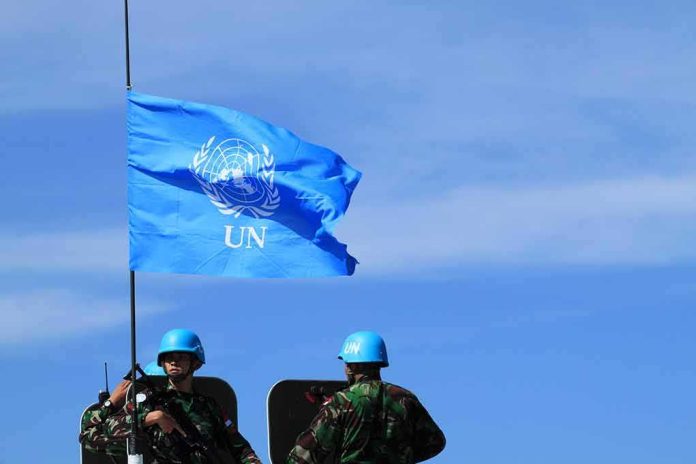
For conservatives wary of globalism and endless foreign entanglements, the framework is a mixed picture. On one hand, it aims to weaken an Iranian-backed terrorist group without sending American combat troops, protects Israel’s right to self-defense, and insists on state sovereignty instead of militia rule. On the other hand, it builds yet another complex, U.S-managed security structure overseas, ties aid dollars to intricate conditions that may be hard to verify, and relies on a Lebanese political class that is divided at best. With United Nations peacekeeping funding cut in the same theater, U.S. oversight becomes even more central—and harder to unwind once in place. As this agreement moves from ceremony to reality, constitution-minded Americans will be watching closely to see whether it truly reduces threats, or quietly expands Washington’s footprint and liabilities in yet another corner of the Middle East.
Sources:
youtube.com, state.gov, aljazeera.com, reuters.com, jpost.com, al-monitor.com