A bomb‑threat hostage standoff at a California Chase Bank once again exposes how fragile public safety has become while political elites argue about everything except law and order.
Story Snapshot
- A man allegedly strapped with a bomb took at least one hostage inside a Chase Bank in downtown Bakersfield, California, triggering a major police response.
- Police reported a confirmed bomb threat, barricades, evacuations, and lockdowns of nearby buildings and streets across the city center.
- Early reports show familiar gaps: officials treat it as a serious explosive threat, yet there is still no public forensic confirmation of an actual working device.
- The incident highlights growing public fears about safety in blue‑state cities, strained police resources, and soft‑on‑crime policies that leave citizens vulnerable.
Armed Standoff in Downtown Bank Rocks Bakersfield
Authorities in Bakersfield, California, rushed to downtown after a man reportedly armed with an explosive device entered a Chase Bank, took at least one person hostage, and refused to come out.[1][2] Police said they received a call just after midday about a bomb threat at the branch in the city’s core business district and quickly treated the scene as a live hostage situation.[1][2] Officers confirmed the suspect was male and indicated that at least one hostage was inside with him.[1]
https://www.youtube.com/watch?v=iKwPF3iZ2dw
Local coverage reported that the man allegedly had a bomb strapped to his body, language that reflects what officers believed they were facing as they tried to negotiate from outside the building.[1] Bakersfield media described the situation as “active,” with police establishing a perimeter and working to contain both the suspect and any potential device.[1][2] The reported threat unfolded in broad daylight in a major financial institution, underscoring how quickly everyday errands can turn into life‑or‑death events for law‑abiding citizens and employees simply trying to work.[1][2]
Evacuations, Lockdowns, and a City Center Frozen by One Threat
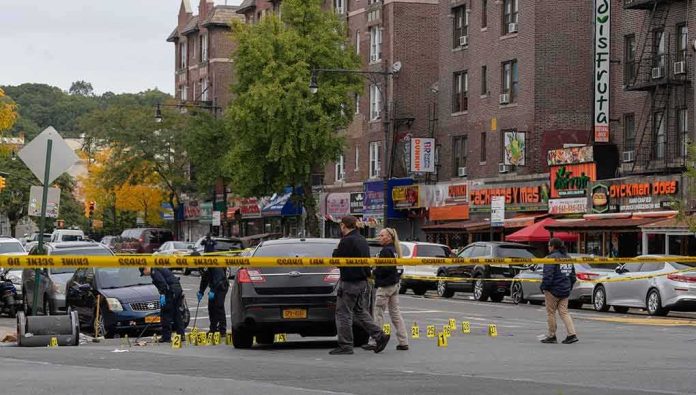
The Bakersfield Police Department responded by sealing off several blocks of downtown, closing roads between key cross streets and urging the public to stay away from the area.[1][2] Reports said mandatory evacuation orders were issued for the immediate surroundings, and multiple public buildings, including city facilities, went into lockdown while the situation remained unresolved.[1][4] Police advised residents and workers to shelter elsewhere and avoid attempting to bypass barricades so negotiators and bomb technicians could focus on the threat.[2][4]
Television reporters on scene described a heavy law‑enforcement presence, including bomb squad resources and staging areas consistent with preparations for a possible mass‑casualty incident.[2][3] Journalists relaying police briefings said the suspect was barricaded inside the bank with members of the community, while officers tried to communicate without escalating the danger.[3] The strong response shows what it now takes to secure a single building when one unstable individual decides to terrorize a city block—and how easily commerce, local government, and daily life can be shut down by a single criminal act.[1][2][4]
Unverified Device, Real Fear, and a Pattern of Crisis Reporting
Despite the repeated references to a bomb strapped to the suspect, coverage so far has not shown any public forensic confirmation that the device was real, operational, or even an explosive.[1][2][3] News outlets leaned on phrases like “allegedly” and “reported bomb threat,” reflecting that police must treat any such claim as deadly serious even before bomb technicians can inspect a device.[1][2] That gap between initial threat reports and later verification has become standard in high‑risk incidents, but it still leaves citizens confused about what exactly happened.[2][3]
Hostage situation at Chase Bank building in Bakersfield. Bomb Squad on site and putting up color coded triage tents. This looks serious.
— Midnight Rider (@31123Q) June 3, 2026
Law‑enforcement case studies from other bank hostage events show the same pattern: early alerts emphasize maximum danger to drive evacuations and road closures, while the technical truth about weapons or explosives often emerges only after the standoff ends.[2] For families watching at home, the result is the same every time—images of taped‑off streets, bomb squads, and negotiators surrounding what should be a safe place to deposit paychecks. Repeated shocks like this erode trust that local leaders can keep basic order in their communities.[1][2][4]
What This Means for Public Safety, Policy, and Everyday Americans
This Bakersfield crisis comes against a backdrop of years in which many large cities pursued softer prosecution, early release policies, and aggressive political attacks on police, even as ordinary Americans demanded safer streets and stronger borders. While local officers on the ground responded forcefully here, they are operating within state and municipal systems that often appear more concerned with ideology than deterrence. When a major bank in a downtown corridor can be paralyzed by one man’s threat, it highlights how thin the margin of safety has become.[1][2][4]
Conservatives watching this situation will see a familiar lesson: when leaders downplay crime, undercut law enforcement, and focus on fashionable agendas instead of security and stability, the people who pay the price are workers, small‑business customers, and families who just want to go about their lives.[1][2] The Trump administration can strengthen federal support, but state and local voters must also demand prosecutors, legislators, and city officials who put public safety first, enforce existing laws, and back the officers who run toward danger when everyone else is running away.
Sources:
[1] Web – DEVELOPING: Man with Bomb Strapped to His Chest Takes at Least One …
[2] Web – Police negotiate in hostage situation at Chase Bank amid bomb threat …
[3] Web – Possible hostage situation underway at Southern California bank
[4] Web – Hostage situation underway at Chase Bank in Bakersfield …