

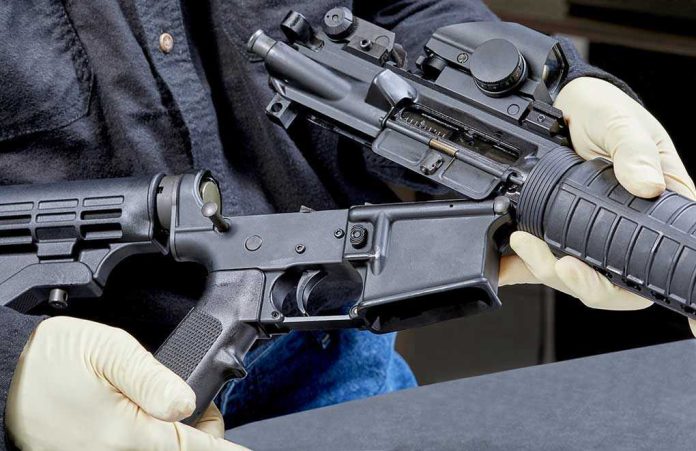
Virginia’s new “ghost gun” ban isn’t really about one type of weapon—it’s a test of whether the state can force homemade firearms into the same traceable paper trail as everything sold over the counter.
Story Highlights
- Governor Abigail Spanberger signed a package of firearm bills on April 11, 2026, with the new rules taking effect July 1.
- HB40 targets unserialized, privately made firearms by banning their manufacture, sale, and possession unless they meet serialization requirements.
- Other new laws focus on domestic-violence firearm restrictions and expanded civil accountability for negligent industry practices.
- Virginia’s policy direction flipped from recent vetoes under former Governor Glenn Youngkin to broad signatures under Spanberger.
The law Virginia wrote to make “untraceable” guns traceable
Governor Abigail Spanberger signed multiple gun-control bills on Friday, April 11, 2026, and Virginia set July 1 as the start date. The headline measure, HB40, bans manufacture, sale, and possession of so-called “ghost guns,” meaning privately made firearms that lack serial numbers and can’t be traced the way factory firearms can. The practical point is simple: investigators follow serial numbers; “no number” stops the trail cold.
That simplicity is also why the law is politically explosive. For gun owners who build at home, the state just moved their hobby closer to the regulated marketplace. For law enforcement, the state just tightened a loophole criminals can exploit. The conflict isn’t merely about guns; it’s about what the government can demand from people who never bought a firearm in the first place because they made one.
Why Spanberger’s signatures matter more than the bill text
Virginia has wrestled with similar ideas before, but the decisive change came from the governor’s pen. Prior versions of ghost-gun restrictions had met vetoes under former Governor Glenn Youngkin, and Spanberger’s approval signals a new executive philosophy: treat private firearm manufacturing like a controllable supply chain rather than a personal-use exception. That change will ripple through committee rooms next session, because lawmakers now draft bills expecting signatures, not veto messages.
The unusual subplot involves former State Senator Adam Ebbin of Alexandria, a long-time advocate for banning ghost guns who resigned in February 2026 to join the governor’s Cannabis Control Authority. That timeline gives the story a whiplash quality: the legislator tied to the policy win leaves elected office, then the policy becomes law anyway. Politics always has career arcs, but this one practically begs voters to ask who truly “owns” a victory.
Four new firearm laws, one consistent theme: liability and control
HB40 draws the most attention, but it traveled with other bills that reveal the administration’s overall strategy. HB19 targets the “intimate partner loophole” by tightening firearm restrictions connected to domestic-violence circumstances. HB93 facilitates firearm transfers for people under protective orders or convicted of misdemeanor domestic violence, aiming to move guns out of volatile situations. HB21 expands the idea of accountability by allowing scrutiny of negligent business practices by manufacturers and dealers.
Supporters frame that package as a public-safety sweep: fewer untraceable guns, fewer guns in domestic-violence flashpoints, and more consequences for sloppy or reckless commercial behavior. Critics see the same package as a ratchet—each bill adds friction, paperwork, or liability until lawful ownership becomes more expensive and legally risky. Common sense says both sides are reading the incentives correctly; the disagreement is whether the incentives primarily deter criminals or mainly burden compliant citizens.
The conservative flashpoint: criminals don’t comply, but databases grow anyway
Gun-rights advocates often argue that “ghost gun” is a propaganda term for ordinary privately manufactured firearms and that criminals will ignore bans. That critique carries weight as a prediction of behavior: people already willing to commit felonies rarely fear additional statutes. The conservative question, then, is whether the law’s main measurable output becomes a larger compliance burden for lawful builders—registration steps, serialization pathways, and potential database exposure—rather than an immediate reduction in violent crime.
Gun-control advocates counter with a law-enforcement reality: even if a criminal ignores the law, recoveries and investigations still benefit when fewer guns circulate without identifying marks. That argument aligns with everyday policing logic. The weakness is time horizon. Tracing works after a gun enters the system through recovery; prevention depends on whether the law disrupts access enough to matter. Voters over 40 have seen many “tough on” policies promise prevention and deliver paperwork.
The legal cliffhanger: Washington could make this a Second Amendment test case
Spanberger signed the bills as the Trump administration’s Department of Justice warned of potential legal action tied to Second Amendment protections. That warning sets up the next fight: not the legislature, but the courts. A legal challenge would likely probe whether banning certain privately made firearms, or forcing serialization and formal channels, crosses constitutional lines—especially around the historically recognized ability to possess arms and the modern reality of do-it-yourself manufacturing technology.
Virginia also had another ticking clock: as of April 13, 2026, Spanberger had not acted on HB217 concerning assault-style weapons and magazines holding more than 15 rounds, with an automatic-law mechanism if the deadline passed without action. That uncertainty matters because it changes how people interpret the ghost-gun ban. If larger restrictions follow, opponents will call HB40 a “starter pistol” for broader limits; supporters will call it overdue housekeeping.
Sources:
ghost guns manufacturer liability loopholes targeted in new va firearm laws