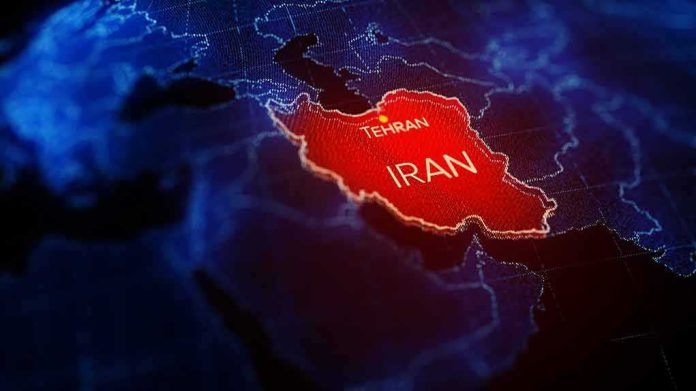
A regime built on surveillance now depends on shoe-leather couriers to reach its supreme leader—and the lag is warping Iran’s ability to decide fast.
Story Snapshot
- United States intelligence tells CBS that Iran’s supreme leader operates from an undisclosed site and is reachable only through couriers, creating delays and stale inputs [3].
- Opposing reports describe in-person access and continued messaging, muddying the picture of isolation versus control [6].
- Regional outlets add bunker claims and tunnel networks, reinforcing a hardened-security narrative amid wartime threats [1].
- Strategic risk grows when command slows: latency tilts deterrence, diplomacy, and battlefield choices.
What the courier-only claim actually says and why it matters
CBS News, citing United States officials, reports that Iran’s supreme leader is “effectively holed up” at an undisclosed location, with access channeled through a “labyrinth of couriers,” and that the time-cost of these handoffs slows responses and dates the intelligence on his desk [3]. If accurate, that workflow changes the physics of power in Tehran: approvals stack up, subordinates hedge, and rivals freelance policy. In conflict, minutes matter. When minutes turn into days, deterrence erodes and accidents multiply.
Iran-focused outlets amplify the bunker narrative with specific geography and hardened-infrastructure claims, including relocation to an underground complex connected by tunnels in northeastern Tehran [1]. Such facilities exist for precisely this purpose: to ride out decapitation strikes and maintain symbolic command. The tradeoff is friction. Secure compartments sever digital trails and compress visibility to a small circle. That might prevent leaks, but it also creates a marketplace of rumor inside the system—and rumor often outruns orders during crises.
The counter-story: access, activity, and continuity
Adversarial coverage and commentary present a different picture: on-record accounts describe a lengthy, private meeting between Iran’s elected president and Mojtaba Khamenei, suggesting at least episodic direct access. Broadcast segments also frame him as mentally sharp and involved in major decisions, while state media continues to air statements attributed to the leadership, even if delivered by presenters [6]. Those facts undercut claims of total isolation, though they do not dismantle the courier-latency allegation or the undisclosed-location piece.
American conservative common sense sorts these threads by incentives. Intelligence agencies leak when they want to shape adversary behavior; regimes project continuity even when they compartmentalize. Both can be partly true. A leader can meet select insiders and still route wider command through cutouts. The harder question is tempo. If the average approval loop now runs slower than before, the system invites miscalculation abroad and opportunism at home, regardless of choreographed meetings and broadcasts.
Why latency rewires deterrence, diplomacy, and the street
Deterrence requires credible, timely signaling. When an adversary believes the response clock drags because orders must traverse humans and hallways, it tests boundaries. Diplomacy also suffers: backchannel proposals go stale if replies arrive after battlefield conditions shift. At home, ministries adapt by pre-authorizing “standing guidance,” which risks drift from the principal’s intent. That is how factions crystallize—military hardliners push for initiative, pragmatists stall, and the public senses dissonance between televised certainty and on-the-ground zigzags.
CBS News exclusive published Sunday: Iran's Supreme Leader Mojtaba Khamenei is in an undisclosed location, reached only through a network of couriers.
Injured on Day 1 of the war. Not seen in public since February 28.
By design, even top Iranian officials don't know where he… pic.twitter.com/ncAKIU0vtc
— The Tectonic (@thetect0nic) May 25, 2026
Security logic still explains the bunker turn. After strikes and assassination fears, leaders reduce exposure, fragment communications, and privilege analog paths over hackable ones. Reports of a fortified underground network and tunnel-linked complexes fit that pattern [1]. The question becomes proportionality. If the pendulum swings too far toward secrecy, the palace walls thicken while the state grows thin. The better-run autocracies mitigate this by codifying clear delegation trees and time-bound decision windows; the worse ones devolve into courier politics and calendar paralysis.
What to watch next: proof-of-life, tempo, and traceable timelines
Three tests can separate fog from function without theatrics. First, proof-of-life with contemporaneous context—date-verifiable footage tied to a known event—narrows the bunker window without revealing location. Second, tempo markers—policy decrees with precise timestamps and follow-on execution orders—show whether latency persists. Third, one reconstructed episode, from initial contact to final directive, would reveal how much of the command chain runs through people versus wires. Until then, the courier thesis stands as a high-friction explanation with persuasive security logic and unresolved counterclaims [3][1][6].
Sources:
[1] Web – Khamenei and his family hiding in bunker north of Tehran, sources say
[3] Web – Iran’s supreme leader is holed up in undisclosed location, U.S. …
[6] Web – Iran’s Supreme Leader Holed Up In Undisclosed Location, Slowing …