When a nighttime pedestrian crash near a university folds in alleged drinking, a shared car, and a fraternity event, two legal tracks diverge: the straightforward case against the driver and the far more complex attempt to extend liability to the people and organizations around him. The Cal Poly incident on Crandall Way sits squarely at that junction.
The Short Version
- Two women were seriously injured on January 8 near Cal Poly when a dark-gray Tesla Model 3 struck them as they crossed Crandall Way; police arrested Ishan Pandhare soon after.
- Pandhare faces felony counts including DUI causing injury and hit-and-run causing injury and has been ordered to stand trial after a preliminary hearing.
- A civil lawsuit filed by the victims names Pandhare, two fellow students, and Kappa Sigma, alleging alcohol provision to an underage driver and negligent entrustment of the Tesla.
- The direct negligence claims against the driver proceed on familiar ground; extending liability to a fraternity or others will require overcoming California’s strong social-host immunity and proving control, foreseeability, and causation.
What Happened On Crandall Way
Shortly after 9:30 p.m. on January 8, two pedestrians were struck in the 100 block of Crandall Way, a street bordering the Cal Poly campus in San Luis Obispo. Reporting contemporaneous with the police response describes serious injuries to both women and identifies a dark-gray Tesla Model 3 as the vehicle involved; based on eyewitness accounts, officers later located the car and arrested Cal Poly student Ishan Pandhare. Those facts frame both the criminal case and a later civil complaint filed by the two injured women, now plaintiffs in San Luis Obispo County Superior Court.
The prosecution charged Pandhare with felony DUI causing injury, reckless driving causing specified injuries, and hit-and-run causing injury. He entered a not-guilty plea in early February, but the case cleared a key threshold when a judge, after hearing preliminary-hearing testimony describing a victim propelled 20 to 30 feet by the impact, ruled that Pandhare must stand trial. That order does not determine guilt; it does signal that the prosecution’s evidence, at this stage, is sufficient to proceed to a jury.
The Civil Lawsuit And Its Theory Of The Case
In July, the injured pedestrians filed a negligence suit naming Pandhare, Kappa Sigma fraternity, and two Kappa Sigma members, Aidan Jameson Kennedy and Kip Stackle. The complaint alleges multiple, linked acts: that Kappa Sigma hosted an event where alcohol was present; that Kennedy and Stackle provided alcohol to Pandhare, who was under 21; and that Kennedy owned the Tesla and permitted Pandhare to drive it despite knowledge—or at least reason to know—of intoxication. Together the claims aim to establish both direct liability against the driver and secondary liability against individuals and the fraternity, including negligent entrustment of the vehicle and negligent furnishing of alcohol to a minor.
Several details matter legally. First, California recognizes a familiar negligence claim against a driver whose conduct breaches the duty of care and causes injury; in a nighttime pedestrian collision, evidence about speed, lighting, crosswalk use, impairment, and evasive action can each bear on breach and causation. Second, when plaintiffs reach beyond the driver to hosts, companions, or institutions, the terrain changes. California’s Civil Code contains robust social-host immunity that generally shields those who furnish alcohol from civil liability for harms caused by the drinking itself; exceptions exist for furnishing alcohol to obviously intoxicated minors, but the pleading and proof burdens are exacting.
The Evidence Posture: What Is Established And What Still Builds Out In Discovery
On the criminal side, public reporting specifies the charges and the preliminary-hearing ruling sending the case toward trial; both are firm, on-the-record steps. The defense’s not-guilty plea simply preserves contest; it does not undermine the state’s ability to proceed. What remains to be developed for a jury—through testimony and exhibits—are particulars such as chemical test results, the timing of any sample collection, and the narrative of what occurred immediately after impact in support of the hit-and-run count.
On the civil side, the complaint’s allegations about speed and the fraternity event provide a roadmap rather than proof. Establishing vehicle speed at impact typically turns on a download of the car’s event data recorder (EDR) or telematics, scene measurements, or synchronized video; these are technical inquiries well within the scope of civil discovery. Likewise, tying alcohol provision to underage status and demonstrating knowledge of impairment involves a mosaic of witness statements, digital messages, payment records, and toxicological analysis. The initial reporting identifies the defendants and the alleged conduct with specificity—who hosted, who provided, who owned the car—which is the right architecture for discovery to test.
Why Extending Liability Beyond The Driver Is Hard In California
Plaintiffs often try to reach individuals who supplied alcohol, national fraternities, or universities on theories of negligent furnishing, negligent supervision, or institutional control. California law narrows those paths. Social-host immunity, codified after California’s courts initially recognized dram shop liability, sharply limits suits based solely on furnishing alcohol; plaintiffs must fit into statutory exceptions or show independent negligence that is not merely derivative of consumption. Appellate decisions also constrain attempts to pin universities with a duty to protect the public from conduct at off‑campus fraternity houses absent a special relationship or control sufficient to create an affirmative duty.
Fraternity exposure turns on granular facts: who actually organized and controlled the event, whether it was on- or off‑campus, what policies or probation terms were in effect, and whether named individuals were acting as agents of the chapter or simply as private social hosts. Courts have dismissed fraternity defendants where plaintiffs could not connect organizational control to the specific risk pathway, but have allowed claims to proceed where evidence suggested structured, sanctioned events with foreseeable harm. In short, labels do not carry the day; actionable control and causation do.
Mechanics Of Proof: From Car Data To Pharmacokinetics
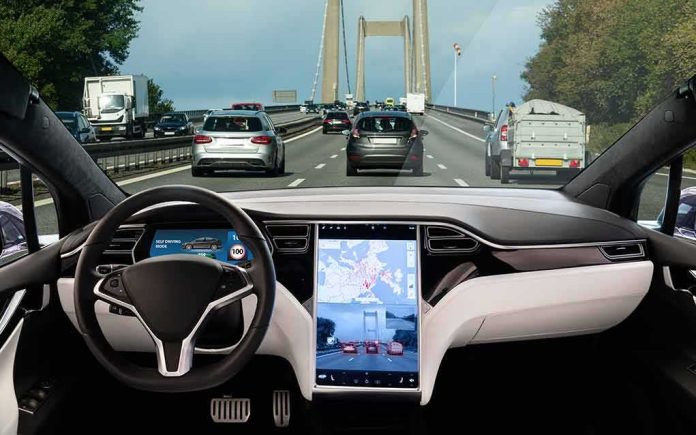
Two evidentiary pillars typically decide cases like this. First, crash mechanics: EDR and telematics from a Tesla can capture pre‑impact speed, accelerator and brake application, and steering inputs. Combined with scene reconstruction—skid marks, throw distance, injury biomechanics—these data help answer whether the driver was speeding, failed to brake, or attempted evasive action. Precise numbers matter to breach and to apportioning fault if, for example, lighting or pedestrian conduct becomes contested.
Second, impairment: toxicology reports (blood or breath), timestamps, and expert pharmacokinetic modeling can estimate blood alcohol content at the moment of driving, filling in the crucial time gap between a later test and the crash. Witness accounts of drinking sequence, receipts, and digital messages can corroborate or contradict model outputs. In civil negligent-entrustment claims, the same evidence helps test what others knew or should have known about impairment when handing over keys.
Why This Case Resonates Beyond San Luis Obispo
Pedestrian injury at night near campuses is a recurring public‑safety problem; add alleged alcohol impairment and speed, and severity rises. Nationally, alcohol‑involved crashes remain a large fraction of road deaths, while pedestrians, unprotected by vehicle structures, bear disproportionate harm in any collision. The Cal Poly case illustrates the policy tension: holding an allegedly impaired driver to account is legally direct, but the broader ecosystem of social supply, group events, and shared cars pushes against legal boundaries designed to limit secondary liability. Communities want deterrence; the law insists on proof tied to control and causation.
What To Watch As The Cases Advance
Three developments will shape outcomes. First, release or in‑court description of toxicology and EDR/telematics data; these are the backbone of impairment and speed. Second, discovery that clarifies the fraternity event: who organized it, who supplied alcohol, where it occurred, and how the Tesla’s keys changed hands. Third, judicial rulings on motions testing social-host immunity, negligent entrustment, and agency—threshold decisions that often decide whether secondary defendants remain in the case. The criminal trial will resolve the charges against Pandhare; the civil suit will answer the harder question of who else, if anyone, bears legal responsibility alongside him.
Sources:
nypost.com, m.dailyadvent.com, mustangnews.net, sanluisobispo.com, calcoastnews.com, courthousenews.com