
A two-minute, made-for-camera exchange aboard Air Force One captured something larger than a novelty moment: the White House deliberately fused celebrity theater with institutional stagecraft, and Nicki Minaj used the scene to deliver unambiguous praise of President Trump’s competence, toughness, and work ethic.
At a Glance
- A publicly posted video shows Nicki Minaj seated across from White House Communications Director Steven Cheung in a mock “press secretary” job interview aboard Air Force One.
- Cheung framed the clip as a lighthearted audition, not a formal hiring process, underscoring its staged, performative design.
- Minaj praised Trump’s grasp of economics, business experience, international toughness, and relentless schedule, calling him a “great guy.”
- The exchange occurred during Trump’s trip to Michigan, amplifying the political theater with official trappings and campaign context.
What Happened: A Staged Interview, Shot on Air Force One
The factual core is straightforward. A short video released publicly shows Nicki Minaj sitting across a small table from White House Communications Director Steven Cheung, who proceeds to ask a set of prepared questions as if conducting a job interview for White House press secretary. Cheung posted the clip with the tongue-in-cheek caption that “we may have found the new White House Press Secretary,” making clear that the premise was playful and staged rather than a standard press availability or a formal staffing announcement. Multiple outlets that viewed the same video described a two- to three-minute mock interview aboard Air Force One, recorded as President Trump traveled for an event in Michigan. The frame is not ambiguous: it was a political-performance vignette, executed in an unmistakably official setting.
In the exchange, Minaj dispensed with coyness. She lauded Trump’s economic acumen and business background as assets in governing, said he would “know what to do with the country,” and characterized him as “very tough” on the world stage. She then pushed the personal dimension—calling Trump a “great guy”—and turned to work ethic, saying he wakes at 4 a.m., outworks people half his age, and chooses to “pay it forward” by helping other Republicans, rather than resting on his stature. The ostensible job-audition conceit framed her remarks as answers to an application prompt, but the substance was praise, plain and emphatic.
How to Read the Scene: Celebrity Politics Meets Institutional Spectacle
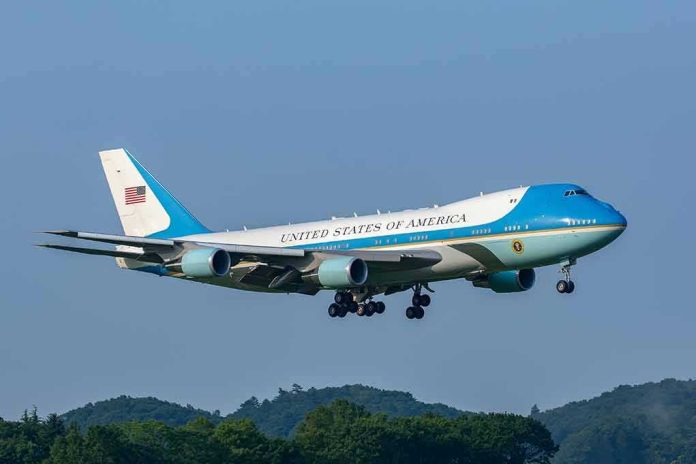
The mechanics of this episode matter. The White House communications chief, not a campaign surrogate, did the on-camera prodding; the venue was Air Force One; the timing aligned with a swing-state rally. Those ingredients transform a celebrity soundbite into something closer to an integrated communication tactic. Theatrical form—mock interview, wink in the caption—lowers the viewer’s guard, creating a permissive space for unabashed endorsement without the stiffness of a lectern speech. Simultaneously, the aircraft backdrop—arguably the most visually potent symbol of presidential authority—lends institutional gravity to what would otherwise be a viral-content stunt. That juxtaposition is intentional; it is how modern political communication manufactures both reach and resonance.
Minaj’s script, whether spontaneous or prepped, served that purpose. The specific claims—economics, business instincts, global toughness, pre-dawn grind—map to recognizably pro-Trump narratives. They underscore competence, vigor, and loyalty to the party, while implicitly inviting contrast with opponents without naming them. The press-secretary gag adds a dash of subversion: the job historically belongs to Beltway professionals; imagining a chart-topping artist in the role flatters the idea that Trump’s White House is porous to popular culture and comfortable playing against type. Cheung’s caption kept the joke in safe harbor while ensuring the clip traveled beyond traditional political audiences.
The Michigan Context and Why the Setting Matters
The reported setting—a trip to Michigan for a Trump rally—heightens the strategic logic. Michigan is a high-salience electoral battleground; inserting a pop-culture moment into the trip refracts local political coverage through a national entertainment lens. Air Force One, meanwhile, is not a neutral studio. Filming there signals proximity to power and communicates that the White House is authoring the message, not merely reacting to a celebrity’s passing comment. The resulting tableau blends campaign cadence with presidential iconography, a hybrid that has become a hallmark of the Trump era’s media grammar.
Minaj’s remarks during the exchange track with the role she played in the episode: a cultural validator, speaking in the vernacular of hustle and loyalty. She emphasized waking hours, stamina, and a pay-it-forward ethos—qualities that resonate with audiences primed to equate output with authenticity. None of this requires a formal appointment; the content does its work as persuasion and identity signaling on contact. And because the piece was short and tightly framed, it maximized quotability for news and social clipping, the coin of the realm in attention economics.
Performance Versus Appointment: What This Was, and Wasn’t
On the central question of personnel, the evidence is consistent: this was a staged, lighthearted “audition,” not a formal selection process. Cheung’s caption was a wink, and no parallel record—no White House staffing notice, no job posting, no official vetting trail—surfaces in the reporting tied to the clip. The point was the performance itself and the messages embedded in Minaj’s praise. That does not diminish the episode’s significance; it clarifies its category. The White House used an institutional platform to amplify a celebrity’s on-brand validation of the president. The impact to watch is communicative, not administrative.
It is also worth situating this move inside the broader literature on celebrity endorsements in politics. The scholarship is mixed: some experiments and field studies find modest or context-dependent effects, while case studies like Oprah Winfrey’s 2008 endorsement of Barack Obama suggest that, under certain conditions, celebrity support can measurably shift votes and engagement. That variability is a feature, not a bug—endorsements work when the celebrity’s brand fits the political moment and audience, the message is distributed through channels they truly command, and the campaign integrates the exposure into a coherent narrative arc.
Trump aide quips Nicki Minaj could become next White House press secretary, per TMZ.
— You Are The Media Now (@UAreMedia) October 25, 2026
What It Means: Communication Value, Not Cabinet Stakes
Seen through that lens, the Minaj–Cheung clip functions as a high-yield unit of political communication. It collapses distance between pop culture and presidential authority; it packages policy-adjacent claims—economics, toughness, stamina—inside the more watchable wrapper of a job-interview skit; and it colonizes social feeds that might otherwise ignore formal speeches. For supporters, the video affirms a story they already tell about President Trump. For casual observers, it supplies a vivid, low-friction cue about how a prominent artist reads his leadership profile.
The practical implications live in distribution and repetition. If similar vignettes recur—other artists, other official backdrops, other tongue-in-cheek roles—the White House will have built a serial format that mainstreams political messaging without the tedium of policy rollouts. If, instead, the moment remains an isolated flourish, it still did its immediate job: generating a wave of coverage that relayed Minaj’s language of competence and grit, anchored to the unmistakable mise-en-scène of Air Force One.
Sources:
mediaite.com, themirror.com, nine.com.au, justthenews.com, balleralert.com, allhiphop.com, dailywire.com, cambridge.org