When a Fox News crew cannot park for two minutes in Beijing without triggering a digital ticket and a diplomatic headache, you are getting a rare glimpse of how China mixes surveillance, control, and state power when an American president comes to town.
Story Snapshot
- Fox News host Bret Baier’s crew watched China’s surveillance state fine them in real time while covering Trump’s visit.
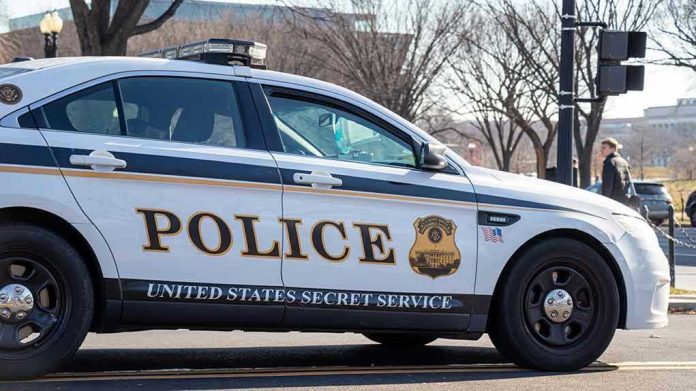
- Chinese security repeatedly clashed with U.S. Secret Service agents and press over weapons, access, and movement.
- A long pattern of standoffs shows Beijing pushing host-nation power against U.S. security red lines.[1]
- For Americans, the episode is a warning about what a fully wired surveillance society really looks like.[1][2]
China’s Cameras Do Not Just Watch the Streets, They Shape the Visit
Fox News anchor Bret Baier stood on a Beijing street corner counting cameras: twenty just in his immediate view, plus another 1,500 reportedly added citywide that year alone for “safety.” As his crew filmed President Donald Trump’s visit, their driver parked illegally for two minutes and instantly received a roughly forty-dollar ticket on his phone. The message was blunt: the Chinese Communist Party sees everything, and it is not shy about turning that vision into punishment.[1]
Chinese officials frame those cameras as tools for order and security, but the system does more than stop jaywalking. State-linked companies integrate facial recognition, license plate readers, and behavior tracking into a social credit style architecture that can reward compliance and quietly punish dissent. Baier’s casual observation that “nobody is jaywalking here” doubles as commentary on a population learning to behave as if watched, because it is watched. That is not safety culture; that is social conditioning.[1][2]
Temple Of Heaven: Where Surveillance Meets Secret Service Muscle
The Temple of Heaven stop during Trump’s visit became the flash point where this surveillance-first mindset slammed into American security protocol. Chinese security officials reportedly objected to a U.S. Secret Service agent carrying a firearm into the venue, leading to a nearly thirty-minute delay for the U.S. media pool while both sides haggled over access and authority. Cameras and Chinese officers documented every motion while the American side insisted that presidential protection standards do not get negotiated away at a tourist landmark.
That standoff did not come from nowhere. Earlier visits saw similar friction, including a well-publicized confrontation over the “nuclear football” during Trump’s 2017 trip, when Chinese personnel tried to block the military aide carrying the launch codes from following the president.[1] Reports differ on how physical it became, but the basic storyline is consistent: Chinese security pushed its territorial authority; U.S. protectors treated any interference as unacceptable risk. The Temple of Heaven delay fits the same pattern, now amplified by omnipresent cameras and instant online spin.
Host-Nation Power, American Security Red Lines, and Conservative Common Sense
Host nations always control their territory on paper, but authoritarian systems like China’s wield that control with a different set of assumptions. Beijing’s Central Guard and domestic intelligence organs treat every foreign visit as both diplomatic pageant and counterintelligence operation. U.S. agents, by contrast, operate from a non-negotiable mission: the president and his immediate entourage must remain under American security control, with weapons, communications, and physical access governed by U.S. standards, not communist police preferences.[1]
🔥🔥 BREAKING:
Secret Service Agents scuffle with Chinese police during Trump’s visit to Beijing.
Agents refused to disarm, leading to a heated physical altercation.
"A very intense standoff… a Secret Service official was blocked from entering with his weapon. But it has been https://t.co/27LvXoUT1n— Wildcat🔥🔥🔥 (@fazhifa777) May 14, 2026
American conservative instincts line up with the Secret Service approach, not Beijing’s. A free country does not outsource its core security functions to a one-party surveillance state, and it does not treat omnipresent cameras as harmless “safety features.” Fox’s ticketed parking mistake may sound trivial, but it reveals the deeper problem: when every minor infraction becomes a data point and every data point feeds a political system, you no longer have neutral law enforcement; you have automated leverage over citizens and guests alike.[1][2]
Digital Lockdown: How U.S. Officials Adapt to China’s Cyber and Camera Net
American officials now travel to China as if entering a digital minefield. Security advisers tell them to assume that every device, network, and conversation is monitored. Many leave normal phones at home, using “clean” temporary laptops and tightly controlled accounts for the duration of the trip.[2] Messages that would usually go through encrypted apps instead route via preplanned channels or face-to-face briefings. The core assumption is simple: nothing that touches Chinese infrastructure is truly secure.
Those precautions extend to physical space as well. Before Air Force One even touches down, Chinese intelligence services research everyone in the U.S. delegation, from senior officials to junior staffers, mapping vulnerabilities and potential pressure points.[2] Meanwhile, U.S. agents plan as if someone in Beijing’s system will test boundaries, whether by blocking an aide, separating the press pool, or trying to corral armed American protectors. The Temple of Heaven impasse, filmed and shared globally, became the latest proof that this assumption is not paranoia; it is operational reality.[2]
Why This Matters Back Home: The Future Beijing Wants You to Accept
Some Americans may shrug and say, “Their country, their rules.” That kind of moral shrug is exactly what authoritarian leaders count on. Today the cameras fine a foreign driver and discourage jaywalking; tomorrow they decide who gets a mortgage, a business license, or permission to travel. Chinese agents already pressure expatriates abroad and run influence operations inside the United States, prompting past administrations to warn Beijing about operating on American soil. A system built to watch everyone rarely stops at the border.
Fox News accidentally gave viewers more than color from a presidential trip; it gave a preview of a future where government and technology fuse into permanent supervision. Americans who value the Bill of Rights should treat that preview as a warning label, not a travelogue. The fight at the Temple of Heaven and the parking ticket on a driver’s phone tell the same story: when the state sees everything, it eventually tries to control everything. That is not order; that is soft digital tyranny.[1][2]
Sources:
[1] Web – A Secret Service agent tackled a Chinese security official …
[2] Web – Confusion Surrounds Confrontation With Nuclear Football …