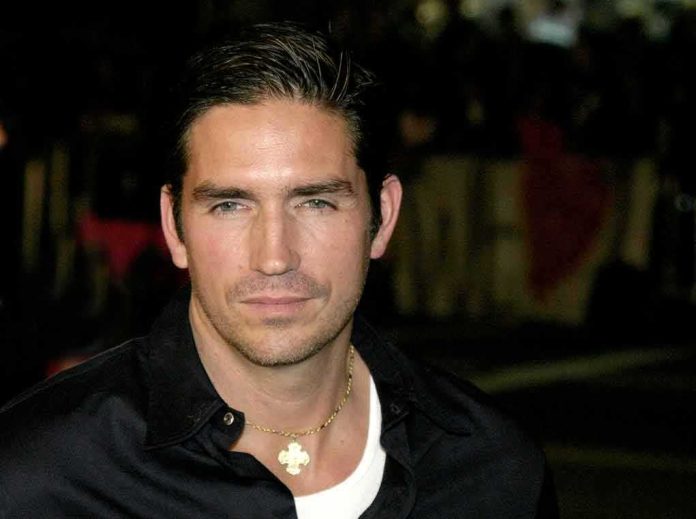
Ghost Soldier succeeds not because it reinvents the action film, but because it fuses a classically American frontier ethic—defend home, family, and town against predation—with a spiritual and masculine register that much of contemporary studio fare sidesteps. That fusion is the point; the film wears it openly.
The Short Version
- Ghost Soldier is built on a clear, patriotic premise: a former Special Forces soldier defends his Wyoming community and land against corporate encroachment, told in a lean action-thriller frame.
- Jim Caviezel’s performance and the film’s rhetoric align with traditional family, faith-tinted resilience, and communal self-defense—deliberately counter-programming to “values-light” blockbusters.
- Audience response diverges from many critics: the Tomatometer sits far below the audience score, signaling a taste gap that has defined recent culture clashes.
- The film’s marketing and reception fit a broader trend: entertainment functioning as identity signal in a polarized marketplace, especially around military, faith, and “heartland” iconography.
What the film is, on its own terms
Ghost Soldier is a compact action-thriller about Henry “Fitz” Fitzgerald, a solitary ex–Special Forces operator living off-grid in rural Wyoming who becomes, in the studio’s own language, “a one-man war” when a powerful corporate player moves to take over local land and water rights. That premise—property defense, neighbor protection, a veteran’s competence redirected from foreign theaters to a threatened hometown—establishes the film’s spine and stakes in a sentence. It is a classically Western setup refitted with modern logistics: drones, surveillance, weapon-systems know-how, and a contemporary behemoth instead of a cattle baron. The official synopsis and exhibitor descriptions are unequivocal on those points; they frame the picture as a straight-ahead action story with community and sovereignty at its core.
This is not a coy text. The mise-en-scène—Wyoming vistas, a semibrutalist homestead, tactical kit that looks used rather than fetishized—supports an ethic of self-reliance that the character does not merely declare; he operationalizes it. Reviews from mainstream outlets outline the same conflict architecture: Fitz’s home is slated for seizure by a corporate concern chasing control over water, the region’s nonrenewable lifeblood, which turns a private standoff into a test of whether local life can fend off extractive power.
Why it resonates with a particular audience
Caviezel’s screen persona has long intertwined physical resolve with metaphysical gravity. In Ghost Soldier he leans into that composite—stoic paternal energy, laconic speech, a sense that violence is justified only as shield for the innocent. The film treats masculinity aspirationally rather than as pathology; competence is moralized, not mocked. That choice reads as refreshingly direct to viewers who feel that big-tent franchises have drained their heroes of conviction in favor of quip-heavy affect. It also explains the bifurcated reception data: while a small set of aggregated critics land the film near the middle-bottom of their scales, verified audience scores are markedly higher, a signature of projects that connect to values before aesthetics in the critical frame.
The tonal register is equally deliberate. Beneath the gunfights is a communal liturgy: home as sacrament, neighbor as obligation, land as inheritance. None of this requires altar calls or overt sermonizing; it is spiritual by implication. Industry trackers and faith-culture researchers have documented that broad swaths of viewers, including across partisan lines, respond to honest, non-caricatured expressions of faith and meaning when embedded in mainstream narratives. That receptivity—less niche than many assume—has powered a quiet but durable lane for films that respect belief without commodifying it.
The cultural lane it travels: military competence, local sovereignty, and the “values signal”
Ghost Soldier also sits within a century-old exchange between uniformed service and cinema. American film has long treated military expertise as a narrative shortcut to moral authority and practical capability; when that expertise comes home, the veteran-as-steward trope follows, converting expeditionary skill into domestic guardianship. Scholarly surveys of film and the armed forces describe this intimacy—sometimes collaborative, sometimes merely thematic—as a persistent current in popular storytelling. While Ghost Soldier’s plot is strictly local, its grammar is unmistakably veteran: planning, rules of engagement inverted for defense, and the lonely burden of the most competent person in the room.
Layered on top is the modern marketplace reality: culture has become a proxy battlefield for identity. Recent social-science work mapping audience preferences across entertainment categories shows polarization’s “oil spill” into popular culture—large but uneven, with conservative-leaning audiences clustering more tightly around offerings that reflect their worldview. That helps explain why a conventional action premise can carry political charge today; audiences read not merely plot, but posture. In that environment, a film that affirms property rights, casts corporate overreach as villainy, and frames masculine duty as virtue will be taken—welcomed by some, derided by others—as a cultural statement as much as a movie.
Mechanics over messaging: how the film actually moves
Strip away the discourse and you have craft choices that earn their keep on screen. The 90-minute runtime forces narrative economy: establish the stakes, escalate pressure, reveal the protagonist’s competencies in set pieces that solve discrete tactical problems—surveillance neutralization, perimeter defense, extraction under fire—rather than bloated spectacle. Director William Eubank favors geography you can read, cause-and-effect you can follow, and gadgets that behave like tools, not deus ex machina. Exhibitor listings and trailers emphasize this leanness; it is a throwback sensibility in an era of maximalist CGI.
Characterization follows the same restraint. Fitz is defined by decisions, not monologues. The community is sketched economically: neighbors with names and stakes, not archetypes; a corporate antagonist with motives rooted in resource control rather than cartoon evil. Even critics who bristle at the film’s politics concede the clarity of its premise: a behemoth closing in on water rights, a house marked for razing, a man who refuses to yield ground. It is the old Western’s railroad baron reconceived as a global capital stack.
Movie review coming in hot . 🚨
Ghost soldier 💥
90 minutes of fantastic movie. Jim Caviezel showing off some great action abilities here. This movie doesn’t get bogged down with over the top redundancy or boring storylines. He’s a patriot defending his hometown and… pic.twitter.com/xRhqFTnH3A
— Silentmajority23 🇺🇸 (@Silentmajo95749) November 11, 2026
Reception, durability, and what it signals for studios
Audience enthusiasm amid critical ambivalence is no longer an anomaly; it is a release pattern. Aggregators capture the split cleanly: a middling Tomatometer, a robust audience score. For studios, that gap is a map—an indicator of underserved demand for action films that center duty, locality, and spiritual seriousness without irony. It also suggests a programming hedge: mid-budget, values-forward thrillers that do not need four-quadrant consensus to perform; they need clarity about who they serve and the courage to serve them without apology.
Ghost Soldier’s ultimate significance is less about any single speech or set piece than about permission structure. It tells filmmakers they can play the traditional chords—home, honor, courage, covenant—without winking, and still find an audience. And it reminds critics of a recurring misread: when a movie locates virtue in competence and loyalty, many viewers do not experience that as propaganda; they experience it as recognition. In a polarized marketplace where culture doubles as identity shorthand, that recognition is a powerful engine. It is also, when paired with rigorous craft, timeless.
Sources:
youtube.com, sonypictures.com, nytimes.com, rottentomatoes.com, thedailybeast.com, kinocalendar.com, journals.openedition.org, academic.oup.com, mediaed.org