The fiercest fights over identification rules aren’t really about IDs; they’re about what we value enough to burden, what risks we fear, and which errors we are willing to live with.
The Short Version
- California’s AB 2030 requires age checks for certain weight-loss and muscle-building supplements sold to minors; it is a targeted health regulation with carve-outs and multiple verification pathways.
- California voters rejected Proposition 39’s voter ID proposal decisively, leaving in place a system grounded in registration data and signature matching rather than photo ID at the polls.
- Equating supplement age gates with voter ID conflates different policy problems: preventing youth harm in a commercial setting versus setting universal conditions for ballot access.
- Evidence and politics cut both ways: research is mixed on turnout effects and confidence gains from voter ID, while AB 2030’s health rationale is broadly legible but its product scope can confuse consumers.
Two identification debates, one mechanism, different stakes
On paper, both controversies involve a commonplace act: show something that proves a fact about you. In practice, the questions and costs diverge. AB 2030 is a retail rule aimed at a narrow health concern—over-the-counter products marketed for weight loss or muscle building—and only when the buyer is under 18. It allows purchase with a prescription, and it gives online sellers flexibility to verify age through databases or at delivery, rather than insisting on a single in-person credential check. Proposition 39, by contrast, would have imposed an identification requirement on every voter, across all ballots and modes, replacing California’s existing signature-matching model with a front-end ID gate for in-person voting or an identification-number process for mail ballots. California voters rejected that shift roughly 60–40, leaving the status quo intact.
The result is not paradox so much as policy tailoring: the same tool—identity or age verification—plays out differently when the state’s interests, target population, and acceptable error costs differ. In age-restricted commerce, legislators often favor precaution for minors and build exceptions to preserve access under medical supervision; in elections, rules are judged against universal access, due process, and equal protection concerns, where small error rates can disenfranchise eligible voters or expose personal data at scale.
How AB 2030 actually works—and why its scope matters
AB 2030 does not sweep every jar at the supplement aisle into an ID regime. It targets products marketed for weight loss or muscle building and instructs retailers to verify age when a buyer’s majority is not reasonably apparent. For minors with a prescription, the covered products remain available, reinforcing the law’s child-protection posture rather than a categorical ban. Online, sellers can use third-party databases or require an adult signature with identification at delivery—design choices that spread friction across steps rather than forcing a single choke point.
Confusion stems from ingredients that sound familiar—creatine, green tea extract, raspberry ketone—appearing in public debate as shorthand for coverage. But reporting indicates those ingredients do not automatically determine whether a product is covered; marketing claims and product positioning matter, which means enforcement and retailer guidance will dictate the lived experience more than any single ingredient list. Precision in compliance—signage, SKU coding, staff training—will decide whether the policy feels like a scalpel or a sledgehammer to families and merchants.
California elections without voter ID: what authenticates a ballot
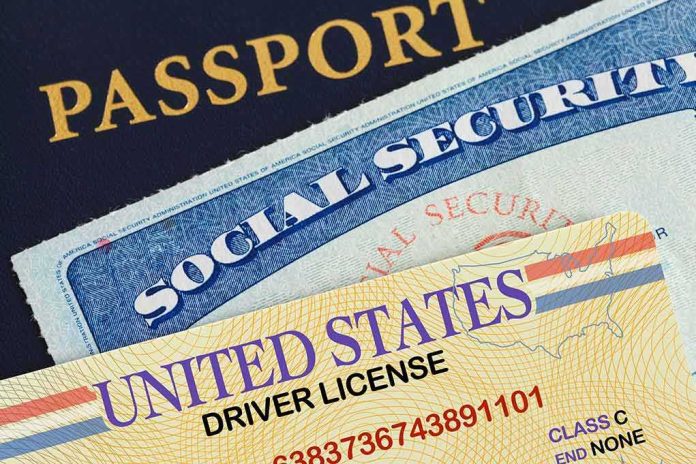
Opponents of voter ID in California didn’t ask voters to trade verification for trust; they argued that the state already authenticates eligibility and identity through registration data and signature verification. Voters provide a driver’s license number or last four digits of a Social Security number at registration and sign either at the polling place or on the mail-ballot envelope; county officials match that signature to the voter’s registration record, with cure processes to resolve mismatches. Proposition 39 would have replaced or layered onto that system; voters declined. County-by-county tallies show the measure lost broadly across the state, not just in coastal hubs.
Supporters of Proposition 39 framed ID as a commonsense confidence-builder, arguing it would reassure the public even if voter impersonation is rare. That intuition resonates with how IDs work in other domains—flying, cashing checks, or buying alcohol—but elections are unusual because minor administrative friction can translate into mass-scale participation effects, and privacy norms for ballot secrecy constrain what data can be collected and displayed.
In California, Your Protein Shake Gets More Scrutiny Than Your Ballot: AB 2030 Brings ID Checks to the Supplement Aisle Days Before Voters Shot Down Voter ID at the Polls pic.twitter.com/yNXpYtAKHv
— Stat Crux Report (@StatCruxReport) November 9, 2026
What the research actually says about ID, turnout, and confidence
Serious studies reach different conclusions on whether strict voter ID rules depress turnout. A large nationwide panel analysis covering 2008–2018 found no measurable negative effect on registration or turnout overall or for any group it could detect, but it also recognized limits in detecting very small effects. Other scholarship has identified modest turnout reductions or self-reported barriers among nonvoters in strict-ID states, suggesting impacts that may be context-dependent or concentrated in narrow bands of the electorate. Confidence is no easier: survey work indicates that simply living under a voter ID regime does not, by itself, increase public trust or reduce perceptions of fraud.
Age-verification online presents its own thicket of trade-offs: database checks, document uploads, or in-person delivery signatures all impose friction, and constitutional analysis stresses tailoring so child-safety goals do not overshoot into speech burdens for adults and businesses. AB 2030’s hybrid options—database verification or adult signature at delivery—track that tailoring instinct, keeping the compliance aperture narrow and tethered to minors rather than all purchasers.
Why the smoothie analogy misleads—and where the real debate belongs
Labeling supplement age checks as the new “Jim Crow” because Democrats opposed Proposition 39 confuses mechanism with mission. AB 2030 is a limited health rule aimed at minors with medical off-ramps; Proposition 39 was a universal condition on a constitutional act that would have altered how all Californians authenticate themselves to vote. The moral valence changes with the stakes and the error costs. In the supplement aisle, a false block inconveniences a family; at the ballot box, a false block disenfranchises a citizen. That asymmetry warrants different evidentiary thresholds and procedural safeguards.
None of this forecloses good-faith disagreement. Advocates like Carl DeMaio argue that, irrespective of fraud incidence, ID requirements would improve confidence, and they attribute Proposition 39’s defeat to campaign context rather than the idea’s merits. Critics counter that California’s existing system authenticates voters adequately without new paperwork hurdles or privacy risks, and the electorate sided with that view in 2026. The productive next step isn’t trading analogies; it is doing the administrative math: measure rejection rates, cure timelines, database match failures, and demographic differentials for both election ID regimes and retail age gates. If a rule’s benefits exceed its burdens within its domain, it will usually endure; if not, it won’t need a metaphor to fall.
Sources:
pjmedia.com, nytimes.com, nbclosangeles.com, yourcentralvalley.com, bakersfieldnow.com, deseret.com, newspress.com, kqed.org, nbcnews.com, kpbs.org, calmatters.org, thehill.com, latimes.com, eastbaytimes.com, laist.com