The most explosive moment in the Charlie Kirk assassination hearing was not the sniper video, but the stunning move Kirk’s own attorney made to force the case wide open to the public.
Story Snapshot
- Judge Tony Graf refused to shut out cameras, saying electronic coverage helps public oversight of the courts.
- Erika Kirk and her family demanded full transparency, even as they watched the assassination video from the front row.
- The defense warned that wall‑to‑wall media coverage could poison the jury, citing strong survey and expert evidence.
- Both sides now fight over whether sunlight brings truth or destroys the right to a fair trial.
The courtroom clash that turned a murder hearing into a media war
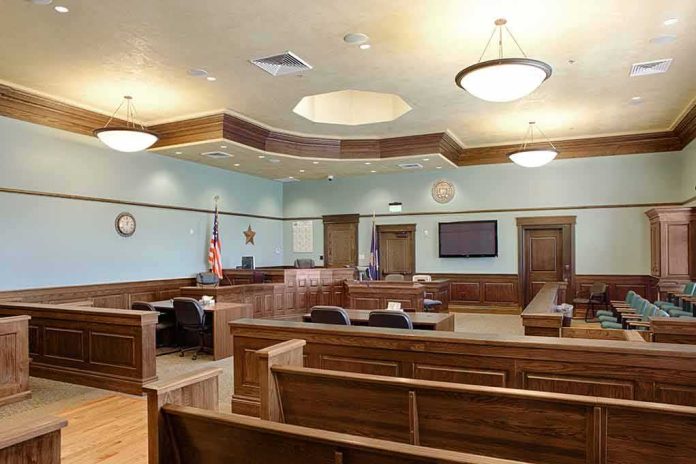
Inside a Utah courtroom, the Tyler Robinson preliminary hearing was supposed to answer one narrow question: is there enough evidence to send the man accused of assassinating Charlie Kirk to trial. Instead, it turned into a high-stakes fight over cameras, sealed exhibits, and who gets to control the story the country sees. Judge Tony Graf faced two powerful forces at once, each armed with facts, emotion, and the Constitution.
On one side sat the Kirk family and their attorney, pushing hard for maximum transparency. Graf had already ruled that electronic media coverage “provides a means to facilitate the public’s right of access to court proceedings,” a clear statement that cameras are not a circus but a tool for accountability. Prosecutors backed that view, arguing daily video and audio from court would show an orderly march of facts and help crush growing conspiracy theories around Kirk’s death.
What Erika Kirk asked for, and why it shocked seasoned court watchers
For many families, the instinct after a public assassination is privacy and distance. Erika Kirk chose the opposite path. In a public statement, she said, “We deserve to have cameras… I want there to be no hesitation in understanding what happened to my husband that day.” That demand was not about ratings; it was a plea to let millions of Americans see with their own eyes what the system is doing in her husband’s name.
Her words landed harder because of what the courtroom had just watched. Investigators played surveillance and other video that, they say, shows Tyler Robinson moving around campus, climbing toward a rooftop “sniper pad,” and positioning himself to fire the fatal shot. Another clip reportedly shows him later turning himself in at a sheriff’s office. As those images rolled, reporters noted that Robinson showed little visible reaction, even as Kirk’s family and widow sometimes stepped out, unable to watch every second.
The defense’s warning: cameras can wreck a jury long before trial
Robinson’s lawyers saw the same cameras and came to a very different conclusion. They asked the court to seal dozens of exhibits and limit what the public could see, arguing that “infecting the potential jury pool” with powerful video and audio would make a fair trial almost impossible. In support, they presented survey and expert evidence showing that pretrial media can tilt people hard toward guilt, even before they hear sworn testimony.
In American conservative thought, the right to a fair trial and the presumption of innocence sit at the core of due process. When defense experts describe jurors emotionally locked in by shocking video, and cite data about how many locals already think Robinson is guilty because of news coverage, that concern deserves to be taken seriously. It is not soft-on-crime talk; it is a reminder that government power must be checked even when the evidence looks strong.
Judge Graf tries to walk a narrow line between sunlight and fairness
Graf’s rulings so far show a judge trying to split a very thin difference. He denied a blanket attempt to shut out electronic media, leaning on Utah’s presumption that news coverage is allowed when the main goal is journalism, not entertainment or harassment. At the same time, he set rules on how some video exhibits could be handled, including keeping certain recordings from being copied and rebroadcast by the press in raw form.
He also adopted a new procedure that forces media outlets to request access a set number of days before key hearings, with tight page limits and no live arguments. That kind of framework may sound dry, but it quietly decides who can show the public what is happening and when. Critics see it as a structural speed bump on transparency. Supporters see it as a way to prevent cameras from turning complex hearings into a televised free-for-all that tramples due process.
Why this fight matters far beyond the Kirk case
The clash in this courtroom fits a bigger national pattern. High-profile criminal cases often see one side pushing for sealed evidence to protect jurors, witnesses, or ongoing investigations, while families and activists push for maximum sunlight in the name of trust. Studies of modern criminal investigations show that video has become one of the most common forms of physical evidence collected, while sworn statements still dominate many files. When that video is powerful, the pressure to broadcast it is intense.
Ladies and Gents
This is an absolute deliberate major cover-up in the Charlie Kirk assassination case and it’s staring everyone in the face.Utah investigators and police didn’t even do the most basic thing required in any real homicide probe: they didn’t properly seize Lance…
— MIA (@Mia_Stretch) July 9, 2026
From an American conservative and common-sense view, two truths collide here. Citizens have a right to see what government agents, prosecutors, and judges are doing with the power they hold. They also have a duty to protect the ancient right of any accused person to face an impartial jury, not one whipped up by viral clips and emotional pundits. In the Kirk case, the stunning move by the family’s attorney was to bet that more sunlight, not more sealing, is the path to both justice and public trust.
Sources:
pjmedia.com, apnews.com, pbs.org, youtube.com, facebook.com, atty.utahcounty.gov, fox4news.com, anthemeap.com