The Supreme Court just shut down Carter Page’s last path to force accountability for the FBI’s Russia probe surveillance fight.
Quick Take
- The Supreme Court declined to hear Carter Page’s appeal, leaving the lower-court dismissal in place.[1][3]
- Page had sued former Federal Bureau of Investigation Director James Comey and other officials over surveillance tied to the Russia investigation.[2][3]
- The Justice Department inspector general found major errors and omissions in the Foreign Intelligence Surveillance Act warrant process.[2][4]
- The case was blocked on procedural grounds, including a statute-of-limitations ruling, not a new merits ruling from the high court.[2][4]
Supreme Court Leaves Dismissal Standing
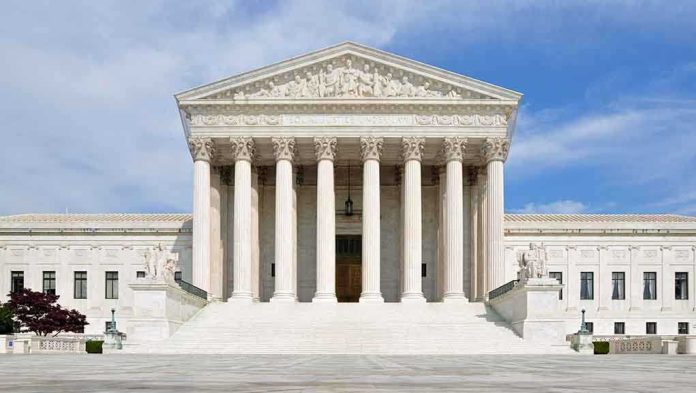
The Supreme Court refused to revive Carter Page’s lawsuit against former Federal Bureau of Investigation officials, ending one more legal route in the long-running fight over the Russia probe.[1][3] The justices acted without comment, which leaves the lower-court dismissal in place. That means Page did not get a fresh ruling on whether the surveillance was unlawful. For many conservatives, the result again shows how hard it is to pin down accountability after federal power is used and the clock runs out.
Page had asked the court to reopen claims against James Comey, Andrew McCabe, and others tied to surveillance warrants used during the 2016 election investigation.[2][3] The Court’s refusal does not erase the wider questions around the case. It only means the lawsuit stays dismissed. The reporting also notes that Justice Ketanji Brown Jackson did not take part. The practical result is simple: the Supreme Court did not disturb the lower courts’ judgment, and the individual claims do not move forward.
Why Page Said the Surveillence Was Abusive
Page’s case rested on the claim that the government used flawed warrant applications to monitor him during the Trump-Russia investigation.[2][3] That claim has support in the Justice Department inspector general’s findings. CBS News reported that the watchdog found 17 significant errors and omissions in the initial application and renewals.[2] CNN also reported that the inspector general later found the process was marked by numerous errors and inaccuracies.[4] Those findings explain why critics keep calling the FISA process a warning sign for civil liberties.
Still, the legal fight ran into a separate obstacle: timing.[2][4] The D.C. Circuit ruled that the statute of limitations barred Page’s claims against federal entities and FBI personnel.[2] CNN reported that the remaining claims were dismissed on that ground, and the Supreme Court declined to review that ruling.[4] In plain terms, the court did not say the surveillance allegations were true or false. It said Page’s case could not move ahead in that form, at that stage, under the rules.
What the Ruling Means for Accountability
The decision leaves a familiar pattern in place. Internal watchdog reports can expose serious failures, but personal liability is much harder to reach in court.[2][4] Page already reached a reported $1.25 million settlement with the government on separate claims, but that deal did not cover his claims against the individual officials.[2][3] So the core political issue remains unresolved for many readers: federal agencies can be found to have made major mistakes, yet the officials behind those mistakes often avoid direct courtroom consequences.
𝐒𝐔𝐏𝐑𝐄𝐌𝐄 𝐂𝐎𝐔𝐑𝐓 𝐒𝐇𝐔𝐓𝐒 𝐃𝐎𝐖𝐍 𝐂𝐀𝐑𝐓𝐄𝐑 𝐏𝐀𝐆𝐄’𝐒 𝐂𝐀𝐒𝐄 𝐀𝐆𝐀𝐈𝐍𝐒𝐓 𝐂𝐎𝐌𝐄𝐘 — $𝟏.𝟐𝟓𝐌 𝐏𝐀𝐈𝐃, 𝐙𝐄𝐑𝐎 𝐏𝐄𝐑𝐒𝐎𝐍𝐀𝐋 𝐀𝐂𝐂𝐎𝐔𝐍𝐓𝐀𝐁𝐈𝐋𝐈𝐓𝐘
Carter Page was the Trump campaign advisor the FBI surveilled for four years using FISA… pic.twitter.com/u9wWbvBl8E
— M.A. Rothman (@MichaelARothman) June 15, 2026
That gap matters because the FISA system depends on trust, secrecy, and careful court review.[2][4] When the record shows missing facts, bad paperwork, or misleading filings, the public has reason to demand tighter limits and real oversight. Page’s loss at the Supreme Court does not answer the larger constitutional concern that surveillance powers can be abused and then insulated by procedure. It does, however, show how difficult it is to turn documented misconduct into personal accountability in federal court.
Sources:
[1] Web – SUPREME COURT Rejects Carter Page’s Last-Ditch Effort to Hold James …
[2] Web – Supreme Court refuses Carter Page appeal over alleged FISA errors
[3] Web – Supreme Court rejects Carter Page lawsuit over FBI surveillance …
[4] Web – Supreme Court declines ex-Trump campaign aide Carter Page’s …