

When a century-old building abuts a deep excavation, gravity and soil mechanics become unforgiving; in Brooklyn, that interface turned lethal, yet a toddler survived with only scratches — a stark reminder that in urban construction, proximity risk is the story.
At a Glance
- A mixed-use building at 1321 Flatbush Avenue collapsed next to an active excavation; city investigators are probing whether adjacent work contributed.
- Eight people were killed and at least 17–18 others were injured; among the survivors was a two-year-old who escaped with minor injuries.
- Prior enforcement actions at the neighboring site included a March stop-work order and later penalties for continuing work.
- Pre-construction records reportedly documented cracks on the building face adjacent to the dig, aligning with known excavation interface risks.
What happened: a sudden failure at the edge of a construction pit
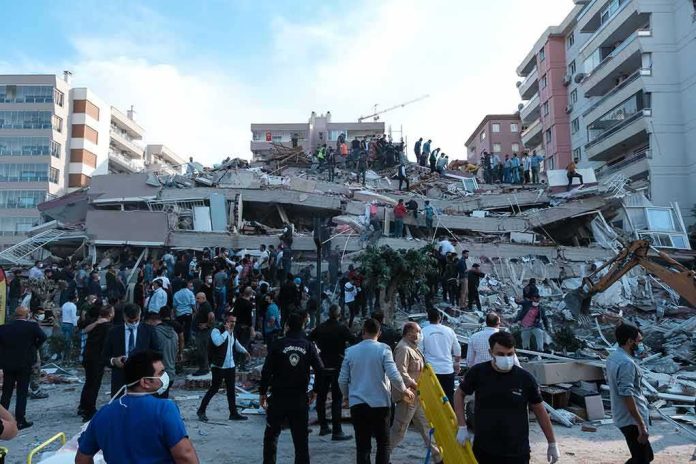
The three-story building at 1321 Flatbush Avenue — storefront below, apartments above — buckled and fell into the neighboring excavation in the Flatbush section of Brooklyn. Witness video from inside an apartment captured the collapse unfolding in seconds, and fire crews tunneled through rubble in a prolonged rescue. The New York City Department of Buildings (DOB) launched an investigation immediately, focusing on the adjacency: active excavation next door at 2625 Bedford Avenue where a larger mixed-use development was underway. Fatalities reached eight, with at least 17 to 18 injuries reported across outlets — a common spread as incident counts move from field tallies to formal confirmation.
The human scale of the disaster is impossible to ignore. One family’s interior video shows dust and daylight replacing a wall in an instant; the father later recounted that his wife and nine-year-old were hospitalized, while their two-year-old son emerged with only scratches — an improbable mercy amid catastrophic structural failure. Rescue footage shows FDNY cutting, cribbing, and shoring to reach trapped occupants as the pit and debris complicated access.
Why the interface between old foundations and new excavation is so perilous
Older New York buildings commonly sit on shallow spread footings bearing on compacted soil. That system assumes lateral soil confinement — the ground on the sides that keeps bearing strata from sloughing and foundations from migrating. Excavate deeper next door without robust temporary works and you change the stress field: soils can move, groundwater paths can shift, and unsupported earth can ravel into the void. That’s why city codes require engineered shoring, underpinning where needed, and monitoring of both movement and vibration during adjacent excavation. Fail the means-and-methods, and the neighboring structure can lose support, rotate, or translate enough to crack and then collapse.
Here, the adjacent site was authorized for excavation and, according to DOB records cited in multiple reports, had a recent compliance history that will draw scrutiny in any root-cause analysis: a March stop-work order tied to demolition without adequate overhead protection for neighboring properties; a subsequent April finding that work had resumed despite that order; and penalties recorded for each violation. Those facts do not prove causation — the cited issues concerned site protection and observance of the order, not necessarily the design or installation of the shoring system — but they establish an enforcement context in which investigators will test timeline, scope, and control over the work.
What the records and early field evidence establish — and what they don’t
Two public record threads matter. First, the physical context: the collapse occurred beside an active excavation for a larger mixed-use project. Officials stated excavation was ongoing when the apartment building failed; reporting places the building’s north facade — the side facing the dig — as the plane along which pre-collapse cracks and masonry misalignments had been documented in a pre-construction survey. A survey noting out-of-plane cracks or stepped masonry is a classic red flag for foundation or wall distress at an excavation interface; it does not, on its own, identify the trigger, but it does bound the problem to the locus of lateral support.
Second, the casualty and operations record: eight deaths, at least 17 to 18 injuries, extensive FDNY rescue operations, and a DOB investigation with law-enforcement involvement — all consistent across serious outlets. Initial language in a DOB entry reportedly attributed the collapse to unsafe adjacent construction but was later removed as premature, replaced by a comprehensive stop-work order linked to the collapse scene — a procedural correction common in fast-moving incidents and not, by itself, probative of cause. The key technical determination — whether excavation-induced soil loss, inadequate underpinning or shoring, vibration, groundwater migration, or pre-existing structural weakness initiated failure — remained under investigation in the days following the event.
Mechanism 101: how excavations destabilize neighbors
Engineers de-risk excavation adjacency through a layered strategy. Start with subsurface exploration (borings, groundwater data), then design a retention system — soldier piles and lagging, sheet piles, secant pile walls — to restrain earth. Where the neighbor’s footing sits above the excavation grade but too close to the cut, underpinning transfers load to deeper, more competent strata beneath the new excavation line. Sequencing matters: staged digging, immediate lagging, preloaded tiebacks or struts, and real-time monitoring (inclinometers for wall movement, crack gauges on the neighbor, settlement points on sidewalks and floors). A well-run job identifies movement trends early and pauses work to add bracing or revise means-and-methods before damage accumulates. Failures tend to share a pattern: over-excavation without immediate support, insufficient bracing stiffness, lagging gaps causing soil raveling, undermined toe support, or water ingress reducing effective stress. The debris field of a wall-and-floor pancake into a pit often reflects bearing loss and lateral soil migration toward the void.
The regulatory and enforcement frame in New York City
New York treats excavation and shoring as recurrent high-risk operations. DOB’s Construction Safety Reports track incidents and fatalities by category, including excavation/soil work and scaffold/shoring — not because they are exotic, but because they are frequent enough to merit their own line items in the city’s safety accounting. Contractors performing excavation must notify DOB in advance and are subject to stop-work orders for safety or compliance breaches; enforcement is real, but its deterrence power hinges on timely inspections and the practical bite of penalties. In Brooklyn specifically, construction injuries and incidents have numbered in the hundreds in individual years, reflecting the borough’s density of active sites and aging building stock. The Flatbush collapse drops squarely into a risk profile regulators understand well — which is why the agency reaction was immediate and sweeping.
What investigators will look for — and why it matters beyond one block
A competent forensic inquiry will sequence the workday and preceding weeks: excavation depths by date, shoring installation records, underpinning layouts, truck logs, and any deviations from stamped plans. It will pull monitoring data for wall movement and settlement, review pre-construction condition surveys and complaint history, and examine whether groundwater control (well points, sump management) matched the soil profile. Photographs and drone mapping of debris can reveal whether failure initiated at the foundation line or propagated from upper masonry; utility breaks can corroborate soil loss patterns. Contracts and permits identify who controlled means-and-methods at each phase — the owner, general contractor, excavation or demolition subs — a necessary step for both accountability and prevention.
This is not merely postmortem. New York continues to build into its vacant slivers and replace low-rise with mid- and high-rise. That growth abuts a 19th- and early-20th-century fabric of shallow footings and unreinforced masonry. The lesson is not to stop building; it is to internalize adjacency risk as a first-order design driver, budget for robust temporary works and monitoring, and enforce stop-work orders with speed and sufficient consequence that violations never pencil out. The Flatbush collapse underscores a simple engineering truth with civic implications: soil does not negotiate. When we ask it to hold long enough to build the future next to the past, we owe it the right shoring, the right sequencing, and the discipline to stop when the instruments say stop.
NYC Mayor Mamdani Orders Inspections at 100 Sites After Deadly Building Collapse in Brooklyn https://t.co/fvkMnqiQNH
— Democracy Now! (@democracynow) November 13, 2026
Sources:
lifesitenews.com, cbsnews.com, patch.com, brooklyn.news12.com, citylimits.org, abc7ny.com, apnews.com, ny1.com, clarin.com, therealdeal.com