

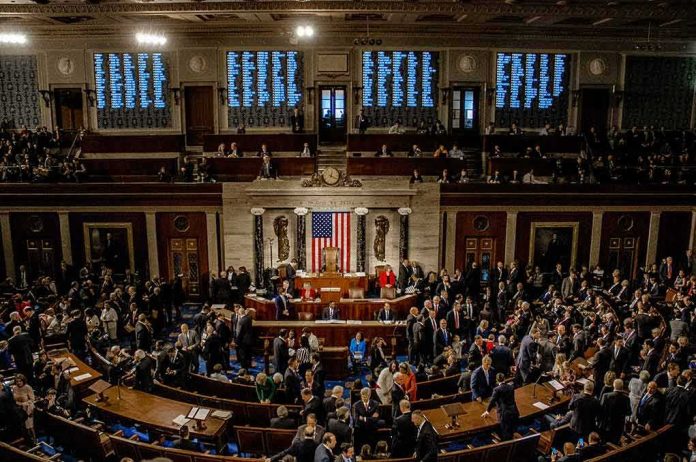
In Washington, impeachment is rarely the opening move; it is the end-state of a methodical information campaign that starts with ordinary oversight and, if facts and politics align, hardens into a constitutional remedy. That is the real story behind Democratic plans: a structured, committee-driven push to investigate alleged corruption, profiteering, and abuses of power in the Trump administration—with impeachment kept deliberately on the table, not at the top of it.
The Short Version
- House Democrats have mapped a broad oversight agenda targeting Trump-era decisions, business ties, and alleged self-dealing; impeachment is an option, not a foregone conclusion.
- The plan emphasizes subpoenas, hearings, and litigation to pry loose records across agencies and Trump-linked entities before deciding on any articles of impeachment.
- Democratic leaders are split on timing and scope; rank-and-file enthusiasm for impeachment is real but leadership is channeling energy into structured investigations first.
- Historically, most high-profile House investigations yield limited durable outcomes; only a minority materially change policy or personnel, a caution against assuming sweeping consequences.
What Democrats Are Actually Preparing: A Litigation-Ready Oversight Machine
Democrats’ roadmap is explicit: reclaim the House, stand up committee investigations across Judiciary, Oversight, Financial Services, Ways and Means, and Intelligence, and use subpoenas and court enforcement to obtain records the executive branch has resisted. The stated targets are concrete rather than rhetorical—potential self-enrichment by the Trump family and Trump-linked companies, agency decision-making tied to allies or donors, and specific episodes such as Iran-related war powers decisions and document-withholding in sensitive matters like the Epstein files. Impeachment is neither promised nor precluded; it is preserved as a contingent remedy if discovery produces evidence that crosses the constitutional threshold.
This design is not novel. It mirrors the modern “pre-impeachment inquiry” pattern: leverage routine oversight authorities to build a factual record, litigate refusals, and only then argue over articles. The Congressional Research Service describes this sequencing—initiation, committee investigation and hearings, markup of articles, and floor consideration—as the House’s established workflow for impeachment matters, distinct from day-to-day oversight only by purpose, not by investigative tools.
Why the Playbook Looks Like This: Constitutional Leverage and Historical Learning
The Constitution lodges the “sole Power of Impeachment” in the House; it needs no judicial preclearance to inquire whether impeachment is warranted. That authority coexists with the House’s ordinary oversight powers, and in practice the two blend: committees often investigate with impeachment as a possible outcome rather than a declared aim from day one. Scholars and practitioners have long endorsed a formal House vote to initiate an impeachment inquiry as best practice for clarity and court deference, but they are equally clear that no such vote is a constitutional prerequisite to gather facts.
Democrats’ emphasis on subpoenas and litigation reflects lessons learned from prior standoffs. When the executive branch refuses to produce witnesses or documents, the House must either compromise or sue; building a record that can survive court scrutiny requires tailored requests, articulated legislative (or impeachment) purposes, and patience. The result is a process measured in months, not news cycles—a cadence that frustrates activists but better positions Congress to prevail when separation-of-powers questions ripen in court.
Inside the Caucus: Appetite, Restraint, and the Choice Architecture
Within the Democratic caucus, the center of gravity favors aggressive fact-finding first. Leadership figures have steered members toward investigations rather than an immediate impeachment vote, both to avoid a politically premature gambit and to concentrate resources where subpoenas and depositions can surface verifiable evidence. Even so, floor votes reveal genuine internal pressure: when a member moved an impeachment resolution tied to immigration enforcement, most Democrats declined to help leaders table it, signaling that the rank and file are not reflexively deferential on timing.
Substantively, committee staffs have sketched initial lanes: potential self-dealing and profiteering by Trump and related entities; use of office to benefit donors and allies; and discrete agency controversies where watchdogs were sidelined or retaliated against—patterns that, if substantiated, fit classic abuse-of-power theories under House precedent. Separate reporting on the housing finance regulator controversy underscores why congressional committees are looking hard at politicized oversight functions and inspector general independence—a traditional congressional concern because it affects the reliability of internal controls.
The Counter-Position: Denial, Partisanship Claims, and Executive Resistance
Trump and his allies have framed prospective impeachment as a partisan attempt to overturn electoral outcomes and criminalize policy disputes. That line reprises earlier impeachment defenses: deny wrongdoing, cast inquiries as witch hunts, and argue that contested acts sit within Article II discretion. The White House has also signaled a willingness to stonewall document production and witnesses where it deems inquiries illegitimate, forcing Democrats to litigate access rather than score quick oversight wins.
Those responses matter procedurally more than rhetorically. Courts typically avoid adjudicating impeachment merits, but they will decide subpoena-enforcement and privilege fights; a record showing specific legislative or impeachment purposes, narrowed requests, and consistent committee process improves the House’s odds. Democrats appear to be engineering toward that litigation posture rather than betting on speed or spectacle.
Base Rates and Realistic Outcomes: Most Probes Don’t Reshape the Presidency
History is a practical hedge against maximalist expectations. Across the postwar era, a minority of marquee House investigations produced large, durable effects; most generated headlines, some reforms, and limited enduring change. Brookings’ catalog of major congressional probes found that only five of thirty-one significant House investigations yielded very significant impact, with a similar number registering moderate effect and the remainder little or none. That empirical base rate is why seasoned investigators build for endurance—document trails, corroborated testimony, enforceable subpoenas—rather than quick catharsis.
The implication for readers is straightforward. The Democrats’ plan is serious in design and specific in target selection; it is not a promise of impeachment, and certainly not of removal. It is a commitment to assemble a factual record under the House’s constitutional powers, to test executive resistance in court where necessary, and then to decide—on substance and on politics—whether the facts meet the House’s own standards for articles of impeachment.
How to Read the Next Phase
Watch the mechanics, not the rhetoric. Which committees lead, how narrowly subpoenas are drawn, whether committees coordinate to avoid duplicative requests, and how swiftly they tee up enforcement actions—those signals will tell you whether Democrats intend to amass a litigable record or primarily message. Conversely, monitor the executive branch’s privilege assertions and refusals; categorical resistance tends to strengthen the House’s hand in court when impeachment purposes are credibly articulated. The system is designed to be slow, but it is not designed to be opaque to the attentive observer.
Sources:
theatlantic.com, nytimes.com, pbs.org, fortune.com, reuters.com, yahoo.com, clickorlando.com, politico.com, thedailystar.net, english.ahram.org.eg, apnews.com, ebsco.com, bbc.co.uk, foxnews.com, xinhuanet.com, democrats-intelligence.house.gov, congress.gov, oversight.house.gov, history.house.gov