Arson prosecutions rise or fall on a simple hinge: can investigators connect a specific human act of ignition to a specific fire. In Charleston, West Virginia, authorities say surveillance video does exactly that, placing a young couple beside a vacant house moments before flames took hold and showing the sequence that led from a lit object to a burning structure.
At a Glance
- Investigators cite surveillance video showing a couple beside a vacant Charleston home just before it ignited, with an object allegedly lit and placed inside.
- The defendants, identified in court records as Dakota Harper, 21, and Felicity Eatmon, 22, face first-degree arson and conspiracy charges in Kanawha County.
- Reports place the fire around 11:15 p.m. at 405 Maryland Avenue; the house was vacant and without utilities, reinforcing the unlawful-ignition theory.
- Modern arson cases often center on video timelines; best practice adds cause-and-origin analysis under NFPA 921 to confirm incendiary cause.
What investigators and the docket say happened
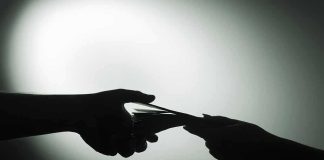
According to court-record-based reporting, Charleston authorities obtained surveillance footage from an alley flanking a vacant residence on the 400 block of Maryland Avenue. The video allegedly shows the pair together immediately before the fire, with Eatmon handing Harper what appears to be a piece of paper; Harper then uses a handheld ignition source to light it and places the burning material inside the structure. Multiple outlets describe the same core sequence and location, citing a criminal complaint and magistrate filings that anchor the timeline to approximately 11:15 p.m. on a Sunday night. The house is identified as vacant and without utilities—facts that, in an arson framework, reduce plausible accidental causes inside the building and sharpen the inference of unlawful ignition.
Harper and Eatmon were arrested shortly thereafter and arraigned on first-degree arson and conspiracy counts. Their names, ages, and the felony charges align across independent local and national reporting built on Kanawha County court records. Several reports add that the video shows the pair partially entering the structure as the fire grew and then departing as flames intensified—behavior consistent with active participation rather than incidental presence. While arraignment is not a finding of guilt, the criminal complaint and the synchronized media accounts establish the scaffolding of the state’s case: presence, act of ignition, and resulting fire.
Why video-driven arson cases are persuasive to juries
Jurors understand sequence. When surveillance situates a suspect at the ignition point, shows a flame being created, and then captures fire growth, the chain of inference is intuitive. Appellate summaries and trial records across jurisdictions reflect how video timelines, even without perfect angles or audio, have become core evidence linking a defendant to the moment a fire begins—especially when paired with corroborating scene conditions and ordinary human behavior (arriving, lighting, leaving). In Charleston, the allegation is that the video shows a handoff of a combustible, an ignition, and placement inside a structure. That is the physical act prosecutors must prove to convict on a willful burning theory; if jurors see it and accept the identification, the legal elements align.
Statutorily, many states—including West Virginia by analogous coverage—treat dwellings as protected whether occupied or not; vacant does not mean valueless under arson law. The gist is risk: structures—even derelict ones—sit among people, utilities, and other buildings. Fire spreads. That risk exposure is why prosecutors charge willful ignition in an unoccupied residence as a serious felony, not a property nuisance.
The fire-science layer: what best practice adds to video
Experienced fire investigators do not stop at a compelling clip. Modern standards guide them to build a cause-and-origin case that can withstand scrutiny. The NFPA 921 framework—the field’s benchmark—requires systematic data collection, scene documentation, hypothesis generation, and the elimination of accidental causes before declaring a fire incendiary. The method is not academic window dressing; it anticipates defense arguments about alternative causes and ensures that the “what you see” in a video is consistent with what the physical scene records: burn patterns, ventilation paths, depth of char, and potential ignitable liquids or improvised combustibles. Properly executed, it gives the prosecutor two independent pillars: the image timeline and the scientific reconstruction.
Documentation is the connective tissue. Photographs, diagrams, and scene notes preserve what the ephemeral flames erased, allowing later reviewers—courts, jurors, experts—to test investigators’ reasoning. Federal and industry guidance is explicit: record the scene methodically and retain evidentiary materials for possible litigation. When done well, the record can corroborate simple but decisive claims (for example, a point-of-origin at the doorway where a burning object was allegedly placed) and rule out easy alternative explanations (such as a live electrical fault in a home described as utility-free).
Where the public reporting converges—and what it implies
On the publicly reported facts, several distinct outlets converge on the same heart of the state’s case: video places Harper and Eatmon at the site; it shows a combustible lit and placed inside; the home ignites; the pair leave; both are charged with first-degree arson and conspiracy. That convergence matters in practical terms. Prosecutors tend to start with what convinces most quickly—a clear video timeline—and then round out with the fire-marshal file, incident reports, and any collateral damage documentation. Reports referencing damage to a nearby church underscore why authorities treat even “vacant” structure fires as serious public-safety events; adjacent properties, particularly older wood-frame buildings, are vulnerable once one structure is aflame.
In contemporary arson adjudication, this pattern is common: a visually straightforward ignition sequence supported by a cause-and-origin write-up that excludes accident. It is the playbook because it works. Surveillance is the modern eyewitness—reliable on place and time, unemotional on sequence—while NFPA 921 disciplines the interpretive parts of the job. Courts increasingly expect both, and competent arson defenses attack one or the other: misidentification on video or insufficiency in the fire-science elimination of accidental causes.
TikTok Couple Charged With Arson After Surveillance Video Allegedly Captures Them Setting Vacant West Virginia Home Ablaze https://t.co/SOBsXz45mB #gatewaypundit via @gatewaypundit
— Edward Jobin (@TedRox) October 1, 2026
What to watch as the case advances
Arson is ultimately about intent expressed as action. In this Charleston matter, the action prosecutors will lean on is the alleged lighting and placement of a burning object inside a dwelling. From there, three threads typically determine outcomes. First, video clarity and identification: can the state prove, to a jury’s comfort, who is visible and what exactly they are doing in each frame. Second, scientific corroboration: does the origin-and-cause analysis align with a deliberate interior ignition and exclude plausible accidental mechanisms, particularly in a vacant, utility-free structure. Third, collateral impact: if adjacent property damage is documented, it can aggravate sentencing exposure and sharpen juror sense of endangerment even without injuries.
None of that is novel; it is how modern arson cases are built. The Charleston prosecution as described tracks that blueprint closely: a time-stamped sequence, a vacant structure, and felony counts aligned with willful burning and conspiracy. If the evidence in the file matches the public narrative, the state has assembled the kind of case jurors readily understand—and, more importantly, the kind that squares investigative storytelling with the discipline that fire science demands.
Sources:
thegatewaypundit.com, tmz.com, wchsnetwork.com, ladbible.com, wchstv.com, lamag.com, cbsaustin.com, hindustantimes.com, nypost.com, usmagazine.com, law.justia.com, amu.apus.edu