President Trump’s vow to “knock out” Iran’s power plants and bridges if Tehran defies Strait of Hormuz demands signals a dangerous slide toward infrastructure warfare that could upend global shipping and civilian life [2][3][4].
Story Snapshot
- Trump threatens strikes on Iranian infrastructure over Strait of Hormuz tensions [2][3].
- Rights advocates warn rhetoric risks large-scale civilian harm [4].
- Pattern of U.S.–Iran crisis cycles raises risk of escalation before mediation [4].
- Conflicting claims over ceasefire breaches cloud facts on the ground [2].
Trump’s Threats Target Iran’s Infrastructure Amid Strait Dispute
President Donald Trump published posts warning Iran that the United States could disable “every bridge” and “every single Power Plant” if Tehran defies demands linked to shipping access through the Strait of Hormuz. His messages described recent Iranian actions as violations of a ceasefire and framed the showdown as the latest chapter in decades of hostility. Media summaries of the posts, citing Sunday morning timing, captured his threat to “knock out” Iran’s infrastructure if compliance falters [2][3].
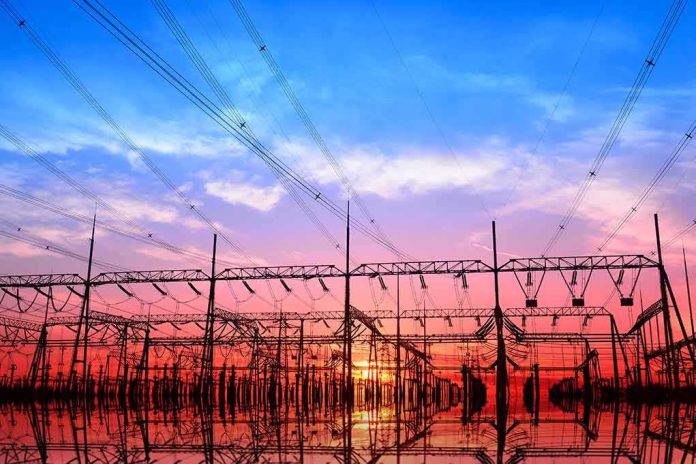
Trump’s rhetoric places infrastructure and energy networks squarely in the crosshairs, a step that extends beyond traditional maritime deterrence. By tying the warnings to alleged firing incidents near international shipping lanes, he signals consequences aimed at crippling Iran’s mobility and electricity grid. Such threats, even when used as leverage, heighten the chance of miscalculation in a congested waterway where a third of seaborne oil passes, and where military and commercial vessels operate in close proximity [2][3].
Rights Groups and Allies React to Civilian-Risk Escalation
Amnesty International criticized the president’s statements, arguing that targeting essential infrastructure could inflict widespread civilian suffering. The group urged urgent global action to prevent potential atrocity crimes, emphasizing that power and bridge destruction would disrupt hospitals, water systems, and humanitarian access. The warning underscores how punitive strikes on dual-use assets, even when intended as coercive tools, can blur legal and moral lines if foreseeable civilian impacts are extensive and prolonged [4].
Allied and regional observers, tracking the administration’s evolving signals, noted previous remarks urging civilians to leave Tehran, which stoked fears of a widening confrontation. Reporting highlighted that the White House sought to downplay imminent war at points, yet presidential posts repeatedly sharpened the stakes, complicating diplomatic space. The communications whiplash risks undermining quiet mediation by partners who traditionally help steer U.S.–Iran crises away from open conflict [5].
Competing Claims, Familiar Pattern, and What History Suggests
Competing assertions over who violated a ceasefire dominate the dispute. Trump’s posts alleged Iranian firing on or near vessels during the supposed truce window; Iranian officials, through various channels, have historically framed their actions as defensive and condemned blockades as provocations. Independent confirmation of specific incidents referenced in the latest posts remains limited in open reporting, leaving the public with sharply divergent narratives amid an information-scarce battlespace [2].
U.S. President Donald Trump has rejected Iran’s counterproposal to end the 10-week Middle East conflict, labeling it “totally unacceptable” in a Truth Social post. Tehran responded defiantly, with President Masoud Pezeshkian stating, “We will never bow our heads before the…
— LOG Global News (@LogGlobal14604) May 11, 2026
Analysts point to a recurring pattern since 1979: maritime incidents spark accusations, threats escalate to infrastructure or regime-pain language, and third parties later broker de-escalation. Rights monitors warn that normalizing threats against civilian-critical nodes lowers the threshold for tactics that disproportionately impact ordinary people. For Americans across the spectrum frustrated with perpetual crises and elite brinkmanship, the cycle reinforces a belief that Washington and Tehran’s hard-liners play power games while families, markets, and energy costs absorb the shock [4].
Sources:
[2] Trump, 79, Tests Fresh Iran Threat in Morning Rage Post
[3] Trump threatens ‘whole civilization will die tonight’ ahead of Iran …
[4] Iran: President Trump’s apocalyptic threats of large-scale civilian …
[5] Trump urges ‘everyone’ to flee Tehran, sparking speculation of …