

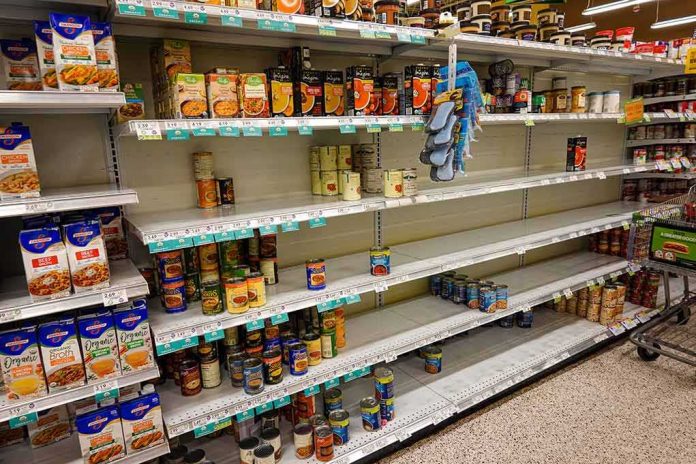
A major food manufacturer’s CEO just revealed that millions of American families are literally running out of money before each month ends—a stark admission that exposes the financial strain ordinary households face despite official economic reports claiming strength.
Quick Take
- Kraft Heinz CEO Steve Cahillane stated consumers are “literally running out of money toward the end of the month,” signaling widespread household budget exhaustion.
- The company is shifting strategy away from premium pricing toward value offerings, smaller package sizes, and aggressive promotions to match consumer spending capacity.
- Cahillane’s warning reflects a broader pattern among consumer packaged goods executives citing unprecedented affordability pressures linked to years of cumulative price increases.
- The admission highlights a K-shaped economic recovery where affluent consumers drive retail gains while lower and middle-income households struggle with month-end cash depletion.
CEO Warns of End-of-Month Financial Crisis
Steve Cahillane, chief executive of Kraft Heinz, told media outlets that American consumers face a critical affordability crisis. “Consumers are literally running out of money toward the end of the month,” Cahillane stated, characterizing the situation as something he has never witnessed in his career [1]. The admission came as Kraft Heinz reported beating first-quarter 2026 earnings and revenue estimates, yet the company simultaneously warned investors that consumers face severe strain driving strategic changes across its product portfolio [3].
Strategic Pivot Toward Affordability
In response to consumer financial exhaustion, Kraft Heinz announced a comprehensive shift in pricing and product strategy. The company will lower prices on select items, expand promotional deals, and introduce smaller package sizes at reduced price points designed to match what households can actually spend [1]. Cahillane emphasized that Kraft Heinz will cover only half of input cost inflation through pricing increases, relying instead on operational efficiency to absorb remaining costs. This approach reflects recognition that further price hikes would price the company out of reach for cash-strapped families [3].
Years of Inflation Fracture Consumer Demand
Cahillane linked current consumer strain directly to cumulative grocery inflation spanning years. “The grocery industry is already struggling because years of price increases have hurt sales volumes, as consumers simply cannot keep up,” he explained [1]. The admission underscores a reality that transcends partisan debate: working families and retirees on fixed incomes have absorbed relentless price escalation on essentials like food, energy, and household goods, eroding purchasing power faster than wages have risen. This pattern has forced consumers to trade down to cheaper alternatives or reduce purchase frequency [2].
Kraft Heinz is pivoting its strategy to focus on value as CEO Steve Cahillane addresses rising consumer concerns over food affordability. https://t.co/ULIfph79jo pic.twitter.com/l0VpHeUTSP
— Yahoo Finance (@YahooFinance) May 10, 2026
Industry-Wide Pattern of Consumer Strain Warnings
Cahillane’s warning is not isolated. Chief executives across the consumer packaged goods sector—including leaders from Whirlpool, McDonald’s, and other major brands—have reported declining consumer demand and purchasing behavior shifts in 2026. The pattern reflects a well-documented industry trend where 78 percent of consumer packaged goods executives cited consumer “strain” or “trading down” in earnings calls during 2023-2025, with frequency accelerating into 2026 as cumulative inflation effects compound [2]. These warnings typically precede announcements of value-focused product strategies, mirroring Kraft Heinz’s current pivot.
Tension Between Official Data and Lived Experience
The CEO’s candid assessment creates tension with macroeconomic headlines. Official retail sales data shows 1.7 percent growth in March 2026, and April 2026 employment figures exceeded expectations with 115,000 new jobs added, keeping unemployment at 4.3 percent. Yet these aggregate figures mask a K-shaped recovery where affluent consumers drive spending gains while lower and middle-income households cut back, particularly toward month-end when savings are depleted. Cahillane’s statement validates the lived experience of millions who feel financially squeezed despite headlines proclaiming economic resilience.
Sources:
[1] Kraft Heinz CEO pushes value: ‘Consumers are literally running out of money’
[2] Consumers Are ‘Running Out Of Money’ And Cutting Back, CEOs Warn
[3] Kraft Heinz CEO Says Shoppers Are Maxed Out as Inflation Strategy …