
Three arrests highlight the dark underbelly of campus life as Providence College students survive a brush with death at an off-campus party.
Story Overview
- Three individuals arrested for supplying fentanyl to students.
- Seven students overdosed but were revived with Narcan.
- Police found drugs and ghost guns at a nearby residence.
- The incident underscores ongoing risks despite declining regional overdose deaths.
Incident Details and Arrests
In early December 2025, a party turned potentially lethal for seven Providence College students who overdosed on drugs laced with fentanyl. All students were revived with Narcan, a life-saving opioid antagonist. The swift response from emergency services averted fatalities. This incident occurred in the city of Providence, Rhode Island, where local police quickly traced the drug source to a nearby residence.
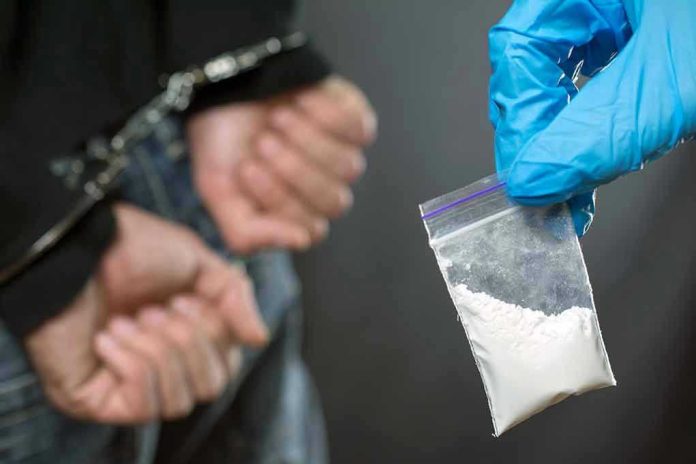
Three suspects—Angel Williams, Patrick Patterson, and Chemistry Simonneaux—were arrested following a police raid. Authorities confiscated around 10.6 grams of fentanyl, along with firearms, including untraceable ghost guns. These arrests shine a light on the broader issue of fentanyl distribution and the presence of illegal weapons within the community, raising concerns over safety and legality.
Risks and Realities of Fentanyl
Fentanyl, a synthetic opioid significantly more potent than morphine, has long been implicated in overdose crises across the United States. Despite a decline in overdose deaths in New England, the danger posed by fentanyl persists. Events like the Providence party underscore that while fatality rates may drop, the prevalence of fentanyl in recreational drugs remains a severe risk, particularly in college environments where drug use can be casual and uninformed.
Students often underestimate the risks associated with street drugs, unaware of contamination with potent substances. This incident serves as a cautionary tale, reminding young adults of the fatal potential hidden in seemingly innocuous recreational drug use.
Institutional and Community Reactions
Providence College and the local community are grappling with the implications of this incident. The college administration must navigate student safety, parental concerns, and potential policy adjustments. Meanwhile, local law enforcement continues to emphasize the importance of community cooperation in tackling drug distribution networks that endanger public safety.
Law enforcement agencies, including the Providence Police Department, play a crucial role in managing such crises. Their efforts in swiftly identifying and apprehending the suspects reflect a commitment to community safety and drug crime deterrence. The case could set a precedent for how similar incidents are handled, emphasizing the need for vigilant policing and robust legal frameworks.
Broader Implications and Future Directions
In the aftermath, institutions may intensify harm reduction strategies, such as widespread naloxone availability, peer-education programs, and stronger medical-amnesty policies. This proactive approach aims to equip students with the knowledge and tools necessary to mitigate risks associated with drug use.
The criminal justice system is poised to use this case as a benchmark for future prosecutions related to drug-induced overdoses, even when non-fatal. The inclusion of ghost guns in the charges may lead to a focused crackdown on illegal firearms, especially those linked to drug operations.
Sources: