

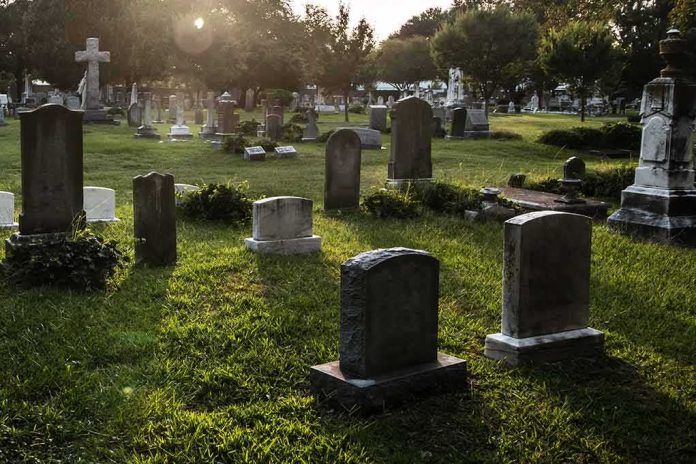
When veterans’ bronze grave markers disappear, the harm isn’t measured in scrap prices; it’s measured in trust. Hopkinsville’s case—27 markers stolen from two cemeteries, a suspect arrested after investigators traced the bronze into the salvage stream—shows how a small, repeatable crime extracts a large civic cost.
The Short Version
- Police and city officials in Hopkinsville reported 27 bronze veterans’ grave markers stolen from Cave Springs and Riverside cemeteries.
- Investigators linked the thefts to the scrap market; a suspect has been arrested and charged in connection with the case.
- These crimes follow a national pattern: bronze memorials are pried up, broken, and sold quickly for far less than their replacement cost.
- Prevention and response hinge on tighter scrap-yard controls, better cemetery security practices, and rapid community alerts.
What Happened in Hopkinsville: A Targeted Theft, A Familiar Trail
Over the course of roughly a week, city crews and families discovered that bronze veterans’ markers—two-foot-by-one-foot military plaques set into the ground—were missing from plots at Riverside and Cave Springs cemeteries in Hopkinsville, Kentucky. Officials tallied 27 stolen markers and asked for the public’s help. This wasn’t speculative vandalism; grounds teams track rows, and the absences were concrete, clustered, and recent. Local news documented the count and the locations with precision, establishing the scope before police moved on to attribution and arrest.
Hopkinsville Police then pursued the most likely commercialization route: scrap. Bronze is copper-rich and easy to offload anonymously if a seller can pass cursory checks. Investigators traced the missing metal into the salvage stream and arrested a suspect, announcing charges tied to theft and graves violations. Coverage described the arrest as the culmination of a standard investigative arc: confirm disappearances through cemetery records and staff, canvass scrap buyers, and match remains or records to missing items. While an arrest is not a conviction, the through-line—from theft reports to a named suspect in custody—rests on official accounts that align across outlets.
Why Bronze Memorials Are a Recurring Target
These thefts keep happening because the incentives align too neatly for opportunists. Bronze memorial items combine a high value-to-weight ratio with predictable placement and, too often, limited on-site guardianship after hours. Thieves lift, pry, or chisel them out, shatter or cut off identifying features, and move them quickly. Police in other jurisdictions report the same pattern, from New Jersey cemeteries losing hundreds of flag holders to Pennsylvania and Maine communities confronting waves of missing markers ahead of remembrance dates. The economic calculus is perverse: sellers may realize a few dollars per pound at a yard, but replacement costs—procurement, engraving, installation—multiply that figure many times over, shifting the real burden to families and municipalities.
Hopkinsville fits this template. City crews first surfaced the anomaly during routine grounds work; officials then broadcast a community alert and sought scrap-yard cooperation—tactics that mirror successful responses elsewhere. In Indiana, for example, a theft spree of veteran markers ended with arrests after sheriffs followed the bronze into the salvage ecosystem, a move predicated on the same chain of custody police pursued in Kentucky. The details vary, but the mechanism rarely does: bronze leaves sacred ground and enters a commodity channel designed to absorb it quickly unless a buyer recognizes what they’re looking at and refuses the transaction.
The Human and Financial Costs: Disproportionate and Avoidable
The accounting here is moral first, fiscal second. Veterans’ markers are not decorative metal; they are the fixed record of service and identity at a gravesite. Removal ruptures that continuity for families and communities, especially in the run-up to public memorials when flags and plaques anchor rituals of recognition. That is why local leaders’ language in similar cases is visceral—words like “disgusting” are not rhetorical inflation but a recognition that someone monetized a symbol that is explicitly non-fungible in civic life.
Even if a city can navigate replacement programs, the clock runs slow: ordering new bronze, confirming inscriptions, coordinating installations, and restoring uniformity row by row. Meanwhile, the scrap sale that motivated the theft often barely covers a utility bill. Philadelphia-area officials estimated thousands of dollars in replacement value from thefts likely netting only a few hundred dollars at yards—an asymmetry consistent with what Hopkinsville crews described when asked about the cost of replacing the missing military plaques.
How Police Build These Cases: From Grounds to Yards
The investigative choreography is well established. First, cemetery staff document absences and confirm they’re not relocations for maintenance or sinkhole repairs—mundane causes that can mimic theft if records lag. Next, police collect on-site evidence: disturbed soil, tool marks, concrete residue, or fractured bronze fragments. Then comes the commercial trace: visiting scrap yards, scanning manifests, and, where state law permits, reviewing seller IDs and transaction photos. Arrests typically follow when investigators match distinctive fragments or dimensions to missing items or when a yard has already flagged suspicious lots and notified law enforcement. Hopkinsville’s arrest fits this blueprint, including the pivot to the salvage channel that often breaks the case open.
That process works best when scrap dealers act as partners. Many states require yards to log purchases of regulated metals, hold items for a short period, and capture seller identification; those controls slow the turnover enough for police to interdict. Where those rules exist and are enforced, veteran-marker thefts are harder to monetize; where they don’t, cemeteries carry most of the risk, and families absorb the downstream pain. Hopkinsville officials’ early engagement with local media was therefore more than public relations—it was a practical probe to surface leads and signal to yards exactly what might arrive at their scales.
Prevention That Works: Deterrence at Three Choke Points
Deterrence starts where the theft occurs. Simple, durable anchors—longer tamper-resistant bolts or reinforced concrete bedding—raise the time and tool burden on would-be thieves. After-hours visibility and motion-triggered lighting at cemetery entrances and along veteran sections can further tighten the window. These are not expensive retrofits compared with the outsized replacement expense of even a handful of plaques. Many associations also inventory veteran sections with photo logs tied to plot maps; when something goes missing, the timestamped record accelerates police work and insurance claims.
The second choke point is rapid notice. Hopkinsville’s public alert, like others, put specific numbers and locations into the community within days. That cadence matters: families visit on weekends; city crews mow on cycles; scrap yards turn metal daily. The faster the alert, the likelier that a buyer hesitates, a neighbor recalls a late-night vehicle, or a patrol unit connects a truck loaded with bronze to a specific crime scene.
Finally, the commercial gate. Yards can train intake staff to recognize the standard dimensions, patina, and fastening scars of grave markers and flag holders; they can also refuse purchases that match those signatures absent verifiable provenance from a cemetery, monument company, or government agency. In jurisdictions that require holds, yards can segregate suspect bronze for law-enforcement inspection. These steps do not vilify salvage operators; they acknowledge their central role in stopping a predictable flow of stolen memorial metal before it becomes anonymous shred.
🚨A suspect is facing charges after the theft of military veteran grave markers from cemeteries in Hopkinsville. https://t.co/YpeD7XmRuF#VeteranGraveMarkers #CemeteryTheft #CrimeNews #MilitaryVeterans pic.twitter.com/J4lkNHFq8j
— FoxNashville (@FOXNashville) September 3, 2026
What This Means Going Forward
Hopkinsville will likely replace the missing markers and continue to harden its cemeteries against repeat offense. The arrest sends a signal, but the stronger deterrent is friction: make removal noisy and time-consuming, make resale difficult and slow, and make discovery swift and public. Communities elsewhere should not wait for a theft to test their systems. Inventory veteran sections, brief local yards, and set an expectation with police that grave theft tips jump to the front of the line. The crime will not vanish; the economics are too simple. But its frequency can drop sharply when every step in the chain—from plot to purchaser—has a countermeasure.
Sources:
military.com, newschannel5.com, wsmv.com, wbko.com, youtube.com, wmskamfm.com, whvoradio.com, fox17.com, patch.com, 6abc.com, abcnews.go.com, cbsnews.com, casetext.com