

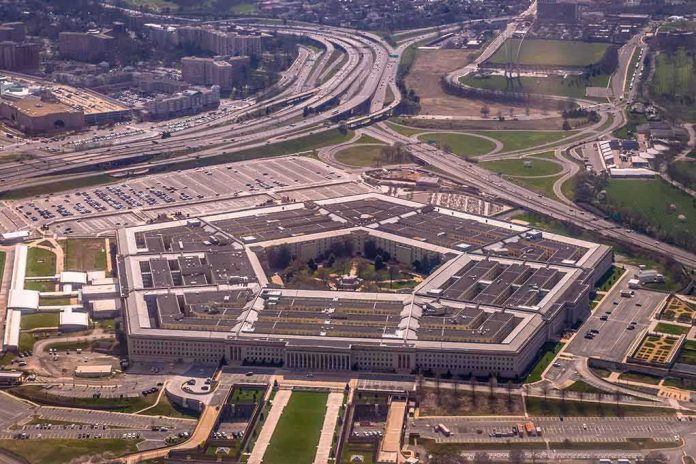
Names and wiring diagrams matter in Washington; by restoring the Office of Strategic Services brand and elevating its civilian leader to parity with the Military Department Secretaries, the War Department has not just polished a WWII-era plaque, it has shifted decision-rights, budget traction, and acquisition leverage for America’s special operations enterprise.
At a Glance
- The War Department rebranded the SO/LIC secretariat as the Office of Strategic Services and elevated its civilian chief to equal footing with the Military Department Secretaries.
- The elevation is designed to harden authority over resources, staffing, and “special-operations-peculiar” acquisitions long debated since USSOCOM’s 1987 authorities matured.
- A Senate bill would codify elements of the change in statute, signaling congressional interest in permanent structure, not a passing memo.
- The move fits a historical pattern: failures or friction in SOF coordination prompt centralization, then years of boundary work to clarify authorities.
What Changed: Title, Tier, and the OSS Banner
On November 12, 2026, Secretary of War Pete Hegseth announced a structural reorganization: the Assistant Secretary of War for Special Operations and Low-Intensity Conflict (ASW SO/LIC) was elevated to “equal footing with the Military Department Secretaries,” and the secretariat was rebranded the Office of Strategic Services (OSS). In practice, parity signals to the rest of the building that special-operations civilian oversight is no longer a sub-tier policy shop; it is a peer leadership node with direct reach into programming, personnel, and acquisition lanes. The memo’s framing makes the OSS nomenclature more than nostalgia: it is a badge to consolidate disparate special-operations equities under a single, empowered civilian principal.
Outside the building, the branding reads as a revival of America’s WWII clandestine and commando heritage; inside, it is a budget-and-bureaucracy play. A contemporaneous trade press read-in highlights that acquisition oversight specific to special operations was aligned to the revamped office—an essential lever if the goal is to shorten cycle times and shield niche capabilities from line-item attrition in broader service budgets.
How Authority Turns Into Capability: The Acquisition Lever
Modern special operations live or die on “special-operations-peculiar” gear—kit so tailored to mission profiles that conventional acquisition systems struggle to prioritize it. Congress solved part of this in the late 1980s by giving U.S. Special Operations Command (USSOCOM) unique responsibilities and budget mechanisms; SOCOM today holds authorities to develop and acquire SOF-peculiar equipment, a rare carve-out within the joint force. The OSS elevation seeks to complement that command-side power with sharpened civilian oversight, ideally aligning budget execution, requirements, and rapid procurements rather than letting them diffuse across service stovepipes. When a civilian principal sits at the same tier as Military Department Secretaries, resourcing arguments stop being escalations and start being negotiations among peers.
That is the quiet revolution here. SOCOM’s authorities gave operators a lane to pull innovations into the field faster; an elevated OSS gives civilian leadership the bureaucratic heft to protect that lane, arbitrate overlaps, and enforce accountability across multiple services and agencies that touch special operations missions.
Why the OSS Name, and Why Now
The OSS brand evokes the integrated model of World War II under “Wild Bill” Donovan—intelligence, influence, sabotage, and irregular warfare assembled under one organizational roof. While today’s statutory landscape is different—CIA, SOCOM, and service components each own defined slices—invoking OSS signals a return to effects-driven integration rather than process-driven fragmentation. That is not mere sentimentality; it is an argument for coherence in an era when gray-zone campaigns and tactical cyber, space-enabled reconnaissance, and proxy warfare blur tidy bureaucratic boundaries.
The timing also tracks with a familiar policy cycle. In the 1980s, the failed Iran hostage-rescue mission catalyzed reforms culminating in Goldwater–Nichols and the Nunn–Cohen amendment, which created USSOCOM and pushed joint discipline and SOF empowerment to the fore. Subsequent decades saw Congress refine these grants of authority, a reminder that big-bang reorganizations begin debates as often as they end them. The OSS reboot is best read as the next turn of that wheel: centralize to fix coordination friction, then clarify with statute and practice.
From Memo to Law: Codification on the Table
Administrative memos move fast; permanence comes from Congress. Within days of the War Department announcement, Senator Ted Budd introduced the Office of Strategic Services Act of 2026, an effort to enshrine the elevation and structure in statute. Legislative codification matters for two reasons. First, it deters future whiplash—programs and people can plan against law, not just policy preference. Second, it can settle seams: who validates requirements, which office holds milestone decision authority for SOF-peculiar programs, how staffing billets are sourced and protected, and what independent budget display OSS must produce for oversight. A memo can imply answers; a statute compels them.
Analysts parsing the Hegseth memo noted that the hard part is always authorities—what the office can direct versus coordinate, and where its writ ends relative to SOCOM and the services. That is precisely where a well-drafted law can translate intent into executable governance without suffocating the speed that makes SOF effective.
Historical Through-Line: Centralization as a Recurrent Remedy
The United States repeatedly centralizes special-operations governance after strategic shocks or coordination failures. Goldwater–Nichols imposed jointness; Nunn–Cohen gave SOCOM its own budget line and acquisition privilege, correcting service-level underinvestment in niche SOF needs. Over time, Congress revisited the balance, fine-tuning oversight and clarifying promotion, assignment, and training authorities to sustain a coherent SOF career ecosystem. The OSS elevation fits that lineage: when complex missions sprawl across departments and commands, Washington’s answer is to raise a single accountable node and hand it the tools to compel alignment.
In practical terms, this means clearer pathways for cross-domain capabilities—think low-signature ISR fused with cyber effects and indigenous partner enablement—where conventional resourcing cycles lag. The OSS frame invites integration across intelligence, irregular warfare, and specialized logistics, backed by a leader with seat-at-the-table parity to defend those integrated bets.
What to Watch Next: Staffing, Budget Displays, and Program Milestones
Three indicators will reveal whether the reboot bites. First, staffing. Elevation must translate into analysts, program managers, contracting officers, and legislative affairs professionals with the seniority and numbers to run multiple portfolios at speed. Reporting around the initiative has suggested a concrete headcount and budget target for the office; if realized, that signals real momentum, not just rebranding. Second, budget transparency. A distinct OSS budget display—mirroring SOCOM’s Major Force Program 11 visibility—would allow Congress to track whether funds are protecting SOF-peculiar priorities rather than disappearing into broader accounts. Third, acquisition milestones. If niche systems move from requirements to fielding on timelines closer to commercial innovation cycles than to traditional defense procurement, the structure is working.
The OSS banner is history reclaimed; the elevation is power reallocated. For an enterprise that wins by being faster, quieter, and more integrated than adversaries, that reallocation is the point. Done well, it will harden civilian oversight where it adds value, streamline acquisition where it adds speed, and clarify accountability where diffusion has too often been the enemy of results.
Sources:
pjmedia.com, budd.senate.gov, war.gov, thecipherbrief.com, yahoo.com, legis1.com, wearethemighty.com, smallwarsjournal.com