In the space of four minutes on a crowded Times Square block, a random double-stabbing became a police shooting — a stark illustration of how fast urban violence unfolds and why frontline officers’ split-second decisions sit at the junction of public safety, mental health, and use-of-force training.
The Short Version
- Authorities describe the Times Square attack as a random, unprovoked double stabbing carried out in broad daylight.
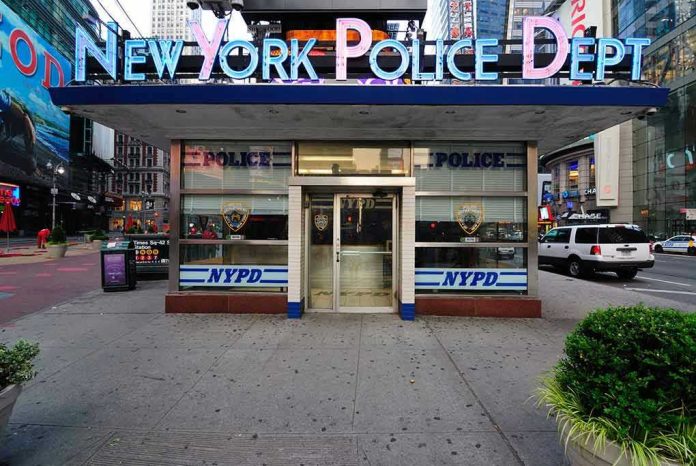
- NYPD officers confronted a knife-armed suspect steps from the Times Square substation, used a Taser, then fired when commands were ignored.
- One victim and the suspect died; a second victim was hospitalized with serious injuries.
- The episode fits a recurring Times Square pattern: fast-moving incidents in dense crowds that force rapid force decisions under extreme risk.
What Happened: A Rapid Chain of Violence on Seventh Avenue
Just before 4:30 p.m., at Seventh Avenue near West 42nd–43rd Streets, a woman armed with knives stabbed two pedestrians — a man and a woman — in what officials and multiple outlets characterized as a random, unprovoked attack. The female victim later died; the male victim was hospitalized in critical condition. Within moments, NYPD officers encountered the suspect outside the Times Square substation, issued clear commands to drop the weapons, and attempted to incapacitate her with a Taser. When the woman, still armed, failed to comply and continued to present a threat amid a dense crowd, officers fired, fatally wounding her. Weapons used in the attack were recovered at the scene. This sequence — knife assault, rapid police contact, less-lethal attempt, then gunfire — is consistent across early reporting grounded in law enforcement briefings and bystander video descriptions.
The location mattered. Times Square at that hour carries a volatile mix: tourists, service workers, and heavy vehicle flow. A single armed person can endanger dozens within seconds. Officers responding in that environment face a compressed decision timeline: contain the suspect before she reaches new victims, avoid crossfire in tight pedestrian channels, and use the minimum force that reliably stops the threat. In this event, the department says the Taser did not end the danger; lethal force followed when the suspect remained armed and noncompliant.
How Police Tactics Apply When Knives Are In Play
Knives are unforgiving at close range. Policing doctrine treats an advancing blade within several steps as a lethal threat; even a stationary knife-wielder can become a lethal threat with a single lunge, particularly in a crowd. Departments, including the NYPD, train a force continuum — verbal commands, distance and cover, less-lethal tools like Tasers, then firearms if the threat persists. Tasers are not a guarantee: heavy clothing, dart placement, or the suspect’s motion can thwart neuromuscular incapacitation. When a suspect continues to hold or move with a knife after a failed Taser deployment, commanders generally view firearms as the tool with sufficient immediate stopping power to protect nearby civilians and officers. The public often experiences this as a sudden escalation; operationally, it is the point at which time and distance run out.
The Times Square response tracked that model: visible presence, shouted commands, less-lethal attempt, then shooting when the risk calculus — knives, refusal to drop them, and a crowd boxed in by street furniture and traffic — tipped decisively. The department indicated a full internal review would follow, as is standard after police use deadly force, including assessment of body-worn camera footage and adherence to training and policy.
Times Square’s Recurring Risk Profile
This was not Times Square’s first encounter with edged-weapon violence or sudden street-level danger. The district’s density and symbolic prominence draw outsized attention and a correspondingly heavy police footprint, yet opportunistic and spontaneous violence still finds seams in the flow of people. Recent years have seen high-visibility blade incidents — from a New Year’s perimeter knife attack on officers to broad-daylight machete assaults and late-night stabbings linked to disputes — each provoking the same core operational dilemma: control a lethal threat without amplifying risk in a sea of bystanders.
That context clarifies why officers emphasize speed and containment in the midtown grid. Intersections around 42nd to 45th Streets leave little standoff distance; storefront recesses, curb lanes, and subway entries constrain movement. A suspect who ignores commands can reach fresh targets in seconds. The duty to intervene — to prevent further harm — sits alongside the duty to use force judiciously, and in Times Square those imperatives collide in full public view. That is why the area remains one of the city’s most heavily patrolled, and why the department trains specifically for crowd-rich, camera-saturated encounters.
Where Mental Health Response Ends and Policing Takes Over
New York City has steadily expanded alternative responses for behavioral health crises — clinician-led teams, co-responder models, and post-crisis stabilization. Those approaches save lives when time, distance, and the absence of a weapon allow engagement built on rapport rather than compliance. But they are not designed for an in-progress violent felony with an armed suspect in a dense crowd. When a person has already inflicted serious physical harm and remains armed, doctrine shifts: officers must neutralize the imminent threat first. Only then do the questions of diagnosis, history, and social services regain primacy. Officials have said exactly that in prior briefings about violent incidents in and around Times Square: clinician-first models are valuable, but they do not apply when a suspect is actively attacking or refusing to disarm while surrounded by potential victims.
It is tempting to universalize from a single event into policy absolutes. The hard truth is more granular. Violence intersects with mental illness only sometimes; many violent acts are not rooted in psychiatric disease, and most people with mental illness are not violent. In this case, multiple reports referenced possible emotional disturbance; even if that proves accurate, it would not change the immediate tactics available once knives are in hand and people are bleeding. In a tourist district at rush hour, that difference is decisive.
Accountability, Transparency, and What Comes Next
After any police shooting, the next steps are procedural and public. Internally, investigators reconstruct the timeline: first victim contact, officer arrival, commands issued, Taser deployment, distance at each decision point, rounds fired, medical response, and recovery of weapons. Externally, the department has committed to releasing relevant body-worn camera clips after preliminary fact-finding, a practice that helps align public understanding with the operational record even as formal reviews continue.
None of that will blunt the human cost. A woman walking through Times Square was killed; another person was grievously wounded; the suspect died after refusing to disarm. For the officers at the center of the encounter, the aftermath is not abstract — mandatory statements, administrative duty, and, for many, the psychic burden of using deadly force in front of hundreds of witnesses. For the city, the lessons are operational and civic: continue strengthening less-lethal options and training for edged-weapon scenarios in crowds; maintain clear thresholds for clinician-led responses versus immediate police intervention; and sustain the transparency that lets the public see how hard decisions were made in minutes that felt like seconds.
Sources:
facebook.com, abc7ny.com, nytimes.com, nypost.com, nbcnewyork.com, cbsnews.com