

AI-driven cyber threats are racing ahead of our defenses, and complacency could invite a national security crisis.
Story Snapshot
- Experts warn AI systems can be poisoned, spoofed, and turned against critical networks [1].
- National security leaders say digital dependence turns private hacks into national risks [2].
- Reports highlight training data gaps and unpredictable AI behavior that attackers can exploit [3].
- Evidence for fully autonomous, learning attacks at scale remains limited today [1].
What the new warning claims, and what the record shows
Recent headlines spotlight a “dystopian” warning about artificial intelligence and cyber war. The core idea is simple. Attackers could use artificial intelligence to find holes, move faster, and hide better. That fear tracks with known weak points. Artificial intelligence models can be tricked by poisoned data and fake inputs that look real to machines but wrong to us [1]. That matters for banks, grids, and hospitals that now use algorithms for daily work. One bad dataset could tilt decisions across an entire system.
Security officials have flagged this risk for years. The National Security Commission on Artificial Intelligence warned in 2021 that our digital dependence turns private and commercial weak spots into national security threats. It said adversaries could use artificial intelligence to enhance cyber attacks, not just defend against them [2]. This is the sober part of the warning. When everything is wired and online, a single breach does not stay “local.” It can hit supply chains, public safety, and even military readiness.
How attackers could exploit AI-specific weaknesses
Researchers outline three big problems. First, hostile actors can poison data sets or training pipelines so models learn the wrong lessons [1]. Second, artificial intelligence can misread strange or adversarial inputs that a human would catch, letting intruders slip past filters [1]. Third, complex systems behave in ways designers did not expect, especially under stress or attack, which widens the gap defenders must cover [3]. Attackers thrive in that gap, using look-alike web addresses and common network ports to blend in and dodge alarms [1].
Defense planners also see risk on the military side. Scholarly work citing a Defense Advanced Research Projects Agency study says artificial intelligence could spot hidden flaws in conventional military systems. If successful, that capability could shape deterrence by finding weak links before a conflict [4]. That cuts both ways. American use can harden our forces and expose enemy gaps. But foreign regimes and cyber crews can chase the same edge. Prudence demands we secure our own house first.
Sorting fact from hype: what we know and what is missing
Some claims outpace hard proof. The Nuclear Threat Initiative paper states attackers have not yet shown success using artificial intelligence to learn and improve attack vectors. It warns the push is real, but the finish line has not been crossed today [1]. That does not mean we relax. It means we avoid panic, focus on what is proven, and tighten the basics that stop most intrusions. Strong identity controls, patching, and network segmentation still block many attacks.
The public record also has gaps. We lack verified incident reports that show fully autonomous systems finding and exploiting new flaws at scale in live operations. Open sources discuss risks and experiments, not a catalog of confirmed machine-led breaches [1][2]. Meanwhile, policy papers in Washington focus more on adopting artificial intelligence for defense than modeling worst-case artificial intelligence attack paths [2][5]. That bias toward shiny tools can leave blind spots. Congress and agencies should demand red-team testing for models that touch critical systems.
What conservatives should demand from Washington and industry
Americans want secure borders, stable power, sound money, and safe families. That requires tough cyber standards without bloated bureaucracy. First, require critical sectors to guard training data like cash in a vault. Secure data stops poisoning and lowers risk to grids, hospitals, and pipelines [1]. Second, force high-risk systems to pass independent adversarial testing before deployment, with results reported to oversight bodies. Third, tie federal contracts to clear, simple security rules, not endless checklists that waste money and hide failure.
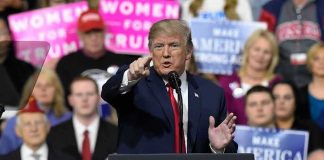
The Trump administration can lead by ordering real-world “break it” drills across civilian agencies and key contractors. Test artificial intelligence systems against known attack patterns and publish fix timelines. Align grants with proven results, not buzzwords. Press allies to do the same so foreign weak links do not backdoor our networks. This is common sense: secure the data, test the models, train the people. Move fast where the facts are firm, and keep watching for proof as the threat evolves [1][2][3][4][5].
Sources:
[1] Web – Dystopian Warning from Renowned Cyber Threat Researcher
[2] Web – [PDF] Assessing and Managing the Benefits and Risks of Artificial …
[3] Web – [PDF] NSCAI Final Report 2021
[4] Web – [PDF] (U) Artificial Intelligence in Nuclear Operations – CNA.org.
[5] Web – Inadvertent escalation in the age of intelligence machines: A new …