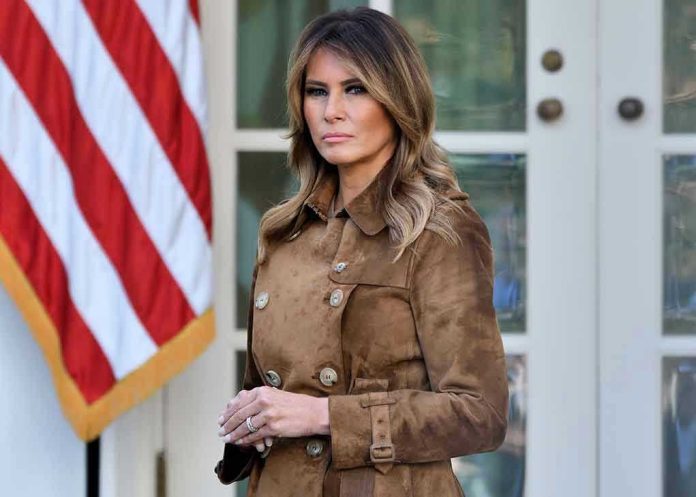
The Melania Trump documentary just pulled off what Hollywood insiders thought impossible—becoming the strongest non-concert documentary theatrical opening in over a decade while critics mocked it relentlessly online.
Story Snapshot
- Amazon-backed documentary earned $8 million opening weekend, setting a 10-year record for non-concert documentaries
- 78% of ticket buyers were over 55 years old, with rural areas delivering 46% of revenue—unprecedented demographic concentration
- Film succeeded commercially despite harsh critical reviews and widespread social media mockery
- Amazon invested $75 million in distribution and marketing, making it the most expensive documentary ever produced
- Audiences in Florida, Texas, and Arizona drove ticket sales, with many describing purchases as political statements
When Critics Miss and Audiences Show Up
The documentary earned $8 million across the US and Canada during its opening weekend, finishing third at the box office. Variety called it “so orchestrated and airbrushed and stage-managed that it barely rises to the level of a shameless infomercial.” Professional reviewers emphasized its polished presentation and limited introspection, arguing the tightly controlled narrative left little room for complexity. Yet exit surveys showed strong audience approval, and in multiple screenings, attendees erupted in applause during the president’s swearing-in sequence, with some shouting “Trump 2028!” The disconnect reveals something fundamental about today’s media landscape.
The Demographic Story Behind the Numbers
Women over 55 comprised 72% of the audience, a concentration rarely seen in theatrical releases. Rural communities accounted for 46% of opening weekend revenue, far above typical documentary performance. Florida, Texas, and Arizona emerged as the strongest markets. A 60-year-old Staten Island man told The New York Times he rarely attends theaters but bought a ticket to “kick Hollywood’s a–.” This wasn’t passive entertainment consumption. These viewers came with purpose, transforming ticket purchases into cultural declarations. The audience composition tells you everything about who still has faith in institutions versus who’s building alternatives.
Amazon’s Calculated Gamble on Political Content
Amazon Studios backed this project with $75 million for distribution rights and marketing, the largest investment ever for a documentary. The film opened simultaneously across 27 countries. Melania Trump launched Muse Films as her production company in late 2025 and served as executive producer. Brett Ratner directed the project after a long absence from filmmaking, documenting 20 days in the First Lady’s life before President Trump’s second term inauguration. The premiere at the Trump Kennedy Center featured Robert F. Kennedy Jr., Dr. Mehmet Oz, Nicki Minaj, and Patriots owner Robert Kraft. Amazon’s bet wasn’t on universal appeal—it was on concentrated demand.
What This Means for Documentary Production
Theatrical revenues alone won’t offset Amazon’s $75 million investment, placing emphasis on eventual streaming performance. The success challenges conventional wisdom about documentary viability and demonstrates market demand for politically-aligned content among specific demographics. Michael Moore’s “Fahrenheit 9/11” remains the highest-grossing documentary ever at $119 million, or $208 million adjusted for inflation. The Melania documentary won’t approach those numbers, but it doesn’t need to. It validates a new model where niche audiences with strong political investment can sustain productions that critics dismiss. Streaming platforms may now pursue similar projects targeting specific demographic and political audiences rather than chasing broad approval.
The New Rules of Cultural Success
Online mockery generated viral memes but didn’t translate to commercial failure. Cultural products no longer require universal approval—they require an audience invested enough to show up. Traditional media critics face continued irrelevance in predicting success within polarized environments. U.S. Attorney Alina Habba, speaking at the premiere, called Melania Trump “incredibly astute” and a “girl boss” who “should have been on the cover of Vogue.” That messaging resonated with the target audience while critics rolled their eyes. The gap between critical reception and commercial performance demonstrates how identity-based media consumption has become economically viable. Documentary filmmakers may face pressure to target niche audiences rather than broader markets, fundamentally altering production incentives.
The documentary’s success proves that in fractured media environments, you don’t need everyone’s approval—you need your audience to care enough to act. Amazon’s investment signals confidence that streaming performance will justify theatrical losses. Competing platforms will likely pursue politically-aligned documentary projects, validating theatrical distribution for niche content with concentrated audience bases. The film challenges traditional metrics for measuring documentary success, prioritizing commercial viability over critical acclaim. This model could encourage similar projects from other political figures, demonstrating the viability of state-adjacent media production as a political tool. The question isn’t whether critics approve—it’s whether audiences show up with their wallets.
Sources:
Despite memes and mockery, Melania Trump documentary broke this remarkable box office record
Melania documentary earns $8M opening weekend, marking best documentary debut in over 10 years