

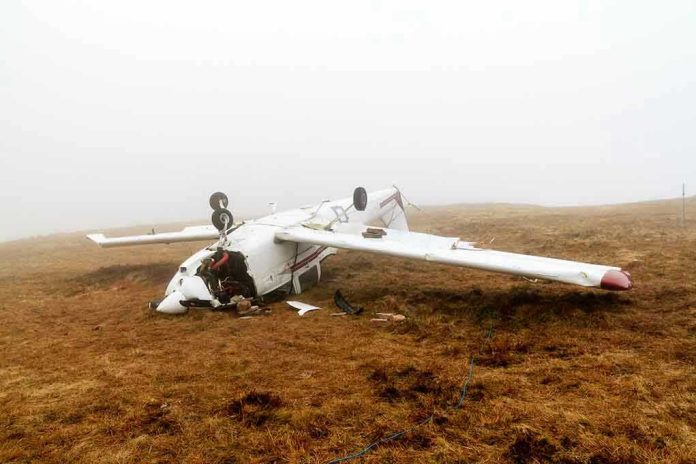
A tragic oversight in aviation safety procedures has led to a catastrophic crash, raising serious concerns about regulatory practices.
Story Overview
- Autopsy reveals co-pilot intoxicated during fatal plane crash in Youngstown, Ohio.
- Aircraft was a Cessna 441, certified for single-pilot operations, adding ambiguity to flight control responsibilities.
- NTSB investigation ongoing, focusing on pre-flight safety protocols and potential mechanical issues.
- Six fatalities, raising questions about crew resource management and regulatory oversight.
Intoxication and Safety Violations: A Deadly Mix
On August 28, 2025, autopsy reports unveiled that the co-pilot of a Cessna 441 involved in a fatal crash in Howland Township, Ohio, was intoxicated. This discovery has amplified concerns regarding aviation safety protocols and pre-flight checks. The aircraft, which crashed shortly after taking off from Youngstown-Warren Regional Airport, was bound for Bozeman, Montana. The crash resulted in the tragic loss of all six individuals on board.
The National Transportation Safety Board (NTSB) is spearheading an investigation into the crash, focusing on several potential factors. The Cessna 441 is designed for single-pilot operation, yet the presence of a second occupant in the cockpit during the crash complicates matters. Autopsy results confirmed that the pilot, Joe Maxin, was sober, while his right-seat companion, Blake, was under the influence of alcohol.
Regulatory and Safety Concerns
The investigation underscores serious regulatory and safety concerns surrounding small aircraft operations. The discovery of an intoxicated individual in the cockpit raises significant questions about the effectiveness of pre-flight safety protocols and the responsibilities of aircraft operators in preventing such oversights. With no flight data recorders in small planes like the Cessna 441, determining who was in control during the crash becomes a challenge for investigators.
Chuck Johnson, a local pilot and former American Airlines aviation instructor, stresses the ambiguity in single-pilot certifications when additional crew members are involved. This incident highlights the need for clear guidelines and stringent enforcement to ensure safety in such scenarios.
Impact and Broader Implications
The tragic incident has left the aviation community and affected families reeling. The crash, which destroyed the aircraft and caused fatalities, has highlighted the necessity for comprehensive review and reform in aviation safety standards, particularly concerning small aircraft operations. The lack of definitive control data due to the absence of flight recorders presents a significant hurdle in establishing the crash’s causation and implementing necessary safety improvements.
The NTSB’s ongoing investigation aims to address these concerns, focusing on potential weight and balance issues, mechanical failures, and crew resource management protocols. The aviation industry is closely monitoring these developments, recognizing the critical need for preventative measures and improved regulatory practices to avert future tragedies.
Sources:
Autopsy reveals co-pilot intoxication in fatal Youngstown plane crash
2006 New York City Cirrus SR20 crash