

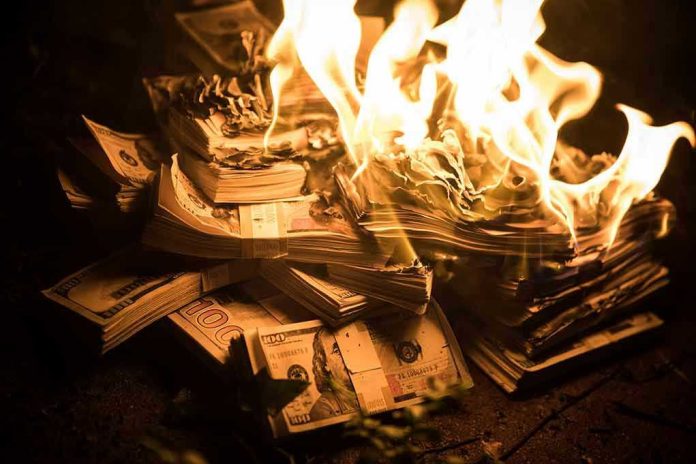
American taxpayers have poured billions into Somalia for over three decades with virtually nothing to show for it except a perpetual failed state that now faces a complete suspension of U.S. aid after officials seized American-funded food supplies.
Story Snapshot
- U.S. suspended all aid to Somalia’s federal government in January 2026 after officials destroyed a World Food Programme warehouse and seized 76 tons of American-funded food
- Somalia has received approximately $2 billion annually in recent years despite remaining a failed state since 1991, with U.S. contributions reaching $765 million in 2024 alone
- Total aid since 1990 exceeds tens of billions of dollars, yet Somalia continues to struggle with al-Shabaab terrorism, clan warfare, and government corruption
- The State Department demands accountability and remedial steps before resuming assistance, while Somaliland officials celebrate the suspension as recognition that aid has perpetuated failure
Decades of Aid Produce No Results
Somalia has consumed approximately $2 billion in global aid annually in recent years, adding to the more than $14 billion received since the early 1990s when the nation collapsed into civil war following the fall of Siad Barre’s regime. The United States alone contributed $765 million in 2024, continuing a pattern of massive financial support that has failed to stabilize the country or improve conditions for ordinary Somalis. Despite this unprecedented flow of taxpayer money, Somalia remains plagued by al-Shabaab terrorism, weak governance, and ongoing humanitarian crises that show no signs of resolution.
https://t.co/HIH0bmRx6B $2 Billion in Annual Aid Kept Somalia a Failed State h/t .@RepOfSomaliland
— Catherine Salgado (@CatSalgado32) April 24, 2026
Aid Suspension Follows Warehouse Destruction
The U.S. State Department suspended all assistance to Somalia’s federal government in January 2026 after Somali officials destroyed a World Food Programme warehouse and seized 76 tons of American-funded food without coordinating with donors. This brazen act of misappropriation represents the latest example of how foreign aid intended for vulnerable populations gets diverted by corrupt officials more interested in consolidating power than serving their people. The State Department has made clear that resumption of aid depends entirely on Somali government accountability and concrete remedial steps, though neither the duration of the suspension nor the total amount affected has been disclosed publicly.
Historical Failures Mirror Current Crisis
The 1992 U.S.-led UNITAF intervention deployed 37,000 multinational troops at a cost of $2 billion to end Somalia’s famine, successfully saving lives but failing to resolve the underlying political dysfunction that continues today. The transition to UNOSOM and subsequent withdrawal left behind a fractured nation where clan-based fighting and governmental collapse became permanent features rather than temporary setbacks. Similar patterns emerged in Afghanistan and Sierra Leone, where post-conflict aid estimates exceeded $10 billion without producing stable, functioning governments, raising fundamental questions about whether massive aid flows to failed states accomplish anything beyond enriching corrupt officials and NGO administrators.
Remittances Outpace Foreign Aid
Somalia’s economy now depends more heavily on the approximately $2 billion in annual remittances from diaspora communities—representing 25 percent of GDP—than on foreign aid, revealing that ordinary Somalis working abroad contribute more to their homeland than decades of international assistance programs. This financial reality undermines the narrative that foreign aid represents an indispensable lifeline for Somalia’s survival and suggests that market-based solutions and private initiative offer more sustainable paths forward than government-to-government transfers. The Somali federal government’s weakness and reliance on external donors creates perverse incentives where maintaining crisis conditions ensures continued aid flows, while genuine progress might reduce international attention and funding.
$2 Billion in Annual Aid Kept Somalia a Failed Statehttps://t.co/bBlOj6jDUK
Stop sending money to Somalia.
— gtslade (@gtslade) April 24, 2026
Somaliland officials have praised the U.S. aid suspension, arguing it finally recognizes that aid since 1990 has been “money down the drain” that perpetuated rather than resolved Somalia’s failed state status. Their perspective highlights a growing consensus across the political spectrum that current foreign aid models serve bureaucratic interests rather than American taxpayers or the populations they purport to help, raising legitimate questions about whether continuing these programs represents sound fiscal policy or simply throwing good money after bad.
Sources:
$2 Billion in Annual Aid Kept Somalia a Failed State
U.S. Suspends Aid to Somalia’s Government
U.S. Foreign Assistance and Failed States
UN Press Release on Somalia 1996