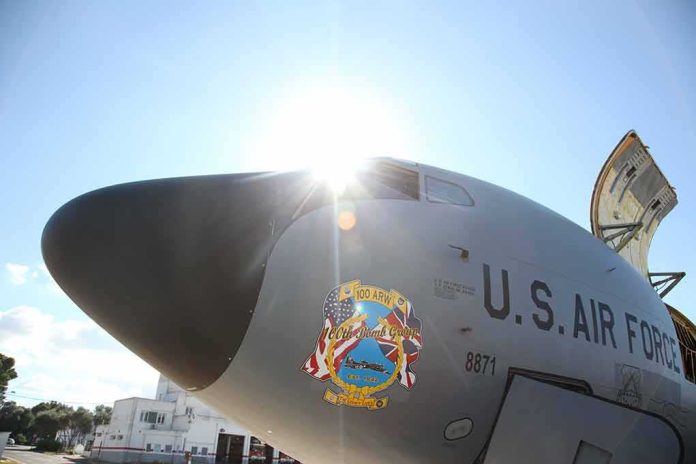
When a single intruder can allegedly climb aboard a parked military transport and, in minutes, render a $60 million aircraft unflyable, the lesson is not only about one man with an axe—it is about how civil-military airports manage access control, protect mission-critical systems on the ground, and absorb the legal and diplomatic consequences that follow.
The Short Version
- Federal prosecutors allege that an Irish national breached Shannon Airport security and extensively damaged a U.S. Air National Guard C-130H on April 11, 2026.
- The indictment describes targeted interior and exterior sabotage—cut wiring and hydraulic lines, destroyed cockpit gauges, and axe strikes to the fuselage.
- Prosecutors say the aircraft, valued at about $60 million, was rendered inoperable and will not return to service.
- The case fits a decades-long pattern of direct-action protest and security incidents tied to U.S. military transits through Shannon Airport.
What prosecutors say happened on the ramp
According to the U.S. Department of Justice, Daithí O’Corrain (also known as David Curran) was indicted in the Southern District of New York for destroying a U.S. government C-130H at Shannon Airport in County Clare, Ireland. The charging document alleges he breached the airport’s secure perimeter, entered the aircraft, and methodically damaged both interior systems and external structure. The technical specificity matters: prosecutors say wire bundles and hydraulic lines were cut; a liquid-oxygen line was crimped; “every cockpit gauge” was destroyed; air ducts were punctured; and the fuel system was damaged. A C-130’s systems are distributed across accessible bays and the flight deck; striking them in quick succession implies familiarity with what to hit and where it matters.
Exterior damage was likewise described as deliberate. The indictment attributes visible fuselage damage to blows with an axe after crew members saw a man emerge through a roof hatch and stand on the aircraft’s upper surface. News organizations that reviewed the case materials reported that images captured from video show a person on the aircraft roof following that emergence. Together, those details form a coherent sequence: perimeter breach, internal sabotage, escape through the top hatch, and external strikes with a hand tool.
Why the consequences go beyond dents and downtime
In transport aviation, ground attacks that target systems—not just skins—drive outcome severity. Cutting hydraulic lines and damaging the fuel system risks contamination and cascading control failures; destroying cockpit instrumentation complicates repair triage because avionics damage often interacts with wiring looms, sensors, and power distribution in ways that require extensive teardown and replacement. That is why prosecutors assert the aircraft will not return to active flight status. ABC News, citing the indictment, places the aircraft’s value at approximately $60 million—a figure consistent with the C-130H’s enduring utility and the cost basis of major airframe and mission-system overhauls. While an indictment is not a verdict, the technical pattern described aligns with how relatively small tools can impose outsized costs on complex airframes.
The operational ripple effects are predictable. A heavy transport off the line shrinks surge capacity for airlift missions; if the tail was part of an Air National Guard unit’s rotational pool, its loss redistributes tasking and maintenance burdens. For airport operators, a determined intruder who penetrates the perimeter and reaches a parked aircraft exposes gaps in sensor coverage, patrol patterns, or procedural controls for mixed-use airfields where civilian and military operations share infrastructure.
Shannon’s unique role and a long protest lineage
Shannon Airport’s appearance in this case is not incidental. For decades it has served as a refueling and transit node for U.S. military flights—an arrangement that has attracted persistent protest in Ireland, where debates over neutrality and alliance commitments recur with each major conflict. Large-scale demonstrations during the Iraq War era set the modern template; smaller but regular vigils and periodic direct actions have continued since, keeping the airport in the crosshairs of activists opposed to U.S. military use of civilian infrastructure.
That backdrop explains how an alleged sabotage episode in 2026 can be both shocking in its damage and familiar in its contours. Prior high-profile actions at Shannon have included trespass, graffiti, and attempts to disable or symbolically “disarm” U.S. aircraft. The present indictment, if proven, represents a decisive escalation in effect—moving from protest symbolism to the permanent removal of a strategic airlift asset. It sits squarely within Shannon’s quarter-century of friction around U.S. military transits, but raises the stakes for airport security and for the diplomatic management of a civil airport that hosts foreign military hardware.
The legal posture: a U.S. indictment anchored in named acts
The case is charged in federal court in Manhattan, with prosecutors detailing the alleged conduct and its consequences under U.S. law governing destruction of government property. The DOJ announcement identifies the defendant by name and outlines the sequence of actions and the claimed results, including the aircraft’s grounded status. Multiple major outlets have reported on the unsealed indictment with the same core facts: the April 11 incident date, Shannon location, C-130H aircraft type, tool use, and the assertion that the aircraft is effectively destroyed. As with any indictment, the allegations await adjudication; however, the alignment of technical descriptions across the primary filing and independent reporting supports a consistent narrative of targeted interior sabotage and exterior strikes.
For readers tracking evidentiary posture, this is a prosecutorial case statement, not a judicial finding. That caveat said, the presence of video-derived images and crew observations—cited in the charging materials and echoed in coverage—provides tangible anchors for the government’s account pending trial. The result is a case file that reads less like a generic vandalism charge and more like an aviation-specific sabotage brief with discrete system hits and observable external damage.
Security lessons for mixed-use airfields
Two lessons recur when analyzing ground attacks on aircraft. First, the target set on a parked airlifter is physically accessible: flight-deck instrumentation, equipment bays reachable via service doors, and system runs routed along known paths. “Soft” tools—wire cutters, a pry bar, a hatchet—are sufficient to cripple mission systems. Second, marginal perimeter improvements rarely solve a motivated-intruder problem at airports with public-facing layouts and routine service access. What changes outcomes are layered controls: surveillance that flags anomalous movement in aircraft vicinities; access procedures that minimize unattended, open aircraft; and rapid-response protocols that deny an intruder the time needed to move from nuisance damage to systemic failure.
For civil authorities, the enforcement piece matters as much as the fence line. A credible risk of apprehension and prosecution—grounded in cooperation between local police, airport authorities, national defense forces, and, when foreign military assets are involved, diplomatic channels—deters copycats. For operators supporting military transits at civilian airports, dissuasion and denial are inseparable.
What to watch as the case advances
The coming legal stages will clarify scope and intent: which specific acts the government can attribute to the defendant, how technical assessments value the aircraft’s loss, and whether the alleged system damage matches forensic inspection. Expect litigated questions about access points, timeline, and the chain of evidence for video and crew observations. Separate from the courtroom, airport managers and defense partners will quietly update security postures—re-evaluating how and where aircraft are parked, how often they are left open for servicing, and which response assets are staged during known high-risk transits through Shannon.
Sources:
cbsnews.com, justice.gov, abcnews.com, apnews.com, thejournal.ie