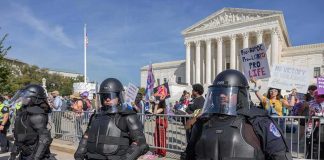

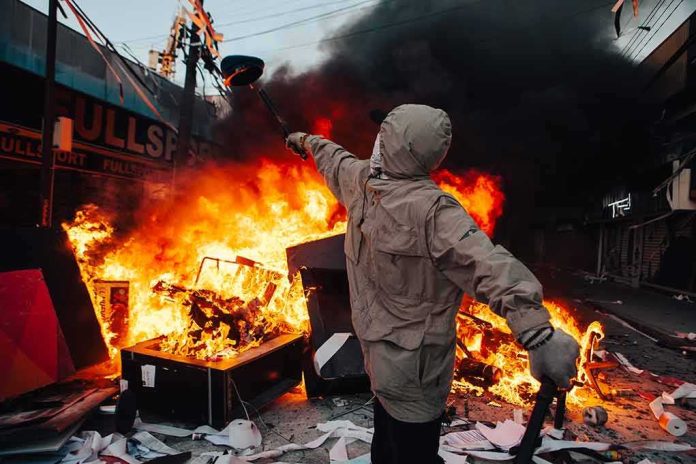
Tear gas in the streets of Paris is not a one-off crisis; it is the default instrument of a French policing doctrine that has relied on chemical crowd control since the late 1940s, and the scenes from this autumn’s school protests are the latest chapter in a pattern stretching back through the Yellow Vests, the pension reform marches, and decades of student unrest before them.
Key Points
- Riot police fired tear gas in Paris and other cities as a student-led protest movement over school conditions and funding drew tens of thousands into the streets, with nationwide turnout later estimated at more than 250,000.
- The unrest spread to more than 1,200 high schools, and French authorities reported roughly 5,000 arrests, the large majority of them teenagers.
- Rights groups, including Amnesty International, have accused police of disproportionate force, citing serious injuries from rubber bullets and close-range tear gas use.
- France’s reliance on tear gas, batons, and less-lethal rounds reflects a crowd-control model researchers describe as among the harshest and most escalation-prone in Europe.
- The French Interior Ministry has defended the police response as proportionate even as the political fallout over school funding and policing tactics continues.
What Happened in the Streets of Paris
The clashes that put tear gas back in French headlines began as a protest over classroom conditions and education funding and escalated quickly. Riot police fired tear gas at hundreds of high school students in Paris as demonstrations continued to spread nationwide, according to Associated Press footage of the confrontations. In the capital and in cities including Marseille, officers deployed tear gas directly into crowds; one BBC reporter on the ground described being able to “feel it in my throat and eyes” during the operation. Lyon saw a barricade set ablaze, while Rennes saw water cannons rather than gas canisters — a reminder that French forces vary their toolkit by city and circumstance, but reach for tear gas more readily than almost any of their European counterparts.
The scale of what followed is what separates this movement from an ordinary flashpoint. Protests eventually touched more than 1,200 high schools across France, and police responded with tear gas and rubber bullets in a significant share of those confrontations. Interior Minister Laurent Nunez told French television that police had arrested roughly 5,000 people since the unrest began, the overwhelming majority of them teenagers. When the movement culminated in a coordinated day of nationwide rallies, government figures put turnout above a quarter of a million people, with police again firing tear gas to manage crowds in Paris and other cities.
A Pattern, Not an Anomaly
France has used tear gas as its default crowd-control measure since the tool was first deployed domestically in 1947, and it became commonplace in street policing by the end of the 1960s — the same era that produced the May ’68 student uprisings that still shape French political memory. That history matters because it explains why tear gas appears in nearly every major French demonstration of the past decade, from the Yellow Vest protests that drew gas and confrontation to downtown Paris in 2020 even under a pandemic assembly ban, to the 2023 pension-reform marches where police fired “clouds of tear gas” against crowds exceeding 400,000 in multiple cities. The student protests over school funding fit squarely inside that continuum rather than standing apart from it.
French riot units carry an arsenal that goes well beyond gas: sting-ball grenades, flash-ball launchers, and defensive rubber-bullet rounds are standard issue, some classified in categories closer to war materiel than to ordinary policing equipment. Researchers studying European crowd control have repeatedly flagged France’s approach as an outlier — not merely in frequency of use but in doctrine, since barrier tactics and rapid dispersal are built into the operational playbook rather than treated as a last resort. That structural tendency toward escalation is precisely what turns a protest over leaking school roofs and overcrowded classrooms into televised clashes with injured teenagers.
The Toll and the Rights Pushback
The human cost of this round of protests was severe enough to draw an international rights response. Some protesters suffered serious injuries — eye wounds, broken teeth, and blows to the head — and reporting on the later stages of the movement documented a teenager whose hand was blown off during the unrest, alongside continued clashes in Lille, Toulouse, and other cities. Amnesty International went further, accusing officers of discharging tear gas grenades “recklessly” and firing rubber bullets that caused serious harm, and calling the overall police response “disproportionate”. Reuters similarly reported that rights groups accused police of heavy-handed tactics against minors, specifically citing batons, tear gas, and non-lethal flash-ball guns used against a protest population that was, by the government’s own account, largely composed of schoolchildren.
High-school students across France are protesting the condition of their schools, and some of those protests have turned into clashes with police. The movement began in mid-to-late September at a lycée in a poorer Paris suburb, after pupils joined teachers over staffing and… pic.twitter.com/gZtRNngJso
— aznnorth (@aznnorth) October 6, 2026
What This Means Going Forward
French officials have not conceded the rights groups’ framing. Nunez, pressed publicly on the police response, insisted it had been “carried out in an extremely proportionate manner” — a defense that places the Interior Ministry squarely at odds with Amnesty’s characterization and with the testimony of students who say officers used force indiscriminately. That gap between official and advocacy accounts is itself the recurring French story: every major demonstration generates its own argument over whether the state’s chosen level of force matched the threat on the ground, and that argument rarely resolves before the next protest cycle begins. For a country whose crowd-control doctrine has changed little in its fundamentals since the 1960s, the school protests are unlikely to be the last time tear gas drifts through a French city center — nor the last time the proportionality of that response becomes a matter of genuine public dispute.
Sources:
bbc.com, pbs.org, reuters.com, newsday.com, tasnimnews.ir, apnews.com