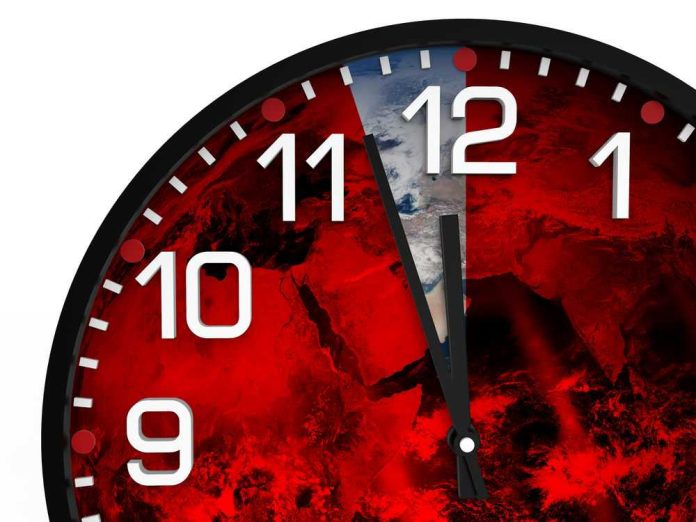
The U.S. House just voted 308 to 117 to end the twice-yearly clock change — and now the bill heads to a Senate where the same fight has stalled before.
Story Snapshot
- The House passed the Sunshine Protection Act on July 14, 2026, by a wide 308-117 bipartisan vote.
- The bill would make daylight saving time permanent year-round, ending the spring and fall clock changes for good.
- The Senate has a companion bill with 17 co-sponsors, but similar bills have died in Congress multiple times since 2018.
- Sleep doctors and health researchers warn that permanent daylight saving time — not permanent standard time — carries real health risks.
House Passes Clock-Change Bill With Broad Support
The House voted 308 to 117 on July 14, 2026, to pass the Sunshine Protection Act. The bill would make daylight saving time the permanent national standard, ending the ritual of changing clocks every spring and fall. Representative Vern Buchanan of Florida introduced the House version, known as H.R. 139, earlier this year. The lopsided vote shows rare common ground in a deeply divided Congress.
The bill now moves to the Senate, where Florida Senator Rick Scott introduced a companion bill, S.29, on January 7, 2025. That bill carries 17 co-sponsors from both parties, including Democrats Patty Murray, Ron Wyden, and Ed Markey, alongside Republicans Tommy Tuberville and Rand Paul. President Trump has also voiced support for locking the clocks, adding political momentum to the push.
A Bill That Has Died Before — Repeatedly
This is not the first time Congress has come this close. A version of the Sunshine Protection Act passed the Senate unanimously in 2022 — though many senators later said they had no idea what they were voting on. That bill then stalled in the House and expired. Earlier versions in 2018, 2019, 2021, and 2023 all failed to become law. The pattern is familiar: momentum builds, then Congress moves on to other things.
This time, supporters are trying a new approach. The language of the House bill was folded into a broader transportation funding package reviewed by the House Energy and Commerce Committee, which approved it 48 to 0. That procedural move helped push the bill to the full House floor, where it passed by a wide margin. Whether the Senate will act quickly remains the key question.
Doctors Say Permanent Standard Time Is the Healthier Choice
Even supporters of ending clock changes face a split with health experts. The American Academy of Sleep Medicine and researchers at Stanford University agree that stopping the twice-yearly switch would benefit public health. But they say permanent standard time — not permanent daylight saving time — is the right call. Standard time lines up better with the body’s natural clock, especially in winter mornings when the sun rises late.
Breaking news in Washington, DC – With a 308-117 vote the House has passed the Sunshine Protection Act bill to make daylight saving time permanent.
— Thomas Ayers III (@Thomas_E_Ayers) July 15, 2026
Permanent daylight saving time means darker mornings for months at a time. Studies link that kind of light exposure to higher risks of heart attacks, strokes, depression, and traffic accidents. The clock-change switch itself causes those spikes in risk — but experts warn that locking in the wrong time year-round could create its own chronic health burden. Congress is moving fast on a popular idea, but the science points in a different direction than the bill does.
What Happens Next
The bill now sits with the Senate, where it faces a familiar obstacle. Senator Tom Cotton of Arkansas debated Senator Scott on the Senate floor in October 2025 over the bill, signaling that not everyone is ready to move quickly. An amendment by Senator Ted Cruz would delay the law’s start by two years. Another amendment, nicknamed “Make America Rested Again,” proposed by Senator Todd Young of Indiana, would push the country toward permanent standard time instead. The Senate debate is far from settled.
For most Americans, this is a simple quality-of-life issue — nobody likes losing an hour of sleep or watching the sun set at 4 p.m. in December. That shared frustration has driven this bill further than any previous version. Whether Congress finally finishes the job, or lets it die again in the Senate, will say a lot about whether lawmakers can deliver on even the most basic things people agree on.
Sources:
facebook.com, govinfo.gov, congress.gov, hydesmith.senate.gov, youtube.com, rickscott.senate.gov, billtrack50.com, thehill.com, en.wikipedia.org, trackbill.com, med.stanford.edu, centreforbrainhealth.ca, bostonglobe.com, aasm.org, nm.org, cnn.com, harvardmagazine.com, pmc.ncbi.nlm.nih.gov, rush.edu, health.harvard.edu, npr.org, sleepfoundation.org, csg.org, webexhibits.org, nationalgeographic.com, ussc.edu.au, jcsm.aasm.org, reuters.com