For the first time since the pandemic crash, official data shows prices falling even as many Americans still feel squeezed at the checkout line.
Story Snapshot
- Headline consumer prices fell in June, the biggest monthly drop since April 2020, driven by cheaper gas.
- Annual inflation is still about 3.5%, and core prices like rent and services remain elevated.
- Social media is already spinning the “biggest drop” headline to claim the inflation problem is solved.
- Both conservatives and liberals worry that economic reality on Main Street does not match the victory laps in Washington.
What The New Inflation Report Really Says
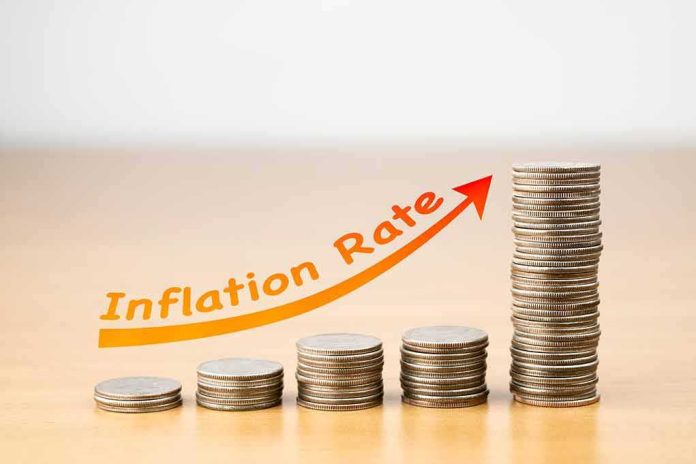
Government data from the Bureau of Labor Statistics shows that the Consumer Price Index, the main measure of inflation, fell 0.4% in June compared with May, the largest one-month decrease since the sharp pandemic-era drop in April 2020. This decline came after months of rising prices and was driven mostly by a steep 9.7% fall in gasoline costs, which pulled down the broader energy index by 5.7% for the month. On a year-over-year basis, headline inflation slowed to about 3.5%, down from 4.2% in May, but still above the Federal Reserve’s 2% goal. Core inflation, which strips out food and energy, was roughly flat on the month, with prices up about 2.6% over the past year. These figures give financial markets hope that interest rates might fall, but they do not mean the broader cost-of-living crisis is over.
News reports and market commentary stress that this is the first time overall prices have declined in many years, echoing past rare episodes like the 0.1% CPI drop in a 2024 report and early post-pandemic dips. Economists note that such monthly declines can happen when energy prices swing sharply, even if underlying costs for housing, healthcare, and other services keep grinding higher. That is exactly the pattern we see now: gas is cheaper, but rent, insurance, and many everyday services are still climbing or staying high. In simple terms, the “biggest drop since April 2020” headline reflects one month and one big category, not a full reset of prices. Families who have watched grocery, rent, and medical bills rise for years know that one good CPI print does not restore the American Dream.
How Social Media And Spin Doctors Use Numbers
The Facebook reel and other viral posts claiming a “BREAKING” 0.4% drop are based on a real number, but they frame it in a way that suggests inflation has been tamed and that regular people can breathe easy now. Prior fact-checks of similar viral inflation claims show a common pattern: the underlying data point is usually correct, yet charts and wording are chosen to mislead, often by highlighting one month or one category while ignoring longer trends. Research on social media behavior finds that a noticeable share of users regularly share exaggerated or false economic news, especially when it fits their political identity or offers quick emotional rewards like likes and comments. Posts that promise “inflation is over” or “biggest drop ever” tend to spread faster than sober explanations that prices are still up over the year. This dynamic lets political and media elites cherry-pick the numbers they like while many citizens struggle to sort hype from reality.
Studies of misinformation show that low-credibility sources, such as anonymous posts and viral images, can nonetheless get huge attention, while more careful fact-checks arrive later and reach fewer people. In earlier inflation debates, some viral graphics used accurate Bureau of Labor Statistics data but distorted it with tricky axes or selective starting points to make price changes look far better or worse than they were. Fact-checkers at outlets like the Associated Press and PolitiFact have rated several of these claims “False” or “Mostly False,” even when the numbers cited were technically real, because the framing hid important context. That is the risk with the new June numbers: one honest data point about a monthly drop can easily be turned into propaganda that declares victory, in a time when most Americans still see rising rents, higher grocery bills, and shrinking savings.
Why This Fuels Anger Across The Political Spectrum
Many conservatives who have long blamed “woke” policies, globalism, and big spending for high prices are skeptical that one month of falling CPI means Washington has suddenly become responsible with money. They look at years of higher energy costs, border problems, and mounting national debt and see elites in both parties using good data points to avoid deeper reforms. On the other side, many liberals who worry about cuts to social programs, deportations, and widening inequality note that a 3.5% inflation rate still erodes paychecks, especially for workers at the bottom of the wage scale. For them, headlines about a “record drop” feel hollow while housing and healthcare remain stubbornly expensive.
The June CPI came in at 3.5% year over year, well below the 3.8% consensus. Monthly CPI fell -0.4%, driven by a 9.7% drop in gasoline prices, more than double the -0.1% to -0.2% decline economists expected. Core CPI cooled to 2.6% year over year, its lowest since February, versus…
— John🎣 (@BottomPhishing) July 15, 2026
Across the political divide, a growing number of Americans share one core belief: the system seems rigged, and official numbers often feel disconnected from everyday life. When government agencies and major media outlets cheer a technical decline, many ask why their rent is still up, why food still costs more than it did a few years ago, and why wages are not keeping pace. Mistrust deepens when leaders use selective statistics to claim success, especially in an era when social media boosts both false alarms and premature victory laps. The June CPI report does show real, welcome relief at the gas pump and a step down from the worst inflation readings. But it also exposes a larger problem: an economic and political culture that treats people like they will forget years of pain because of one “biggest drop since 2020” headline. Understanding that gap between the numbers and lived reality is key to seeing how the so-called deep state and broader elite culture keep losing the trust of the people they claim to serve.
Sources:
facebook.com, bls.gov, summitplate.com, americanprogress.org, pnc.com, cnbc.com, octagonai.co, usinflationcalculator.com, calendarx.com, robinhood.com, fake-off.eu, apnews.com, pmc.ncbi.nlm.nih.gov, insights.som.yale.edu, politifact.com, cato.org, shorensteincenter.org