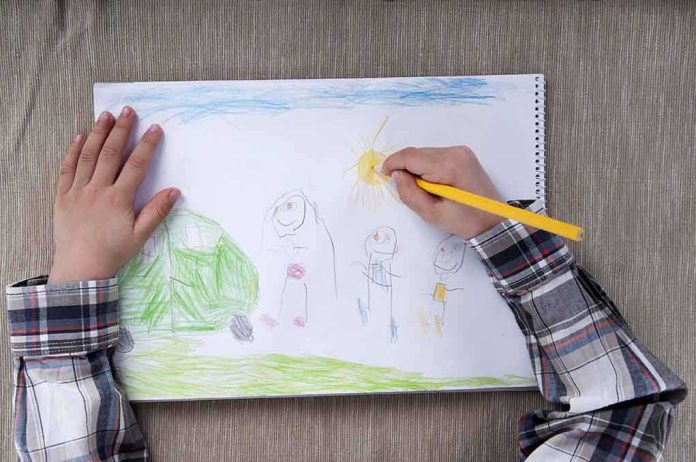
Multiple Labour councils in northern England have warned schools that children’s drawings in art class might violate Islamic law against depicting living beings, marking a stunning shift in how British education navigates religious sensitivities.
Story Snapshot
- Labour councils distributed guidance titled “Sharing the Journey” warning that student drawings could be considered blasphemous under Islamic prohibitions against representational art
- The guidance affects multiple subjects including art, music, dance, drama, and physical education across councils in Leeds, Calderdale, Oldham, Wakefield, Sefton, and Tameside
- The 2021 Batley Grammar School incident, where a teacher displayed an image of the Prophet Mohammed and subsequently went into hiding, catalyzed the policy development
- Free speech advocates warn the guidance prioritizes one-directional accommodation rather than mutual integration
- Schools are encouraged to explore Islamic artistic traditions like calligraphy and geometric patterns as alternatives to representational art
When Crayons Become Controversial
Children across northern England now face an extraordinary question when they pick up a pencil in art class: could this drawing offend? The guidance from multiple Labour councils warns that images of living beings, a staple of elementary education since time immemorial, might violate Islamic theological principles. The document roots these restrictions in hadith, traditional accounts describing the Prophet Mohammed as discouraging the creation of images depicting living beings. These prohibitions, promoted in conservative Islamic movements including the Deobandi tradition followed by the Taliban, have now entered British classroom policy through official council channels.
The Batley Shadow Still Looms
The 2021 Batley Grammar School incident casts a long shadow over this guidance. When a teacher displayed an image of the Prophet Mohammed during a religious studies lesson, protesters descended on the school. The staff member involved remains in hiding years later, a chilling reminder of how quickly educational decisions can spiral into personal security threats. This incident appears to have prompted local authorities to develop preemptive guidance, though critics question whether preventing controversy should come at the cost of curriculum freedom. The teacher’s ongoing exile serves as a stark warning to educators about the potential consequences of misjudging religious sensitivities.
Beyond the Canvas
The guidance extends far beyond art class. Music, dance, drama, and physical education all fall under scrutiny. Schools receive advice to listen to parental concerns and discuss the role of these subjects within the curriculum, avoiding requirements that pupils participate in activities conflicting with religious beliefs. Yet the guidance maintains that subjects should not be removed entirely from school life, creating a delicate balancing act for administrators. Essex County Council issued similar advice stating some Muslims view representational art as blasphemous because it attempts to imitate God’s creation, suggesting this represents a broader pattern across England rather than isolated overreach.
The Integration Paradox
Lord Toby Young of the Free Speech Union delivered a scathing assessment: “Labour’s idea of integration is that the indigenous population of Britain has to change its behaviour to fit in with the non-indigenous population.” This critique cuts to the heart of the controversy surrounding accommodation versus assimilation. The Labour Government frames the guidance as promoting understanding between communities and supporting social cohesion, with Communities Secretary Steve Reed announcing plans to monitor anti-Muslim hostility in schools. Free-speech campaigners warn these initiatives could discourage open discussion about issues within Muslim communities, creating a chilling effect on legitimate debate about religious accommodation in public institutions.
Not All Muslims Agree
A crucial nuance often lost in the debate: not all Muslims accept restrictions on music or representational art. The prohibitions promoted in certain conservative movements do not represent universal Islamic practice, indicating significant diversity within Muslim communities themselves. The guidance acknowledges that Islamic civilization boasts a rich artistic heritage, particularly in geometry, calligraphy, and patterned design. Schools are encouraged to explore these traditions as alternatives, suggesting an educational approach that maintains curriculum richness while accommodating sensitivities. This raises an uncomfortable question: whose interpretation of Islamic law should shape British educational policy when Muslims themselves hold varying views?
What Happens Next
The guidance remains in effect across multiple local authorities as of March 2026, indicating ongoing implementation rather than a new policy. The story gained significant media attention after years of quiet circulation, suggesting renewed public scrutiny may force a reckoning. Schools now face the administrative burden of implementing guidance while maintaining educational standards, navigating between curriculum requirements and community sensitivities. The precedent being set could influence curriculum design and teaching methodologies across England for years to come. Teachers must adapt lesson planning and classroom management, while non-Muslim pupils may experience modified curriculum content, raising questions about whose education is being compromised in the name of accommodation.
Sources:
Labour councils warn schools that children’s drawings may be blasphemous to Islam – GB News
Children’s drawings could offend Muslims, schools told – The Telegraph