The moment protest turns into explosives, nobody gets to pretend it’s “just politics” anymore.
Quick Take
- An ignited improvised explosive device was thrown during dueling protests outside Gracie Mansion on March 7, 2026, narrowly missing NYPD officers.
- NYPD arrested six people; two Pennsylvania suspects were linked to the devices and later reported in federal custody.
- Investigators later connected the suspects to a black sedan with out-of-state plates and found a third suspicious device inside.
- No injuries were reported, but officials said the devices posed a serious risk—this was not treated as a prank or mere smoke bomb.
Gracie Mansion Becomes a Pressure Point, Not a Backdrop
East 87th Street and East End Avenue turned from a predictable protest corridor into a test of how fast a city can pivot from crowd control to bomb response. On Saturday, March 7, dueling demonstrations gathered outside Gracie Mansion, the official residence of New York City’s mayor. The target of the protest energy was Mayor Zohran Mamdani, and the tensions weren’t theoretical: a counterprotester allegedly lit and threw a device toward the protest area.
The object described by officials and reported by local outlets wasn’t subtle—smoke, flame, and a jar wrapped in black tape with metal fasteners meant to shred whatever stood nearby. It struck a barrier and went out near police officers, a detail that should chill anyone who believes disorder “usually” stays contained. The next seconds mattered even more: investigators said a second device was lit and dropped while the suspect fled.
The Timeline Shows Planning, Not Random Chaos
The alleged throw happened around 12:30 p.m., and the sequence reads like a crude, improvised operation rather than a spur-of-the-moment tantrum. Police identified an 18-year-old suspect—reported with slightly varying spellings of his name across coverage—who allegedly ignited and threw the first device, then obtained another from a 19-year-old companion and set that one as well. Six arrests followed, with additional charges tied to pepper spray and disorderly conduct.
The next day added the detail that separates a frightening moment from an ongoing threat. On March 8, investigators used surveillance and license plate information to connect the suspects to a black sedan with Pennsylvania plates parked several blocks away on East End Avenue. That’s when the bomb squad moved in with its most common-sense rule: don’t walk up to a car that might be booby-trapped. Robots, rope, and controlled access led to the discovery of a third suspicious device.
NYPD’s Response Highlights the New Normal in Protest Policing
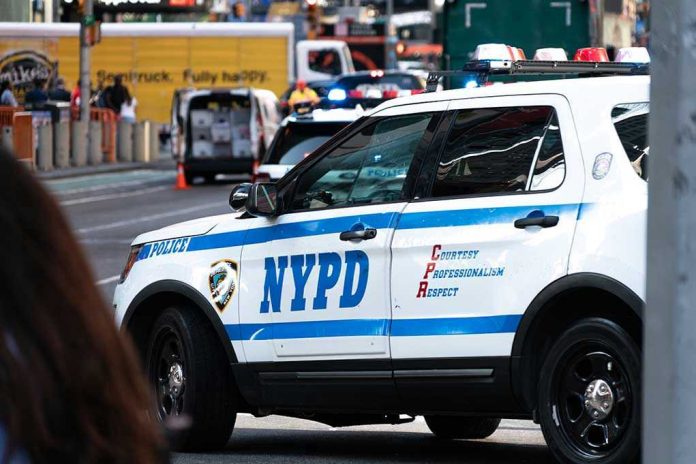
NYPD Commissioner Jessica Tish framed the danger plainly: the devices were real IEDs, not a hoax, and could have caused serious injury or death. That clarity matters because the public often gets fed euphemisms until after the crisis passes. When leaders speak directly, they set expectations for enforcement and deterrence. The bomb squad protocols—robot approach, perimeter control, partial evacuations—show a department operating as if worst-case outcomes are plausible.
The absence of injuries is the headline people want, but it can also become a trap: “See, it wasn’t that bad.” That logic collapses under basic physics and basic morality. Devices allegedly packed with nuts, bolts, and screws aren’t meant to make a point; they’re meant to maim. Conservative common sense says protest is a right, endangering bystanders is a crime, and anyone who blurs that line for political convenience invites more of the same.
Out-of-State Suspects and a Mayor’s Residence Raise the Stakes
The Pennsylvania connection may sound like a footnote, but it changes how New Yorkers interpret risk. Local protests often burn hot and then cool; outsiders can arrive with different intentions, fewer social constraints, and less fear of community consequences. Pair that with the symbolic location—outside the mayor’s home—and you have a predictable escalation ladder: provocation, confrontation, and then someone deciding intimidation beats persuasion. That’s not activism; that’s coercion dressed in slogans.
The mayor’s office condemned the incident in stark terms, with the spokesman labeling the demonstration as Islamophobic and describing the use of an explosive device as reprehensible. Readers over 40 have seen enough cycles to know two things can be true at once: hateful rhetoric poisons public life, and violence in response is not a cleansing fire—it’s gasoline. When political tribes treat intimidation as “defense,” ordinary residents become collateral damage.
The Open Question: What Charges Fit When Protest Turns Weaponized?
Officials said the investigation continued, including analysis of the device materials and the suspects’ movements. The early reporting also reflected a common uncertainty: some outlets initially described “suspicious” devices before later confirmation that authorities considered them genuine IEDs. That gap is normal in fast-moving public safety events, but it matters for accountability. If the facts support that the devices were designed to injure, prosecutors should treat them accordingly, without political hesitation.
The lasting lesson isn’t that New York is uniquely unstable; it’s that American civic life has grown too comfortable flirting with escalation. A protest outside Gracie Mansion should be loud, not lethal. Police shouldn’t have to “run toward danger” in a residential neighborhood because someone wanted to win a street argument with shrapnel. The city got lucky this time. A free society shouldn’t rely on luck as its security plan.
Limited social media research provided no qualifying English X/Twitter link; the broader question now shifts to whether leaders and law enforcement can deter copycats without treating every protester like a suspect. The answer requires an unglamorous mix of surveillance review, clear charging decisions, and consistent condemnation of political violence—especially when it comes from “our side.” That consistency is the only thing tougher than an IED: the public’s temptation to excuse it.