When U.S. leaders say cheap gasoline is “goal number one” even as Iran inches along the nuclear threshold, they are not choosing the economy over security; they are acknowledging that in the Gulf, oil prices and nonproliferation are the same problem expressed through different clocks — one measured in weeks at the pump, the other in years of strategic risk.
At a Glance
- Public framing has elevated gasoline prices to the top tier of Iran policy, but credible analysis shows nuclear risk and oil prices are deeply linked, not competing priorities.
- Markets price the Strait of Hormuz like a fuse; supply disruption or nuclear escalation embeds a risk premium into every barrel.
- Historical precedent: Washington routinely cushions domestic fuel costs (e.g., SPR releases) while pursuing security aims — a tension, not a trade-off.
- The durable strategy is integration: maritime security, sanctions design, and nuclear constraints must be aligned to avoid importing volatility at the pump.
What Washington’s “price-first” rhetoric really signals
Vice President JD Vance’s formulation — keep oil and gas cheap “goal number one,” ensure Iran never gets a nuclear weapon “goal number two” — captures a political instinct that has animated every administration facing an Iran shock: stabilize prices before they stabilize you. The phrasing invites a false hierarchy. Gasoline is the most visible, emotionally resonant price in American life; it reshapes household budgets weekly and approval ratings quarterly. Nuclear risk is abstract until it isn’t. But in the Persian Gulf, the mechanisms that move both problems are entangled: sanctions constrain revenue but also supply; maritime insecurity transmits instantly into futures curves; nuclear brinkmanship widens risk premia that marketers and refiners pass to drivers. Framed correctly, price relief is not a substitute for nonproliferation; it is an instrument and indicator of whether your Iran policy is aligning incentives rather than bidding against itself.
That entanglement is not theory. The Strait of Hormuz moves roughly a fifth of globally traded crude and a significant share of refined products. Every credible study of Gulf disruption or Iranian escalation finds a nontrivial, persistent uplift in prices, a textbook “risk premium” that markets attach to expected supply insecurity. In that sense, downgrading the nuclear file to elevate prices misunderstands the plumbing: if Tehran crosses key nuclear thresholds or the Gulf looks more combustible, the pump reflects it quickly — sometimes before the geopolitics is publicly clear.
Mechanism: how nuclear risk becomes a price at the pump
Energy markets translate security signals through three channels. First, physical supply: sanctions, sabotage, or naval incidents reduce barrels available today. Second, logistics: insurance rates, war-risk premia, and reroutings raise delivered costs even if headline supply seems adequate. Third, expectations: traders capitalize the probability of future disruption into today’s prices. Iran touches all three. Sanctions that squeeze its exports reduce supply and liquidity in the Atlantic Basin; drones and mines around Hormuz elevate shipping and insurance costs; rhetoric around uranium enrichment, IAEA access, or red lines shifts expectations and embeds premia into Brent and WTI benchmarks.
Empirical ranges exist. Analyses by nonpartisan and policy institutes alike have long estimated that a nuclear-armed Iran — or a crisis that convinces markets such an outcome is likely — could lift crude prices in the 10%–25% band in year one, with gasoline up 10%–20%, precisely because Gulf risk becomes structural rather than episodic. Those are not alarmist tail scenarios; they are base-case translations of higher perceived disruption probabilities into price. If your north star is pump prices, then averting nuclear breakout and keeping Hormuz predictable are not optional extras — they are the price strategy.
History: the recurring balance between price relief and pressure
U.S. Iran policy has always been a two-handed exercise: one hand turns the screws on Tehran’s revenue and technology access; the other cushions domestic consumers against the supply-side consequences of those screws. The legislative and executive record is clear — from 1990s energy sanctions to the ratcheting of secondary sanctions — that Washington designs coercion around the hydrocarbon spine of Iran’s economy even as it frets, publicly and privately, about what that does to global balances. When markets wobble, administrations lean on buffers. President Biden’s 2022 decision to release additional Strategic Petroleum Reserve barrels was explicitly tied to lowering pump prices; it was a straight admission that energy security and cost-of-living stability are inseparable aims, not sequential tasks.
Iran, for its part, reads the same map. When prices are firm, Tehran can afford negotiating patience; when they are soft, sanctions bite deeper and incentives to trade nuclear restraint for economic relief strengthen. Reuters reporting during prior cycles captured this logic crisply: higher oil prices bought Iran time at the table, reducing urgency to restore nuclear limits because revenue relief arrived via market, not diplomacy. That is why policy that treats prices as the endpoint — rather than as leverage to secure durable nuclear and maritime commitments — tends to underperform. It relieves the symptom while extending the disease.
The supposed trade-off collapses under evidence
Treating “cheap gas now” and “no Iranian bomb later” as competing priorities is analytically weak. The Washington Institute and the American Security Project, working from different assumptions a decade apart, converge on the same conclusion: allow nuclear risk to harden, and you harden a price premium that lands at American filling stations. This is not just about a speculative future breakout. Each step that injects ambiguity — reduced access for inspectors, enriched stockpiles moving upward, saber-rattling across Hormuz — lifts the expected value of future disruption. Markets monetize ambiguity quickly and mercilessly.
Policy practice has recognized this linkage even when talking points have not. When U.S. and Iranian interlocutors have circled potential arrangements, access to oil flows and sanction waivers have been made contingent on nuclear restraint and safe transit — a package logic that prices and nonproliferation together rather than trading them off. The integrated approach works best because each pillar reinforces the others: fewer provocations reduce premia; more barrels stabilize prices; inspectors and caps reduce tail risk. Break any strand and you rebuild the premium.
Where the real disagreements lie
The genuine debate is not whether prices and nonproliferation are linked — the evidence says they are — but how to sequence and weight tools so the link works in Washington’s favor. Hawks argue for maximal sanctions and naval dominance to reset expectations decisively; doves favor calibrated relief tied to verifiable nuclear steps, betting that economic incentives crowd out adventurism. A third, pragmatic camp optimizes for market stability first, on the theory that lower prices degrade Iran’s negotiating leverage and shorten cycles of defiance. The risk in the first approach is shock: excessive supply removal can boomerang into higher premia that fund proxies through smuggling and gray markets. The risk in the second is slippage: relief without hard constraints can finance capabilities you’re trying to deter. The risk in the third is temporizing: audiences at home applaud cheaper gas while strategic problems metastasize into a larger, costlier correction later. Evidence supports synthesis: maritime security and clear nuclear constraints as non-negotiables; sanction design that targets revenue without indiscriminately starving supply; and tactical market tools (SPR, allied spare capacity) deployed to blunt volatility while leverage is applied.
What a durable, price-conscious Iran strategy requires
First, treat Hormuz as infrastructure, not a battlefield. Quiet, continuous coalition maritime security — escorts, ISR coverage, mine-countermeasure readiness, and predictable insurance backstops — is the cheapest price stabilizer available because it compresses the logistics and expectations channels that inflate premia. Second, make nuclear verification boring again. The goal is a monitored status quo that traders can model — access for inspectors, ceilings on enrichment and stockpiles, and clear tripwires for snapback measures. Markets discount drama; they pay for surprises. Third, design sanctions with barrel arithmetic in mind. Targeted measures that constrain Iran’s net revenue and technology imports while preserving global supply through managed waivers or alternative flows reduce the inflationary collateral damage that undercuts domestic support. This is how prior sanction rounds avoided catastrophic spikes even as they tightened pressure.
Finally, maintain domestic shock absorbers. The SPR is not a strategy but it is a tool; used judiciously alongside demand-side flexibility and coordinated releases with allies, it can prevent transitory dislocations from hardening into a populist crisis that narrows policy options. The 2022 experience — an explicit, public tie between releases and pump prices — showed that transparency about objectives can build slack into political timelines needed for slow, verifiable security gains.
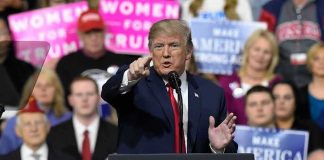
Trump Suggests Declaring Strait of Hormuz US Territory
• Trump stated he would soon declare the Strait of Hormuz US territory during a speech.
• Remarks occurred amid US-Iran war and ceasefire negotiations.
• Americans urged to accept higher gasoline prices linked to the… pic.twitter.com/oo7sLLbNcw— The Unbiased Update (@unbiased_update) August 15, 2026
The bottom line
Prioritizing low oil prices without anchoring nuclear constraints is a short-term high with a painful comedown; prioritizing nonproliferation while ignoring market mechanics is principled but brittle. The discipline of a durable Iran policy is to integrate the two. The research record — market studies, historical cases, and policy analyses — is emphatic: every dollar shaved from a Gulf risk premium through secure transit and credible nuclear limits is a dollar that does not need to be replaced with SPR draws, ad hoc waivers, or political capital spent explaining price spikes to voters.
Put plainly: if “goal number one” is cheaper fuel for American families, then “goal number one” is also preventing nuclear escalation and keeping Hormuz boring. Anything less is not a strategy; it is a tab that arrives with interest.
Sources:
feedpress.me, aa.com.tr, business-standard.com, news.laodong.vn, reuters.com, cnbc.com, nbcnews.com, wsj.com