
The central fact is simple: after spending months dismantling much of the existing foreign-aid apparatus, the Trump administration is now channeling nearly $2 billion through faith-based organizations, with Christian-led groups receiving the largest share. That is not an end to foreign aid; it is a rerouting of aid through a different set of intermediaries.
Key Points
- The State Department announced nearly $2 billion in humanitarian and global-health funding for faith-based groups, including $1.4 billion for a Christian-led consortium and $538 million for disaster response through groups such as Samaritan’s Purse, World Vision, and Compassion International.
- Officials described it as the largest allocation of global health foreign assistance to faith-based organizations in more than 20 years, which makes the move a policy reallocation rather than a clean termination of assistance.
- The new money lands after sweeping cuts to USAID and other foreign-assistance programs, including the termination of thousands of awards and the elimination of most existing foreign-aid contracts.
- The practical effect is to elevate faith-linked contractors as major delivery vehicles for U.S. assistance, while leaving unresolved how much of the money is fresh funding, reprogrammed funding, or restored obligations.
What the Administration Actually Announced
The administration’s announcement was large in both scale and symbolism. According to reporting on the State Department rollout, roughly $1.4 billion is set aside for a Christian-led consortium, another $538 million for disaster response, and an additional $570 million for faith-based hospitals and clinics operating through memorandums of understanding with local governments. The named recipients include a familiar roster of global Christian humanitarian organizations: World Vision, Compassion International, Samaritan’s Purse, World Relief, ADRA International, Catholic Relief Services, HOPE worldwide, International Care Ministries, and LifeNet International.
That mix matters. These are not fringe ministries; they are large, institutional aid actors with the logistical capacity to run health, disaster, and community programs at scale. In practice, the administration is not replacing one-off charity with one-off charity. It is choosing a class of implementers that already have overseas networks, field staff, hospital partnerships, and the ability to move money quickly into fragile settings. The White House and State Department have repeatedly framed this kind of shift as efficiency and strategic alignment, not as a retreat from humanitarian responsibility.
Why This Is Best Read as Rerouting, Not Retreat
The deeper story is not that aid vanished and then somehow reappeared. It is that the Trump administration spent its opening months imposing a broad pause, terminating programs, and redirecting foreign assistance away from the existing USAID-centered model. The White House order that launched the review explicitly said new obligations and disbursements should be paused while agencies determined whether programs were aligned with the president’s foreign policy. Later reporting said the administration finalized the termination of thousands of awards and contracts, including more than 5,800 USAID contract awards and 4,100 State Department grants.
That backdrop explains why the later faith-based announcement is so revealing. When an administration first squeezes the old pipeline and then opens a new one for faith-linked contractors, the relevant question becomes who controls the spigot, not whether water still flows. The State Department’s description of the new initiative as the largest faith-based global-health allocation in over two decades underscores the point: this is a deliberate channel change, not a simple continuation of prior practice.
The Christian groups themselves were not spared the earlier cuts. Reuters reported that the global Catholic charity arm called the reductions “catastrophic,” while other Christian charities described severe disruptions, layoffs, and funding gaps. That history matters because it shows the administration did not merely preserve existing faith-based humanitarian work. It first battered the sector, then selectively restored funding through favored entities. That sequence is what gives the announcement its political force.
The Ideological Logic Behind the Shift
This move fits a larger conservative foreign-policy instinct that has been building for years: distrust multilateral and secular aid bureaucracies, elevate religious intermediaries, and insist that aid should serve clearly defined national or civilizational goals. Reporting from the start of the second Trump administration described senior aides telling faith-based charities that the government had “zeroed out” foreign aid and envisioning a future in which church groups and wealthy private donors would take over care for vulnerable populations. That language is not incidental. It reveals the governing theory behind the policy.
The administration’s own public rationale has been consistent. It has argued that aid must be aligned with U.S. foreign policy, that the old model was inefficient, and that private or faith-based actors can deliver services more effectively. Critics reject that premise, but the premise itself is clear. The shift is not just budgetary; it is philosophical. Assistance is being recast from a universal humanitarian instrument into a tool that should be steered by the administration’s preferred institutions and priorities.
That is why the “Trump promised to end foreign aid” framing captures only part of the reality. The evidence here supports a narrower but more precise judgment: Trump moved to slash or suspend large portions of foreign aid, then preserved and even expanded selected aid streams through Christian and faith-based organizations. In other words, the policy was never a pure abolition. It was a sorting mechanism.
What Counts as Christian Aid — and What Doesn’t
The headline language naturally invites a blunt conclusion that the administration is simply giving money to “Christian groups.” The record supports that broad characterization, but with important qualifications. Several beneficiaries are explicitly Christian or Christian-rooted organizations, yet some are large humanitarian contractors with mixed operating identities and broad service portfolios, not narrowly devotional ministries. World Vision and Catholic Relief Services, for instance, are faith-based organizations with long histories of secular humanitarian delivery as well as religious identity.
That nuance does not erase the political significance. The relevant issue is not whether every recipient runs Bible studies; it is that the funding architecture places explicitly faith-linked bodies at the center of U.S. foreign assistance. The reporting also indicates the grants are structured through formal mechanisms, including MOUs with local governments and health-service consortia, which makes this a durable policy channel rather than a symbolic one-time giveaway. Still, the public sources do not show the underlying award notices, scoring memos, or eligibility rules. As a result, it remains unclear how much of the $2 billion is new money, how much is reprogrammed, and whether non-Christian organizations were eligible for comparable awards.
Why the Contradiction Resonates Politically
The contradiction is so sharp because the administration’s rhetoric and its operational choices point in opposite directions. On one hand, Trump officials have celebrated a hard reset in foreign aid, including claims that the old system was wasteful or corrupt. On the other hand, the administration has now announced one of the largest faith-based aid packages in recent memory, with Christian organizations prominent among the beneficiaries. For critics, that looks like selective generosity after public triumphalism about cutting aid. For supporters, it looks like a smarter delivery model that keeps assistance alive while shedding the bureaucracy around it.
Both readings draw from the same facts, but they are not equally complete. The stronger reading is that the administration did not abolish foreign aid so much as redefine its gatekeepers. USAID’s central role was reduced; faith-based contractors were elevated; and the dollar amounts were large enough to signal policy intent rather than administrative housekeeping. The remaining open question is not whether the shift happened. It clearly did. The open question is whether future award records will show a stable, additive faith-based strategy or a temporary redistribution after a deep contraction in the broader aid system.
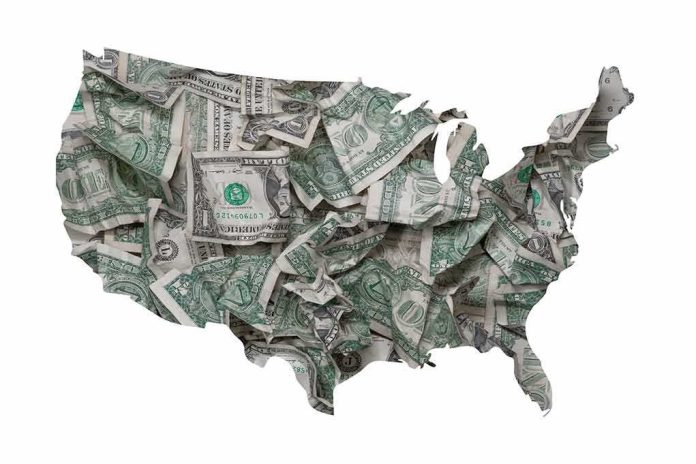
What is already plain is that this is a consequential reordering of American humanitarian power. Foreign aid has always been more than money; it is a map of whom the United States trusts to represent it abroad. On that map, the Trump administration has moved the pins decisively toward religious institutions, and especially toward Christian ones.
Is nearly $2 billion in foreign aid to Christian groups a good use of taxpayer money?
The Trump administration promised to cut wasteful overseas spending, but has just promised $2 billion to Christian groups.
More in @reason 👇 pic.twitter.com/2rLIiA01NX
— Reem Ibrahim (@ReemAmirIbrahim) August 12, 2026
Sources:
reason.com, christianitytoday.com, politico.com, ffrf.org, baptistnews.com, religionnews.com, newdailycompass.com, christianpost.com, foreignpolicy.com, state.gov, aol.com, devex.com, anabaptistworld.org, kff.org