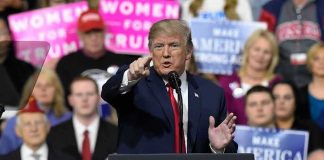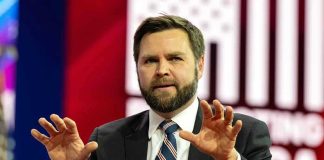
The real shift in American politics is not that presidents spar with the press; it’s that they now spar directly with creators. When President Trump used a high‑visibility memorial address to denounce “commentators, influencers, and others” who cheered Charlie Kirk’s assassination—and called them “major losers”—he treated the influencer class as political actors to be disciplined from the biggest stage. Hasan Piker’s immediate, public reaction underscored the point: creators with mass followings are no longer peripheral; they are inside the arena.
At a Glance
- In a Glendale, Arizona address after Charlie Kirk’s assassination, President Trump condemned “commentators, influencers, and others” who reacted with approval, calling them “major losers.”
- Streamer Hasan Piker responded as if included in Trump’s target set, exclaiming, “He’s coming after influencers!” as the remarks circulated.
- Trumpworld has engaged Piker before; prior controversies around Piker’s rhetoric have drawn attention from Republican figures and coverage tying the dispute to Trump’s orbit.
- This episode fits a larger pattern: political influencers operate as agenda‑setters and mobilizers, and elected leaders now treat them accordingly—sometimes as foils, sometimes as amplifiers.
What happened and why it matters
At a memorial event in Glendale on September 21, 2025, President Trump devoted a portion of his remarks to condemning those who reacted to Charlie Kirk’s killing with what he called “sick approval, excuses, or even jubilation.” He grouped these voices as “commentators, influencers, and others,” then labeled them “major losers.” The rhetoric was not a passing aside; it was a deliberate rebuke from the country’s most powerful political communicator aimed at the digital personalities who shape public sentiment and partisan identity at scale. Hasan Piker—one of the most prominent left‑leaning streamers—reacted on cue, voicing alarm that Trump was “coming after influencers,” which reframed the moment as a clash between institutional politics and creator politics.
Piker’s presence in this frame is not accidental. He has been a recurring character in conservative media narratives and an occasional lightning rod for Republican officials. News coverage in 2026 documented GOP attention to Piker’s campus appearances and resurfaced his most controversial quips—among them a riff that “America deserved 9/11” and rhetoric about Medicare fraud and Senator Rick Scott—which Piker has since characterized as inappropriate or poorly phrased. The point isn’t the adjudication of those lines; it’s the signal they sent. Piker became a convenient emblem of the “influencer left,” and therefore a predictable reference point when Trump castigated influencers in the wake of Kirk’s death.
The mechanism: how influencers became political actors
Over the past decade, influencers have evolved from ancillary commentators into core nodes in the political information economy. The best evidence says they are not merely entertainers dabbling in civics. Researchers describe “political social media influencers” as creators whose content, even when mixed with lifestyle or gaming, reliably carries political cues that shape follower beliefs, emotional engagement, and action. Their persuasive leverage often flows through parasocial ties—the one‑sided intimacy that makes messages feel like advice from a trusted friend—magnifying efficacy beliefs and mobilization. In aggregate, this reconfigures how agenda signals travel: from party to press to public has become party to influencers to publics, with feedback loops in between.
This reconfiguration changes incentives for elected officials. When an influencer can set the day’s frame for millions before traditional outlets have filed a story, a president has two options: court them or confront them. Trump—who has long practiced politics as a form of media production—does both, often in the same speech. He elevates friendly creators as validators and castigates adversarial ones as moral hazards, thereby drawing a bright line between “legitimate” and “illegitimate” intermediaries. In Glendale, he used a moment of collective mourning to do just that—assigning moral blame to a category of creators he cast as celebrating violence, and distancing his coalition from their influence.
Precedent and pattern: Trump, Piker, and the right’s influencer lens
The Trump era trained conservatives to see the influencer sphere as a battleground: win the feed, win the frame. Charlie Kirk himself built Turning Point USA on that premise, recruiting young creators and campus organizers into a pipeline for pro‑MAGA content. In that ecosystem, an adversarial influencer like Piker is not just a pundit; he’s a counter‑mobilizer. That is why his earlier rhetoric reliably resurfaces in conservative coverage—it serves as narrative evidence that the influencer left is beyond the pale, and therefore fair game for presidential condemnation. News reporting tying GOP figures’ actions to Piker’s presence on campus speaks to this logic: starve platforms of legitimacy and resources if they host figures framed as dangerous or irresponsible.
In this light, the Glendale remarks were not a one‑off outburst; they were a continuation of a strategy that treats creators as political institutions. The president’s denunciation establishes a permission structure for allies to marginalize certain influencers and an identity cue for supporters to discount their frames. Piker’s response, meanwhile, did what effective creators do: metabolize a live political moment into content that galvanizes an audience, reinforces in‑group identity, and expands his own narrative arc as a foil to power.
Where the genuine disagreement sits
The live fault line is not whether Trump condemned influencers—he did—nor whether Piker took it personally—he did. The disagreement is over inclusion criteria and responsibility. On one side is the claim that some commentators celebrated or excused assassination; on the other is the counter that broad presidential denunciations chill speech and collapse a diverse creator sphere into a caricature of extremism. The friction is structural: creators often trade in hyperbolic performance, clipped reaction, and rapid‑cycle takes; presidents traffic in category judgments and moral signaling. When tragedy strikes, these modes collide—one rewards speed and provocation, the other claims the mantle of moral order.
Scholarly work helps explain why both sides push hard. Influencer communications can raise participation and shape attitudes with unusual efficiency, which makes them attractive to movements—and worrisome to opponents. Studies find that such messaging can intensify polarization even as it persuades particular audiences, a dual effect that encourages politicians to either align with powerful creators or to disqualify them rhetorically. The Glendale speech did the latter. The creator response did what it always does: turn condemnation into fuel for further reach.
Deadline: “ABC filed an unprecedented First Amendment lawsuit against the FCC on Tuesday, claiming that its investigations and regulatory actions are part of a Trump admin ‘retaliatory campaign’ to curb the network’s free speech. The lawsuit, filed in federal court in DC, also…
— Russell Shaw (@therussellshaw) August 19, 2026
What this means going forward
Three implications follow. First, presidents will increasingly use ceremonial and high‑viewership events to police the boundaries of acceptable influencer speech. Expect more category labels—who is a “patriot,” who is a “loser”—because category work is how leaders simplify complex media landscapes into actionable cues for their supporters. Second, creators will continue to operationalize those labels as content, recasting censure as proof of relevance; the conversion of condemnation into audience growth is now a well‑worn loop. Third, institutions—universities, platforms, campaigns—will be pressed to choose: partner with politically aligned creators, or develop durable norms that resist episodic pressure. None of this is hypothetical; it is the operating system of politics in a creator‑first media economy.
Sources:
the-express.com, podcasts.happyscribe.com, youtube.com, timesofindia.indiatimes.com, newsweek.com, wunc.org, abc.net.au