
The uproar aimed at John Thune over the SAVE America Act is less about a single voter-ID bill than about a collision between online rage politics and the unforgiving arithmetic of the modern Senate.
At a Glance
- Thune openly concedes the SAVE America Act lacks the 60 Senate votes needed to clear the filibuster, despite strong support from President Trump and the Republican base.
- MAGA-aligned activists and influencers have turned Thune into a lightning rod, “ratioing” his posts on X and demanding his removal as leader for prioritizing other legislation and refusing to change Senate rules.
- Trump and high-profile supporters, including Elon Musk, frame the bill as a litmus test of loyalty, while Thune insists the obstacle is bipartisan opposition and Senate procedure, not his own commitment.
- The controversy illustrates a broader pattern: presidential and grassroots demands for maximalist action colliding with the Senate’s supermajority requirements and leaders’ responsibility to manage scarce floor time.
The SAVE America Act: Substance and Senate Math
The Safeguard American Voter Eligibility (SAVE America) Act is a Republican election overhaul centered on proof-of-citizenship requirements to register for federal elections and photo ID requirements to cast a ballot. Its backers, led by President Trump and House conservatives, present it as a common-sense election integrity measure that should be easy to pass and popular with voters. Critics, including virtually all Senate Democrats and a handful of Republicans, argue the bill would make voting significantly harder for millions of eligible citizens—especially those without passports, those who have changed their names, and people who rely on online registration. That policy divide matters, but it is not what currently blocks the bill.
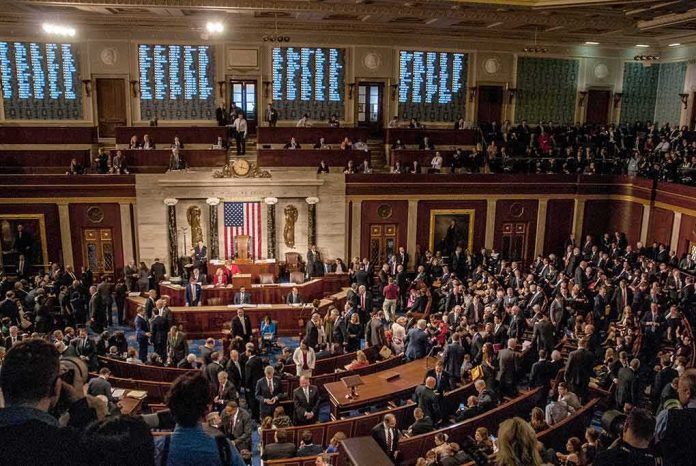
The decisive barrier is procedural. Under current Senate rules, most major legislation must secure 60 votes to end debate and avoid a filibuster. Republicans hold a bare majority, and on repeated tests they have not come close to that 60-vote threshold for the SAVE America Act. Thune has said publicly, more than once, that the Senate does not have the votes either to pass the bill outright or to change the rules to make passage easier. In one briefing, he summarized the situation bluntly: “It’s a well-known fact around here… we lack the votes,” and noted the bill had failed to reach even 50 votes on the floor. That is the core reality he keeps returning to when pressed: the math does not add up.
Thune’s Position: Supportive on Policy, Pessimistic on Passage
What makes this dispute unusually explosive is that Thune is not a substantive opponent of the bill. On paper and in floor speeches, he has praised the SAVE America Act as “commonsense” reform and urged passage of stronger voter integrity measures. He has shepherded it onto the floor multiple times, overseen debates, and allowed repeated votes—then watched it fail, again and again. Asked by reporters to explain his stance, he has been remarkably consistent: Republicans lack the votes to overcome a filibuster; they lack the votes to “nuke” or significantly alter the legislative filibuster; and they even lack a clear path to a talking filibuster that could force Democrats into concessions.
Thune’s language is the language of a vote counter, not an ideological rebel. He has described himself as “pessimistic” about winning Democratic support for the bill and challenged Trump allies to show him a concrete path to passage—senator by senator, vote by vote, rather than through slogans or pressure alone. “Show me how this ends,” he told one group of reporters, counting off how many times the bill had already been brought up and defeated on the floor. In his telling, refusing to spend weeks of floor time on a doomed bill is not betrayal; it is sober stewardship of a chamber that still has to fund the government, renew surveillance statutes, and manage foreign crises.
The Ratio: How X Turned Procedure into a Loyalty Test
Outside the chamber, that procedural explanation has landed poorly. Every time Thune’s office posts anodyne content on X—support for service members abroad, congratulations to a South Dakota sports team—the replies fill with accusations of treason and demands that he “bring up the SAVE Act” or resign. Reporters have documented a wave of social-media criticism and calls for him to be removed as majority leader, even though no Republican senator has formally backed such a move. The dynamic is familiar to anyone watching modern politics: an online base treating the absence of maximal action on one priority as proof of hidden opposition, regardless of institutional constraints.
Elon Musk’s involvement supercharged the backlash. After donating heavily to a Thune-aligned super PAC, Musk turned against the leader on his own platform, accusing him of being “spineless” and “corrupt,” and declaring that “failing to SAVE is act of treason against the people of America.” The New York Times counted more than 100 Musk engagements with the SAVE America Act on X in a single year, many explicitly targeting Thune. When a figure with more than 200 million followers repeatedly tells people to call Thune’s office and demand action, the result is what political professionals now expect: relentless “ratioing,” cascading outrage, and a sense—within the movement—that any delay is a deliberate betrayal.
Thune, for his part, has shown little interest in courting that outrage. Asked whether the online criticism was changing his calculus, he brushed it off as something that “comes with the territory,” suggesting that leaders cannot navigate by the most angry replies in their mentions. At one point he attributed some of the pressure to a “paid influencer ecosystem,” a phrase that inflamed supporters who see themselves as grassroots volunteers rather than hired guns. In the attention economy of X, that kind of dismissive rhetoric is combustible, and it has helped cement Thune’s image among MAGA influencers as a “RINO” obstructing Trump’s agenda.
Trump, Filibuster, and the Pressure to “Just Get It Done”
President Trump has treated the SAVE America Act as his top legislative priority, repeatedly urging Thune not to let the Senate “leave town” for recess until the bill is passed. On Truth Social and in interviews, he has framed the situation as a simple test of will: Thune, he argues, “has the votes” and should be willing either to push the bill through or to “terminate the filibuster” so Republicans can swiftly pass “everything they ever dreamed of.” That framing elides the crucial distinction between majority control and supermajority thresholds. Republicans can schedule votes and debate; they cannot unilaterally conjure the extra votes needed to end debate, nor can they change the rules without a coalition that currently does not exist.
The push to end or “nuke” the filibuster is particularly fraught. Thune has been explicit that he does not have anything close to the votes needed to abolish or fundamentally alter the legislative filibuster for this bill. Some Republicans fear that doing so would empower Democrats in future Congresses, enabling sweeping progressive legislation with only a bare majority. Others see defending the filibuster as a matter of institutional identity for the Senate itself. For Trump and many activists, those concerns are secondary; in their view, the filibuster is a relic standing between them and essential reforms, and any leader unwilling to sacrifice it is choosing procedure over country.
This is where the clash becomes personal. Media accounts describe Trump’s “patience running out” with Thune, threats of political consequences, and public jabs at his leadership. Conservative outlets and commentators talk openly about replacing him with a more aggressively pro-Trump figure, portraying the SAVE America Act not just as a policy fight but as a referendum on loyalty to the president and to MAGA priorities. In that narrative, Thune’s insistence on vote counts and rule constraints reads as excuse-making rather than realism.
Beyond One Bill: The Recurring Senate Pattern
Strip away the personalities and the platform drama, and the SAVE America Act fight fits a long-running pattern in Senate politics. Presidents and their bases frequently demand high-profile pushes on marquee issues—health care, immigration, voting rules—while Senate leaders weigh three hard questions: do they have 60 votes; are they willing to spend weeks of floor time on a likely failure; and how much political damage will they suffer if they cement that failure in public. Saying “we don’t have the votes” is a way of telling the base that enthusiasm is not enough.
In this case, the record is clear. The SAVE America Act has cleared the House, reached the Senate floor repeatedly, and officially failed. Bipartisan opposition, including a solid wall of Democrats and several Republicans, has prevented it from reaching even a simple majority at times, let alone the 60 votes required to overcome a filibuster. There is no public whip count suggesting that reality has changed. Supporters talk about national polling, overwhelming grassroots enthusiasm, and the moral imperative of protecting elections; critics talk about disenfranchisement and bureaucratic burdens. Those arguments might eventually move a senator or two, but so far they have not produced the concrete commitments that Thune, as leader, would need to schedule a vote he believes could succeed.
What is new is the speed and intensity with which that procedural reality becomes a digital morality play. Social media ecosystems, particularly those oriented around Trump and MAGA, encourage a belief that institutional resistance is temporary and will collapse under sufficient pressure. Filibuster rules, swing-vote calculations, and bipartisan coalitions are hard to explain in 280 characters; accusations of cowardice and treason are easy. A Senate leader who talks about “vote math” can therefore look, on X, like a villain standing between the people and the reforms they demand.
It’s not just Kennedy. Sen. John Cornyn (R-TX) publicly called Trump’s foreign policy chaotic, said negotiating with him is pointless because “he changes his mind based on the last person he speaks to.” Trump’s response: endorsed his primary opponent. Cornyn lost by 27 points.…
— Dittie (@DittiePE) July 27, 2026
What This Episode Reveals About Power, Platforms, and Governance
For readers trying to make sense of this from outside the partisan scrum, two lessons stand out. First, online fury is not a reliable guide to legislative viability. Ratioed posts and viral insults can reveal genuine anger, but they do not move the cloture threshold on their own. Until sponsors of the SAVE America Act can point to a senator-by-senator coalition that reaches 60 votes, Thune’s claim that “the math doesn’t add up” remains well-supported by the record.
Second, Senate leaders now inhabit a dual accountability environment: inward to institutional norms and vote counts, outward to highly mobilized online bases. Thune’s choice to prioritize other legislation—a bipartisan housing package, spending bills, surveillance law renewals—over endless symbolic votes on the SAVE America Act is precisely the kind of trade-off majority leaders have made for decades. The difference is that every such choice now generates a digital rebellion, complete with calls for removal and accusations of betrayal, amplified by billionaires and talk-show hosts with vast reach.
The SAVE America Act may yet evolve—through amendments, narrower provisions, or a shift in Senate composition—but as things stand, the decisive facts are straightforward: the bill has failed multiple times; the chamber does not have 60 votes to pass it or to scrap the filibuster; and John Thune, while substantively supportive, has chosen to acknowledge those limits rather than pretend they do not exist. The “ratio alert” on X is real, but it is aimed at a structural reality of American governance that no number of angry replies can erase.
Sources:
twitchy.com, thune.senate.gov, time.com, youtube.com, cbsnews.com, pbs.org, democracydocket.com, foxnews.com, facebook.com, politico.com, cnn.com, nytimes.com, theguardian.com, thehill.com, en.wikipedia.org, northjersey.com, npr.org