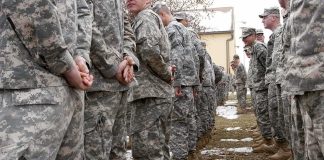


A flu outbreak at Lackland Air Force Base is now testing a Pentagon policy that made the shot optional for troops and trainees.
Quick Take
- Lackland Air Force Base is dealing with a localized influenza outbreak among Basic Military Training trainees.
- The outbreak came weeks after the Department of War made annual flu vaccination voluntary for active and reserve personnel and civilian staff.[1]
- Military health guidance still says yearly flu vaccination is the best way to lower flu risk.[3][5]
- The record supports a strong timing link, but it does not prove the policy change caused the outbreak.
What Happened at Lackland
Air Force officials said the 37th Training Wing is managing a localized flu outbreak among trainees at Basic Military Training. The service said it is isolating sick trainees, treating them, and monitoring others who may have been exposed. News reports say dozens of service members were affected, with one account placing the number near 160. The key point is simple: this is a real readiness problem inside a tightly packed training environment.[8]
The setting matters. Lackland trains new recruits who live and eat close together, which gives flu a fast path through a unit. That is why military health leaders have long treated influenza as more than a seasonal nuisance. The National Foundation for Infectious Diseases says flu can spread quickly in close living and working settings, and the Centers for Disease Control and Prevention says yearly vaccination is the best way to reduce risk.[3][20]
Why the Policy Shift Drew Attention
Secretary of War Pete Hegseth signed a memorandum making annual influenza vaccination voluntary for all active and reserve component service members and War Department civilian personnel, effective immediately.[1] That change came before the Lackland outbreak reached the public eye, which created the sharp timeline now driving the story. Supporters of the old mandate can point to that sequence and argue the military gave up a proven layer of protection at the worst possible time.
That argument has weight, but it is still not proof. The sources provided do not include a base epidemiology report, vaccination-status breakdown, strain data, or a contact-tracing analysis tying the outbreak to the policy shift. The evidence shows a policy reversal and then an outbreak, not a full causal study. Even so, the military’s own health guidance still treats flu vaccination as a standard preventive step for service populations.[3][5][8]
What the Evidence Does and Does Not Show
The strongest factual point is that the timing is real and the policy was broad. It covered active-duty and reserve service members, along with civilian personnel, and it took effect right away.[1] The second strong point is that influenza remains a live threat, not a theoretical one. CDC surveillance shows flu activity rising nationally, with millions of illnesses already estimated this season.[9][11] In a crowded training base, that backdrop makes any local outbreak more concerning.
Major flu outbreak at Lackland AFB Texas. This comes 2 months after Hegseth made flu shots optional for military members. Flu vaccine numbers have dropped to 40%https://t.co/A31cwMrUZB
— Auntie Smartassy (@AuntSassyAss) June 18, 2026
What is missing is the part that would settle the debate. No supplied source shows how many Lackland trainees had been vaccinated, how the virus entered the unit, or whether another exposure source helped spread it. That means the outbreak can be described as following the policy change, but not as being scientifically blamed on it. For readers who care about readiness, that distinction matters, because military health decisions should rest on facts, not headlines.
Why Conservatives Are Watching This Closely
For many conservatives, this story goes beyond flu shots. It speaks to a larger fight over whether military leaders will keep prioritizing readiness, discipline, and common sense over political slogans about “freedom” from every rule. A training base is not a college campus. It is a place where illness can spread fast and damage mission performance. When the government loosens a rule that protected a dense force, the public has a right to ask who will pay the price if sickness spreads.
At the same time, the record also shows why caution is important. The Department of War said its new policy gives service members the choice to take the vaccine, and other military guidance still points to annual flu vaccination as the best available protection.[1][5][20] That leaves commanders in a tough spot: they must balance individual choice with the needs of a force that lives, trains, and deploys together. Lackland now shows how fast that balance can be tested.
Sources:
[1] Web – Air Force unit faces flu outbreak weeks after vaccine mandate dropped
[3] Web – [PDF] New Jersey Department of Health (NJDOH), Vaccine Preventable …
[5] Web – The State of US Vaccine Policy — May 14, 2026 – CIDRAP
[8] YouTube – We are Discarding the Mandatory Flu Vaccine …
[9] Web – Pentagon Drops Influenza Vaccine Requirement for US Military
[11] Web – Comparative community burden and severity of seasonal and … – PMC
[20] Web – Hegseth ends mandatory flu vaccine for US military, says shot is …