
A man living comfortably in Shanghai can help light political fires in Minneapolis—and the hardest part is simply proving it.
Quick Take
- Neville Roy Singham, a U.S. businessman living in China, faces allegations that money tied to his network helps bankroll far-left protest infrastructure in Minneapolis.
- Congress can issue subpoenas, but enforcing one against a U.S. citizen who resides in the People’s Republic of China becomes a practical dead end.
- Investigators and reporters describe “dark money” pathways: nonprofits, fiscal sponsors, vague entity names, and hard-to-trace addresses.
- The dispute centers less on whether people can protest and more on whether foreign-aligned funding and undeclared advocacy are shaping U.S. streets.
How a Shanghai address becomes a Minneapolis problem
Congressional investigators and several media outlets have focused on Neville Roy Singham, an American entrepreneur who sold an IT consulting firm for $785 million and later relocated to Shanghai. The allegation is not that he personally shows up at protests, but that money associated with him flows through intermediary organizations that support far-left activism, including anti-ICE demonstrations in Minneapolis. The hook for lawmakers is simple: foreign influence doesn’t need diplomats when it has wiring instructions.
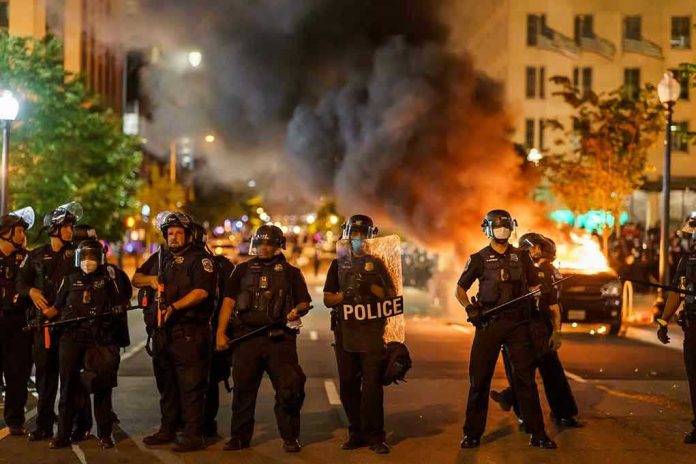
The Minneapolis angle matters because it converts an abstract funding story into a neighborhood-level reality: protests organized quickly, messaging that appears professionally coordinated, and groups with the capacity to mobilize. Reporting points to organizations such as the Party for Socialism and Liberation and The People’s Forum as key nodes in activist infrastructure. Those groups did not respond to certain inquiries described in the reporting. Silence does not prove wrongdoing, but it does keep accountability out of public view.
Dark money mechanics: legal shapes, murky outcomes
“Dark money” is a term of art for political funding that becomes difficult to trace in real time, often because nonprofits can legally shield donor identities or because money passes through multiple organizations. The reporting describes suspiciously thin organizational footprints—mailbox-style addresses, generic naming, and fiscal-sponsorship arrangements that blur who actually pays for what. That structure matters to ordinary citizens because it changes the question from “Who’s protesting?” to “Who’s underwriting the machinery?”
Funding claims vary by scope, which is common in complex networks. Some reporting cites more than a quarter-billion dollars routed into dark-money organizations over time, while other commentary references more than $100 million directed to U.S. activist organizations. Those figures may describe different buckets, but the public still faces the same practical problem: when money moves through multiple nonprofit layers, the average voter cannot tell where ideology ends and operations begin. Transparency becomes the missing ingredient.
The subpoena problem: Congress can ask, China can shrug
A House committee’s approval of a subpoena in January 2026 made headlines because it signals seriousness—at least on paper. Former federal prosecutor Andrew Cherkasky underscored the core obstacle: a subpoena has teeth inside U.S. borders, but little bite abroad. If a witness stays overseas, Congress can posture, complain, and issue stern letters, yet still struggle to produce testimony. Jurisdiction turns into a shield, not a technicality.
That limitation should worry Americans across the political spectrum. A system that cannot compel answers about cross-border political financing invites copycats. A foreign-based funder does not need to direct every protest to affect outcomes; it only needs to subsidize the permanent infrastructure—staff, legal support, media production, travel, and “rapid response” organizing. From a conservative, common-sense perspective, the baseline expectation is straightforward: Americans should know when foreign-aligned money helps steer domestic agitation.
Minneapolis as a case study in professionalized protest
Protests can be spontaneous, but sustained agitation usually requires logistics. Reporting tied to Minneapolis describes disruptive events and organized demonstrations, and it also spotlights nonprofit compensation that raises eyebrows among taxpayers and donors. One organizer, Nekima Levy Armstrong, reportedly received more than $1 million in salary and benefits over six years tied to nonprofit leadership. High pay is not a crime, but it is a flashing indicator that activism often runs as an industry—with budgets, payroll, and incentives.
Americans over 40 recognize the pattern because they’ve seen it in other arenas: once an organization depends on unrest to justify fundraising, unrest becomes the product. That doesn’t mean every protester is a paid actor. It means the scaffolding around the protest—press releases, transportation, bail funds, curated slogans—can be financed and managed by people far removed from the local consequences. Minneapolis residents absorb the disorder; distant patrons absorb the influence.
FARA, propaganda concerns, and the accountability gap
The Foreign Agents Registration Act exists for a reason: advocacy on behalf of foreign principals should not masquerade as purely domestic grassroots politics. Reporting summarizes lawmakers’ concerns that organizations promoting narratives aligned with adversarial governments may avoid registration and avoid scrutiny. The House Ways and Means Committee has also pressed federal agencies about tax-exempt groups accused of pushing CCP-friendly initiatives. If those concerns are substantiated, the issue becomes less partisan and more about national self-respect.
https://twitter.com/
Media commentary has amplified the story, including claims that major outlets downplay the foreign-influence angle. Skepticism about media incentives feels earned after years of selective coverage, but conclusions still require evidence. The most responsible stance is firm but fair: pursue documentation, follow money trails, and distinguish between protected speech and coordinated foreign-aligned operations. Americans can defend the right to protest while demanding transparency about who funds the megaphones.
Sources:
CCP-Connected Millionaire Allegedly Bankrolls Minneapolis Agitator Groups Through Dark Money Network
Bill O’Reilly: China-Linked Billionaire Funding Minnesota Chaos
CCP-connected millionaire allegedly bankrolls Minneapolis agitator groups through dark money network
Far-left agitator who organized Minnesota church storming raked over $1 million from nonprofit
American Billionaire based in China funding the protests against the ICE