
When the Supreme Court greenlights or halts a border project, it is not merely refereeing a local dispute; it is deciding how far executive waiver powers stretch when national security claims collide with environmental and cultural protections—and whether emergency procedure is an appropriate vehicle for that call.
At a Glance
- The administration sought and obtained emergency Supreme Court relief to proceed with Big Bend border infrastructure, invoking DHS’s statutory waiver authority.
- The district court had issued a preliminary injunction after finding challengers likely to succeed and face irreparable harm; the Supreme Court’s action allows construction to resume while litigation continues.
- The core legal fight turns on the scope and limits of the 1996 waiver statute and whether Big Bend fits the statute’s “areas of high illegal entry” criterion.
- Opponents ground their case in site-specific environmental, cultural, and property impacts and argue Big Bend’s remoteness undercuts the security rationale.
What the Supreme Court’s emergency action actually decides—and what it doesn’t
Emergency applications are about timing and harms, not the last word on the law. Here, the government asked the Court to stay a preliminary injunction that had halted barriers, roads, and any ground-disturbing activity across a roughly 500-mile sector of the Big Bend border. The administration argued that its operational and border-security interests outweigh asserted aesthetic, recreational, and cultural injuries, and that the district court improperly suspended statutory waivers granted under the Secretary of Homeland Security’s congressionally conferred authority. Reports describe the lower court order as preliminary—an interlocutory ruling preserving the status quo pending a final merits decision—so the Supreme Court’s emergency relief restores the agency’s ability to act while the underlying case proceeds.
The government’s application was not mere signaling. DHS and DOJ formally invoked the Court’s emergency docket, emphasizing the injunction’s breadth and its effect on federal operations. They also quantified enforcement activity in the sector—more than 89,000 apprehensions over fiscal years 2021 through 2025—to support the need for expedited infrastructure; critics note that the public record does not disclose the corridor-level breakdown behind that aggregate.
The legal fulcrum: DHS waiver authority and “areas of high illegal entry”
The modern border-barrier regime descends from a 1996 statute that authorizes the DHS Secretary to waive specified legal requirements to speed construction in defined areas of high illegal entry. That waiver power—expanded by subsequent appropriations and fence legislation—has repeatedly survived facial challenges, but the statute’s limits have always mattered: Congress tethered waivers to specific projects and geography, not a free-floating blank check. In Big Bend, the challengers say DHS overreached by invoking waivers to push barriers and roads through one of the most remote stretches of the border, bypassing environmental, cultural, and archaeological safeguards. Judge Kathleen Cardone agreed at the preliminary stage, finding the plaintiffs likely to succeed and staying the waivers’ effect inside the sector.
The administration counters that the statute places the necessity judgment with the Secretary, who is best positioned to weigh operational risk, including diversion effects as barriers and staffing harden other corridors. In the emergency posture, the Court evidently credited the government’s showing enough to let work resume, but that does not settle the merits. The ultimate question—did DHS lawfully determine that Big Bend meets the statute’s threshold, and did it compile a record adequate to justify the specific waivers used—will be decided in the ordinary course or on expedited merits review if the statute’s special review provisions apply.
The factual dispute: operational risk versus site-specific harm
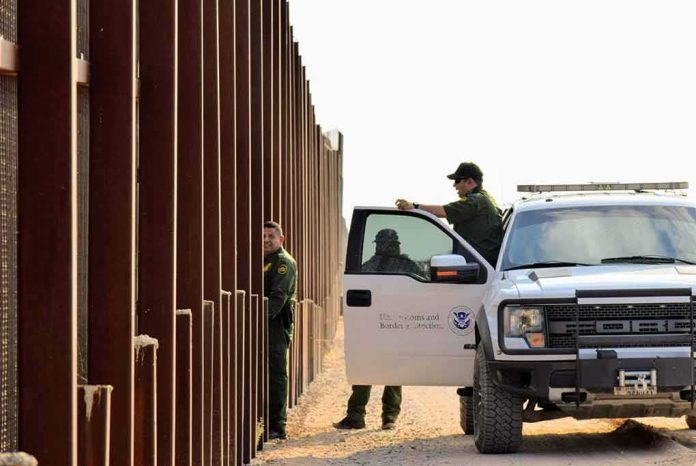
On the government’s side of the scale are claims of impaired patrol mobility and interdiction, the need for roads and lighting to reduce response times, and the deterrent and channeling value of barriers in rugged terrain—framed as concrete operational harms, not discretionary aesthetics. In support, the emergency filings stress that suspending waivers and construction across hundreds of miles imposes real costs on agents and undermines border control goals that Congress has funded repeatedly. Yet much of the public-facing record is thin: beyond the sector-level apprehension tally, reporting does not surface sworn operational declarations, response-time maps, or project-by-project engineering plans linking specific segments to measurable enforcement gaps in Big Bend. That evidentiary sparseness is a litigation vulnerability if left unaddressed.
Opponents have filled the vacuum with named, on-the-ground evidence: videos of bulldozers and track hoes clearing vegetation, testimony from river guides and ranchers about blocked river access and altered landscapes, and expert and advocacy statements warning of erosion, sedimentation, and threats to aquatic species and historic resources like the adobe church at Ruidosa. At the preliminary hearing, plaintiffs called multiple witnesses; one plaintiffs’ lawyer asserted the government called none and failed to substantiate unusually high illegal entry or irreparable harm from a pause—an argument that likely influenced the district court’s initial injunction calculus.
Do barriers work in places like Big Bend? The evidence is mixed—and context-dependent
Serious research on border barriers shows asymmetric results. Some location-specific analyses find meaningful reductions in crossings where fencing closes easy routes and complements patrols; one study discussed by the American Economic Association reports reductions in migrant flows from affected Mexican municipalities on the order of 27 to 35 percent, underscoring that infrastructure can matter when terrain and enforcement design align. Cross-national and broader-scope work is more skeptical: multiple reviews find that fences often divert rather than prevent movement, have limited effect on refugee flows, and can trigger backfire dynamics that raise risks or shift modalities rather than reduce aggregate entries.
Big Bend sits at the edge of these findings. Rugged topography and remoteness already impose costs on crossers—opponents argue the landscape itself is a deterrent—yet those same conditions can complicate patrol mobility and surveillance, the very problems roads and lighting are meant to solve. In such settings, the marginal effectiveness of barriers is ultimately an empirical question: does a particular segment, paired with access roads and sensors, reduce crossings in that corridor in a way that justifies its environmental footprint and financial cost? The record presented so far leaves that answer contested.
🚨 JUST IN: The Supreme Court has cleared the way for border wall construction to resume in Texas’s Big Bend region.
The decision puts a controversial stretch of the U.S.-Mexico border back on the path toward construction, raising questions about environmental protections,…
— J (@jasonllevin) November 10, 2026
How the case advances from here—and what would resolve the real disagreements
Emergency relief buys the government time and operational discretion; it does not relieve it of the need to win on the merits. The cleanest path forward is a fuller administrative and evidentiary record: sworn declarations from sector leadership tying proposed segments to specific interdiction deficiencies; disaggregated encounter data locating flows, repeat encounters, and modality changes; and an engineering plan that compares barriers, roads, lighting, sensors, aviation, and staffing on cost-effectiveness grounds. On the other side, plaintiffs will continue to develop site-specific environmental, cultural, and property impacts and to press statutory limits on waiver scope and geography. Courts are well equipped to weigh both kinds of proof.
Why the Supreme Court’s intervention matters beyond Big Bend
Two institutional stakes make this dispute larger than a single sector. First, it tests the practical bounds of Congress’s waiver design: if the Secretary’s “high illegal entry” determination is effectively unreviewable on an emergency record, waiver power expands; if courts demand granular evidence and narrow tailoring, it contracts. Second, it signals how the justices police the emergency docket in high-salience policy fights. By restoring the government’s ability to build pending appeal, the Court prioritized claimed operational harms over preliminary findings of environmental injury; but it left room for a different outcome after fuller merits development. Agencies that want durable wins should treat that as a directive to shore up the record, not an invitation to rely on generalities.
Sources:
cbsnews.com, houstonpublicmedia.org, courthousenews.com, republic.land, mynbc5.com, aljazeera.com, biologicaldiversity.org, aeaweb.org, tandfonline.com