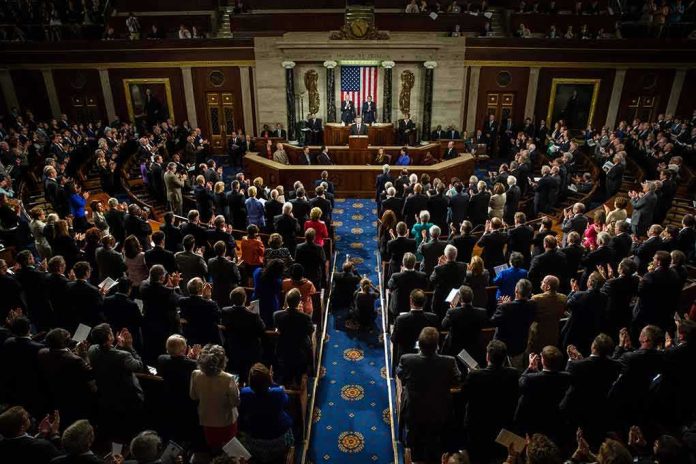
Voters handed Democrats control of Congress not because “woke” politics surged, but because pocketbook pain met a familiar midterm impulse to counterbalance the White House; the mandate that follows is less a cultural reset than a demand to make life more affordable while checking presidential power.
The Short Version
- Democrats won both chambers amid elevated anxiety over prices and household costs, a classic midterm backlash dynamic.
- The new majorities include an energized progressive bloc, but leadership’s opening agenda centers on affordability, health coverage, and oversight.
- Exit polls and independent analyses point decisively to cost of living, not culture-war issues, as the cycle’s dominant driver.
- Divided government channels power toward investigations and messaging bills; durable policy hinges on cross-party bargains in the Senate.
What This Majority Is Built On: Economics First, Not a Cultural Sea Change
Midterms in the United States are structured by two overlapping forces: a recurring penalty against the president’s party and voters’ retrospective judgment on performance, especially the economy. In that light, a Democratic sweep while President Trump holds the Oval Office is unsurprising; it fits the postwar pattern in which the out-party gains when economic perceptions sour and voters seek institutional counterweight to the executive. The evidence from this cycle underscores that economic frame: major outlets summarized the results as a rebuke of Trump’s record, and national exit polling reported that worries about groceries, gas, utilities, healthcare, and inflation dominated voter priorities. More than eight in ten voters said they were concerned about necessities, and cost-of-living pressure registered as a crucial factor for a decisive majority.
That does not mean ideology is irrelevant; it means causation matters. The new Democratic caucus undeniably includes a visible progressive contingent alongside establishment and swing-district moderates. But the ballots were cast in a market of kitchen-table concerns, not primarily over abstract cultural markers. Analysts who want to pin the flip on a revival of “woke” politics are over-reading the signal; the best-supported reading is economic discontent combined with the perennial midterm corrective.
What Democrats Say They’ll Do: Affordability, Health Coverage, and Oversight
Before the votes were counted, Democratic leaders previewed a “first 100 hours” domestic focus: reinstate expired Affordable Care Act subsidies, reverse Medicaid reductions, and take a hard look at tariffs that, in their telling, increased consumer costs. Those are not niche cultural planks; they are price and coverage levers. Party strategists also promised aggressive oversight, with subpoena power targeted at administration conduct and policy administration. That toolset is the natural comparative advantage of a congressional majority facing a president from the other party: it can investigate, legislate to define contrasts, and force on-the-record votes that clarify who is obstructing or enabling a policy path.
There is internal tension about how far to take confrontation—investigations are certain, while talk of serial impeachments is not anchored in documentary planning or leadership commitment in the available record. Claims that Democrats would pursue a spree of impeachments against a cast of public figures lack the supporting schedules, committee documents, or statements that mark real congressional strategy; treat them as speculative rather than predictive. The institutional reality is plainer: the House can pass a raft of affordability-oriented bills; the Senate, bound by filibuster rules, makes bipartisan arithmetic the gatekeeper for anything durable.
How We Got Here: Midterm Mechanics, Issue Salience, and Trump-Era Backlash
Political science offers a sturdy scaffolding for what we saw. Midterms typically punish the president’s party as voters use Congress to check executive power—an equilibrium observed for decades. Within that structure, the issues that loom largest in voters’ minds—issue salience—shape both turnout and choice. When prices spike and household budgets feel squeezed, economic issues outrank cultural identities in the voting booth, even for highly engaged partisans. This cycle’s polling cut cleanly in that direction: cost of living and inflation consistently ranked as leading concerns, and large majorities described direct financial hardship from rising prices.
Against that backdrop, Democrats’ messaging in competitive races gravitated toward affordability and health security, while promising to police administration excesses. That is not a repudiation of the party’s progressive wing; it is a coalition strategy that leads with the median voter’s pain point. The progressive bloc’s presence in safe seats ensures leftward pressure inside the caucus, especially on oversight priorities and tariff politics, but the governing center of gravity is forged where Senate math and swing-district incentives intersect.
Where the Real Disagreement Lies: Interpreting Mandate and Measuring Ideology
The fight now is interpretive: Did voters authorize an ideological left turn or demand competent economic relief and accountability? The strongest empirical record favors the latter. Coverage synthesizing exit polls framed the result as an economic backlash and a check on Trump’s stewardship; analysts highlighted that more than 80 percent of voters were worried about everyday prices and that affordability was a crucial or major voting factor for roughly nine in ten. By contrast, the evidentiary chain for a “woke resurgence” thesis is thin—heavy on inference from the composition of the caucus, light on voter-level data linking cultural-left preferences to ballot choice. Without precinct or microdata tying candidate support to views on DEI, gender policy, or related markers, treating the flip as a cultural verdict outruns the facts.
Democratic leaders can, of course, pursue progressive policy reversals alongside pocketbook relief. But conflating caucus preferences with voter causation is a category error. The electorate that delivered this majority did so under the weight of prices and performance evaluations, not in response to an ideological catechism. Assertions of sweeping impeachment agendas belong in the same bucket until corroborated by committee calendars, subpoenas, or leadership directives.
Democrats’ takeover of Congress could lead to significant changes in Washington’s approach toward Israel.
According to Reuters, several newly elected Democratic lawmakers campaigned against military assistance to Israel and the war with Iran.
The new Congress could increase…
— Han | World Brief (@Han_WorldBrief) November 5, 2026
What It Means Going Forward: Power, Constraints, and the Test of Delivery
Two implications dominate. First, investigations will shape the political environment. Oversight hearings, document demands, and agency scrutiny are levers Democrats can pull unilaterally in the House and, with committee gavels, in the Senate. Used judiciously, they can surface administrative failures and discipline policy. Used performatively, they risk backlash. The caucus’s internal debate will be less about whether to investigate than about scope, pacing, and targets.
Second, affordability is now the yardstick. Bills to restore ACA subsidies, unwind Medicaid cuts, or recalibrate tariffs have a coherent through-line: reduce household costs and protect health coverage. Some of these measures may attract Republican votes—tariff skepticism and Medicaid pragmatism have had cross-pressures inside the GOP—but most will hit the friction of Senate rules and presidential veto power. In divided government, even popular policies often become positioning devices rather than law. That dynamic makes delivery—tangible changes in out-of-pocket costs—the difference between sustaining a coalition and setting up the next backlash. The electoral coalition that showed up for cheaper groceries, gas, utilities, and healthcare will grade results, not rhetoric.
Bottom Line
Democrats captured Congress on the strength of economic grievance amplified by a durable midterm pattern. They take office with an energized left flank, yes, but a clearer mandate: make life more affordable and restrain executive overreach. The tools are familiar—legislation that centers prices and coverage, and oversight that can expose where governance faltered. The test is timeless: convert anxieties measured at the ballot box into measurable relief at the kitchen table. If they do, they will have earned the majority they hold. If they don’t, midterm gravity will be waiting.
Sources:
facebook.com, nbcnews.com, politico.com, nytimes.com, edition.cnn.com