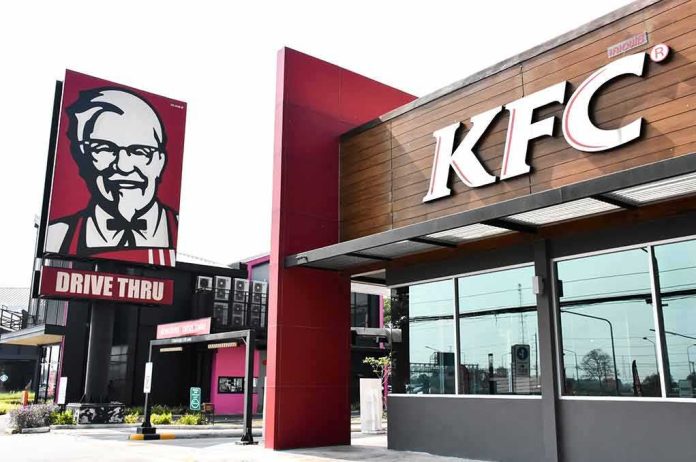
When a national chain rewrites a decades-long beverage contract, it is not swapping sodas; it is moving a strategic pillar of the business that touches pricing, equipment, distribution, marketing, and—ultimately—guest behavior. KFC’s decision to replace PepsiCo with Coca-Cola in its U.S. restaurants beginning in 2027 is precisely that kind of structural shift.
At a Glance
- KFC has signed Coca-Cola as its U.S. beverage partner, ending nearly 40 years with PepsiCo; rollout starts January 2027 with full availability expected by spring.
- The transition covers roughly 3,700 U.S. restaurants, a systemwide domestic change rather than a regional test.
- KFC frames the move as part of a broader brand evolution and turnaround, not just a fountain swap.
- International KFC markets continue with PepsiCo, underscoring that the change is U.S.-specific.
What KFC Decided—and Why It Matters
KFC announced that Coca-Cola will replace PepsiCo beverages across its U.S. system, with the conversion beginning in January 2027 and national availability targeted for spring. The decision ends a near-40-year run that began when PepsiCo owned KFC in the late 1980s and maintained the brand as a flagship fountain account even after KFC became part of Yum Brands in 1997. The scope—roughly 3,700 domestic restaurants—marks a full supplier transition rather than a limited pilot, and it represents a significant competitive win for Coca-Cola in the high-stakes foodservice channel. KFC’s U.S. president, Catherine Tan-Gillespie, has linked the new partnership to a broader modernization push to evolve the brand, strengthen restaurants and menus, and deliver a more relevant experience for today’s guests.
The operational timetable is specific: a January 2027 kickoff and completion by spring, with some reporting citing an end-of-first-quarter target. That cadence matters for franchisees because fountain partnerships are not plug-and-play—changing syrup, valves, backroom bag-in-box logistics, and often the dispensers themselves requires coordinated installations, training, and marketing. A systemwide change on this schedule signals that implementation planning is already deep underway.
Mechanics of a National Fountain Switch
Restaurant beverage deals are comprehensive commercial architectures. They typically specify product menus (cola and non-cola assortments), fountain and backroom equipment packages, service and maintenance standards, distribution models (direct versus third-party), marketing support and co-op funding, and contract economics including pricing tiers and potential rebates. That’s why a shift of this magnitude is rarely about taste alone. It’s a bundling decision that affects unit-level margins, order flow, and guest attachment rates—in other words, the entire operating model around the drink station. Public explanations that emphasize “customer relevance” frequently coexist with intricate private negotiations over cost and support; the two narratives are complementary, not contradictory.
For operators, the near-term work is physical and procedural. Stores must coordinate deliveries to run down legacy inventory while staging new syrups, change over nozzles and ratio settings to meet brand specs, swap branded signage and menu boards, and train staff on product names and cup-marking to minimize order errors. Marketing calendars flip, too: national advertising, in-store merchandising, and digital menu art all require synchronized transitions. Large chains schedule these conversions in waves to reduce supply-chain whiplash and allow service techs to move market by market.
How We Got Here: From Ownership Tie to Open Market
PepsiCo’s 1986 acquisition of KFC created the initial lock on the fountain lineup in the U.S.; the brand remained a Pepsi pour even after Yum Brands was spun out in 1997. For nearly four decades, Pepsi’s presence at KFC formed part of the company’s broader food-and-beverage strategy across restaurants it once owned, including Taco Bell and Pizza Hut. The 2027 transition breaks that historical association for U.S. stores, while international KFC markets continue with PepsiCo—a clean illustration that these contracts are negotiated region by region, not globally dictated. That regional heterogeneity is common in foodservice and allows each market to optimize for its distribution infrastructure, brand portfolio, and consumer preferences.
In the broader market, large accounts do move between Coke and Pepsi. Recent years have seen high-profile switches at Costco and Marriott that reshaped share in key away-from-home channels. Each flip reflects a moment where contract terms, equipment support, and strategic alignment line up for the buyer. KFC’s U.S. deal fits that recurring pattern.
KFC’s Turnaround Frame—and What It Can and Can’t Prove Today
Tan-Gillespie has cast the Coca-Cola partnership as one piece of a “Kentucky Fried Comeback,” language echoed in internal communications reported by business media. The message aligns with how turnarounds work in practice: bundle visible guest-facing improvements (new beverage choices, packaging, promotions) with behind-the-scenes enablers (equipment upgrades, supply chain simplification, co-marketing funds). A beverage partner with a deep portfolio—core colas, Sprite, Fanta, Minute Maid, Gold Peak, and Zero Sugar variants—gives culinary and marketing teams more levers to pair drinks with evolving menus and to promote bundles that lift average check.
What this announcement is not is a results report. Implementation is scheduled for 2027; customer response and operational outcomes will be measured afterward. That said, the commercial logic is straightforward: if the new partner improves unit economics and unlocks more compelling offers, the beverage station becomes a growth engine rather than a cost center. Many chains have made similar calculations and switched accordingly.
What Stays the Same—and What Changes—for Guests
For U.S. guests, the most immediate change is the fountain lineup. Expect Coca-Cola, Diet Coke, Coke Zero Sugar, Sprite, Fanta flavors, and likely complementary non-carbonated brands tied into bundle promotions. Marketing will lean into meal pairings and limited-time offers to reintroduce the beverage station as part of the KFC experience. Abroad, nothing changes: international KFC markets continue with PepsiCo, an important distinction for travelers and for the brand’s global communications calendar. That U.S.-only scope avoids disrupting markets where Pepsi’s distribution or portfolio is strategically preferable, while allowing the domestic business to execute its modernization plan on its own timetable.
From a brand-positioning standpoint, the move also resets the competitive narrative. Coca-Cola gains a national chicken QSR account with broad suburban and rural reach; PepsiCo relinquishes a long-held U.S. foothold but remains significant across Yum’s other concepts internationally. Because beverage contracts are multi-year and capital-intensive, these shifts tend to stick—once the syrup rooms and signage change, inertia favors the status quo until the next renewal window.
KFC to switch to Coca-Cola beverages in U.S. restaurants for the first time in decades https://t.co/mjXHzRUzp0
— Brandon Gomez (@bgomezreports) October 16, 2026
The Numbers—and the Signal They Send
Reports place the U.S. system at roughly 3,700 restaurants, with some variance around the exact count depending on methodology. The operational takeaway is unchanged: this is a full domestic conversion, not a partial test. Timelines are similarly tight and unambiguous—begin in January 2027, complete by spring—which signals execution confidence to franchisees and suppliers. While neither party has disclosed financial terms, that is typical for foodservice beverage contracts; the components that matter most to operators—delivered prices, equipment support, and marketing funds—are embedded in confidential schedules rather than public filings.
What to Watch Next
Three markers will reveal whether the partnership delivers on KFC’s stated goals. First, the installation curve: smooth market-by-market conversions with minimal downtime indicate disciplined planning. Second, attachment rates and mix: a sustained lift in beverage attachment and premium mix is the earliest proof that the fountain is pulling its weight. Third, menu and marketing integration: look for new bundles, family meal pairings, and seasonal flavors that turn beverages into reasons to visit. If those signals align, the switch will read not as nostalgia disrupted, but as a practical lever in a broader turnaround.
Sources:
facebook.com, cnbc.com, finance.yahoo.com, wdtn.com, ndtv.com, bloomberg.com, foxbusiness.com, restaurantdive.com